The Legacy of Love

Mothering is a long line of love, 
from my mom’s mom (and hers)
to me, to my children,
to my daughters and their children—
a long, strong line that I pass on
with joy, taking great care
to keep intact the wisdom,
courage, TLC and friendship
that has made our line so rich.

I am so glad for all she did
to make me me,
especially the way her love
for walking with her Jesus
radiated quietly from
how she lived. And loved.
And worked. And read.
And prayed. And sang.
And shared her heart,
especially when she wrote
those constant letters,
daring distance to keep us apart.
What she passed on
was wisdom, a treasure.
And the legacy continues!

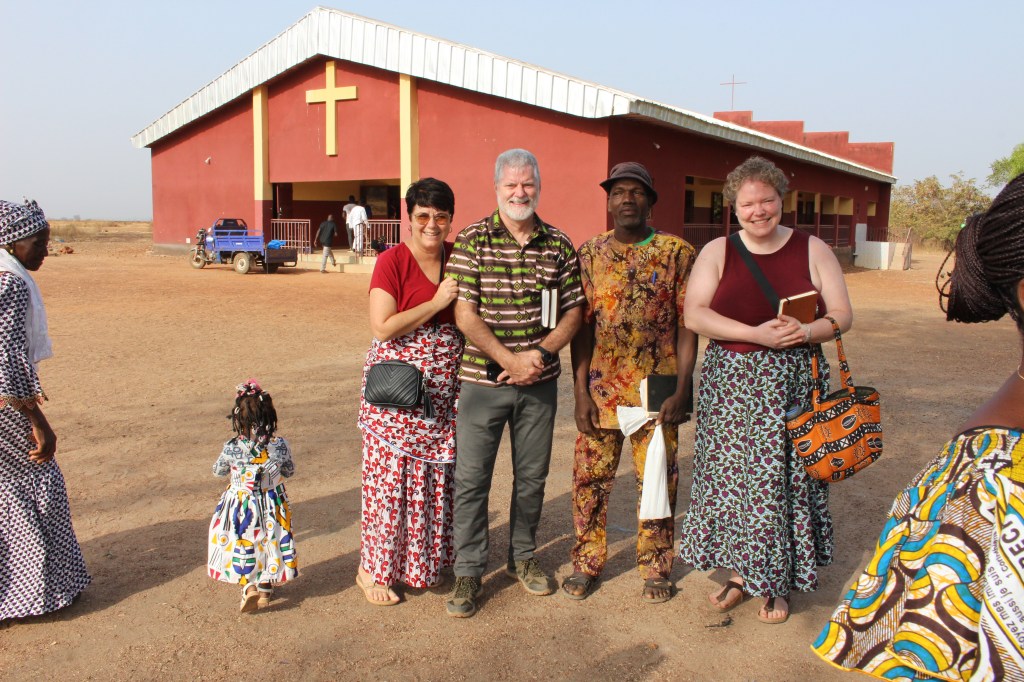
If my mom, Barb Slater, were still alive, she would now be 100. Her birthday was September 30, so my siblings and our mates got together a few days ago to remember her life. And now Glenn and I are on vacation up north at Chalet Shalom, the retirement home in the forest by Piatt lake that Mom and Dad built and loved so much. It is literally full of the aroma of their lives as missionaries in Africa as well as their roots in Michigan. So how could I not find myself thinking even more deeply about the impact Mom had on my personally?

I was the firstborn of her six children, followed by a string of boys and one little sister. So I spent lots of time with her in the kitchen cooking, and doing childcare. She home-schooled me through fourth grade (until ICA, the missionary-children’s boarding school, opened up) and then in eleventh grade (which was not yet offered at ICA). That established close connections and a great appreciation for her teaching ability. I also worked with her at the mission hospital when I could, and was deeply touched by her constant compassion for the premie babies and their mothers and her passion for training new workers. Mom also loved to welcome visitors into our home—I especially treasure the memories of her mother-daughter attachment to a young African pastor’s wife, Anne, and the hours she spent talking with her.

When I ended up returning to that same town, Ferkessédougou, as a missionary coworker, she encouraged me through many challenges. She was my safe place. And she poured loved on my kids. I was passing on to them the freedoms she had given me to run and play in the outdoors and with any kids around, to learn to love Africa and to enjoy creating new things that reflected our “third culture” family dynamics (a hybred blend of two cultures).

Living alongside her in youth and adulthood, she had a deep affect on my spiritual life as well. Until I was 8 years old we were in Congo. There she had a little box of memory vierses that she would drill us in at breakfast. One that became glued to my heart was James 4:8,  “Draw near to God, and he will draw near to you.” As I grew older that became an incentive to pursue knowing him. And as a teen I observed her love of reading Scripture. She was excited to find new translations that spoke to her, like the J.B. Phillip’s New Testament, then the Living Bible. That opened me up to using them and other new translations too, never suspecting that I would end up spending most of my years of ministry in Bible translation!

She would welcome the local missionary community into her living room for a “singspiration” on certain Sunday evenings. We had a piano, so my Aunt Marion would play it while the group chose favorite hymns. I loved singing with them. When one of my brothers asked last week what Mom’s favorite hymn was, another brother and I immediately said, “I come to the garden alone”!

That made me begin to process why she loved it so much, and I think I know.

It was about spending solitary time with her Beloved and the love they shared, hearing his voice as he walked and talked with her. I did often wonder what the last line of the chorus meant: “And the love we share, as we gather there, none other has ever known.”  How could that be, when many people do know God’s love and walk close to him? At last I have understood it to be a way of describing that personal relationship with God that could not be identical for anyone else, since each one of us is a person unlike anyone else. He made us, knows us, loves us, and interacts with who we are. What a precious realization!

Even though I did not realize how it was influencing me, hearing her choose that song so many times and then watching her read and pray, I was becoming increasingly hungry to hear my Lord’s voice too. I longed for that intimacy. It was instrumental in making me excited to take advantage of a special privilege offered to us teens at boarding school: Get up early on Saturday, before the wake-up bell rang, and go outdoors to pray! I learned to love walking in the dewy grass, feeling the morning breeze before the sun heated the day, meditating and praying. Who would have known it would lead to practicing “solitude and silence” as an adult, and writing the poetry that would flow from my heart as I learned to listen to the Voice?

I may not always have a garden to walk in, especially living in  the city as I do now. But I treasure the legacy that has led me to make that “time apart” a priority and opened me up to the possibility that I might actually have conversations with God!

(You can get a taste of my learning curve in my collection of poetry produced over the years, When He Whispers: Learning to Listen on the Journey, available at several marketplaces online.  Some of you readers already have dug in, I know!)

One last thing—here are the verses of Mom’s favorite hymn that keep singing in my heart. It was written in 1912 by C. Austin Miles:

1) I come to the garden alone,
While the dew is still on the roses,
And the voice I hear, falling on my ear,
The Son of God discloses.

Refrain:
And He walks with me, and He talks with me,
And he tells me I am His own,
And the joy we share as we tarry there,
None other has ever known.

2) He speaks and the sound of His voice
Is so sweet the birds hush their singing;
And the melody that He gave to me
Within my heart is ringing.

Living Inside His Love

Living inside Your love 
I move within
a world protected
not that I am
never wounded
but that you
keep me safe
from ultimate harm
from all malignant
and pernicious evil
inside the loving kindness
of your heart
I’m held where goodness
is my atmosphere
and tenderness the song
that plays incessantly
and heals me,
fills me with new hope
for this poor world


This poem was given to my heart just before war broke out around us, back in September 2002. Its message was given to me for a reason!

We were in Côte d’Ivoire, in its second largest city, Bouake, attending training in “crisis response” so that we could help coworkers going through tough times. It was so ironic—the crisis hit us straight on, partway through the seminar!

When we first heard shots fired in the morning of September 19th, I was full of fear. We had our 15-year-old son with us. My mama heart was glad we had not left him behind in Ferke with a friend, as had been originally planned. But now we kept hearing periodic gunshots all around, sometimes even mortars whooshing overhead. I worried. We were in a three-story building, and the rebel force would take one side, the government army the other, to fire at each other for hours. We were instructed to lie down on the floor of the cement hallway running through the dormitory-style row of bedrooms on the second floor. For days our only hope was in our God’s love, especially his promises of protection. But we also knew that sometimes he does allow death, even to his loved ones. What was his purpose going to be in that moment?

This was clear: if we were taken, we would be with our God. If he permitted us to be rescued, he had a reason. And that is what happened: after over a week of waiting, a 24-hour ceasefire was arranged, and anyone holding a foreign passport would be allowed to leave Bouake and go south to territory the government still held.

One crucial moment on the way through the stringent check at the capital, Yamoussoukro, underlined the Lord’s protection. We had a two Nigerians with us in our car who had also been attending the training seminar. The officer who stopped us at the checkpoint told Glenn he had to drive over to the side for a thorough check of the vehicle. The rest of us had to get out and go to the booth ahead. Our son suddenly realized his backpack with his papers was in the car trunk so I accompanied him back there to find it. That put the soldiers on alert; they were not happy that we opened the trunk. By the time the two of us got up to the checkpoint, the officer was holding the Nigerian passports in his hand and getting angry with our friends. He was asking questions, but neither of them spoke French so could not respond. Plus they were wearing dressy “boubous”, robes that are also common among Muslims, preparing for their plane ride home. That seemed to brand them as suspicious.  I got there just in time to translate and tell the officer that they were also missionaries, that we had been at the same training in Bouake. He relaxed and waved us through.

My coming up behind them was in God’s timing. And there were other things in that story that led to our reliance on the goodness and tenderness of our God who is love. In the midst of war all around us, who else could we turn to? When we had to lie on the floor of the hallway while mortars flew over us, my dear friend Karen and I made sure we were next to each other. We held hands. We prayed. Somehow we even slept later that night! Our Father was our hope and our shield.

I relate to what David wrote when he was in a war zone:

LORD, hear my prayer, listen to my cry for mercy; in your faithfulness and righteousness come to my relief. . . .  3 The enemy pursues me, . . .  4 So my spirit grows faint within me; my heart within me is dismayed. . . .  6 I spread out my hands to you; I thirst for you like a parched land. 7 Answer me quickly, LORD; my spirit fails. Do not hide your face from me or I will be like those who go down to the pit. 8 Let the morning bring me word of your unfailing love, for I have put my trust in you. Show me the way I should go, for to you I entrust my life. 9 Rescue me from my enemies, LORD, for I hide myself in you. 10 Teach me to do your will, for you are my God; may your good Spirit lead me on level ground. (Ps. 143:1–10 NIV)

Yes! We were couldn’t wai to get out of this scary situation. We longed to hear good news in the morning, news of rescue. And it came. We saw him take us out of a dark tunnel to a place of level ground. There was grief.  Would we ever get back home, up north in that country? Would our friends there be okay? What should we do next?

Through it all, it was our Father’s unfailing, never-ending love that held us close, giving us hope and comfort. His song was playing in my heart, even when I could not hear it. His love was the one sure thing that remained when chaos was all around. We knew that he was paying attention, hearing our cries, and he would bring us through. Even if we had lost our earthly lives, we knew we would be with him—no malignant evil could remove that confidence!

So every year, this anniversary of war and rescue reminds me to remain rooted and grounded in his love, to live inside it whether life is on an ordinary track or full of bumps in the road.

Breathe in his goodness! Listen to the song of love that he plays in your heart, and carry on—even when there is chaos all around. He never changes, and his love for us (small as we are) is constant!

Full of Grace, Full of Truth


His kindness overwhelmed them from the start:

the way he chose his students:

            hearts that yearned for meaning

            beyond fishing nets or taxes;

            welcoming the seventy,

            both genders, to his company—

the way he saved the day for his mom’s friend:

            reaching back to first creation,

            crunching time by his own Word

            he said, “Let there be wine,”  

            and there it was, the best—

the way he broke the rules that kept the stranger

            snubbed and minimized;

            he crushed the prejudice  

            that said a woman should not  

            learn, sitting at his feet—

the way he took a trip and waited by a well

            to meet an outcast woman,

            to let her know that she could thrive

            by drinking living water,

            accepted and forgiven—

the way he fed the hungry lingering crowd,

            rewrote a blind man’s lifeline,

            let children climb into his lap

            and touched untouchables,

            his purity the remedy.

His goodness split the confines of the box.

And with his kindness came God’s truth:

the word that let the rich man know

            that following the rules

            would never bring him life;

            the only way to freely sail

            was to haul in his anchors—

the word that fired his makeshift whip

            to chase the rottenness

            of greed and selfishness

            out of the place reserved

            for penitence and praise—

the word that underlined his power,

            that healed a dying child

            from very far away,

            that said, “Get up and walk!”

            and lameness took a hike—

the word that turned their eyes away

            from temporary gluttony:

            the food that spoils,

            the search for yet more  

            thrills instead of treasure—

the word that showed them who God is:

            forgiving Father,

            rescuing Son,

            Spirit bringing birth to spirit—

            new creation, life begun!

He was the living truth that changed them all.

Postscript:

His kindness offered favors

not one of them deserved.

The truth flowed out of him

and overturned the world—

the night turned into sunrise,

rule-keeping became love,

surrender moved from slavery

to the status of a son.

And time could not contain this grace.

The “I Am” made the promises

as true for me, as real for you,

as when his glory walked the earth

in flesh and bones, in word and work.

 The Word became flesh and made his dwelling among us. We have seen his glory, the glory of the one and only Son, who came from the Father, full of grace and truth. (Jn. 1:14 NIV)

The true light that gives light to everyone was coming into the world. (Jn. 1:9 NIV)

May the grace of the Lord Jesus Christ, and the love of God, and the fellowship of the Holy Spirit be with you all. (2 Cor. 13:14 NIV)

When his grace shines on us we have rescue and hope. His light shone in the darkness that was over Israel, and it shines into us. Then we know the truth, the real solid unshakeable truth: God’s light became truly visible through the words and work of Jesus, revealing what he values and accomplishing his purpose. That gift of grace continues to be our portion as we walk with him in the light, made new by his unmerited favor poured out on us.  Night has sturned into sunrise! Life with him will never end in this New Day!

A Confluence of Soulmates

We believe in him
so streams of living water
flow from within
and mingle in
profuse display:
splash of sympathy,
sparkle of delight,
mellow liquid comfort.
Spirit meets spirits
and waterfalls rush
to embrace, clarity
leaping with grace
to wash over souls
and leave us refreshed,
renewed and blessed.

Think of a recent moment when that happened to you. You met with one or more fellow devoted followers of Jesus, indulged in honest conversation—maybe also prayed together—and left with gratitude and peace washing through your inner being. This is when koinonia, the Greek word usually translated “fellowship,” comes to life in the community.

I have found this to be particularly true when I am one-on-one with a sister in Christ who shares openly what she is experiencing in her walk, or what the Lord is teaching her. And I share, too. That is when the label “soulmates” comes to mind. I am blessed to experience it here in my home, with my husband and son, as we meditate on Scripture and pray together. And there are those times at church when shared praise, compassion or concern touch each of us, and we are bonded yet more closely.

Last week I focused on the “fellowship of the Holy Spirit” as it was linked with Jesus’ grace and God’s love in Paul’s farewell blessing in 2 Corinthians 13:14. There we were focusing on Jesus’ gracious offer of salvation and God’s love underlying it all, then the gift of the Holy Spirit who lives in the believer and is their “companion of the Road.” The Spirit gives us close relationship with God the Father and Jesus; the Trinity is one, each part revealing to us the whole character of God. That intimate relationship between them is offered to us as well when we are truly set apart, consecrated to him (John 17.19).

In Jesus’ prayer just before his arrest, recorded by his disciples, he prayed that all future believers as well as his disciples would have both horizontal unity between them and vertical unity with the Trinity, putting it in clear terms. He asked:

21 that they will all be one, just as you, Father, are in me and I am in you. I pray that they will be in us, so that the world will believe that you sent me. 22 The glory you gave to me I have given to them, that they may be one just as we are one23 I in them and you in me– that they may be completely one, so that the world will know that you sent me, and you have loved them just as you have loved me.  (Jn. 17:21-23 NET)

Wow! He really emphasized that element of being “one”! And he made sure that we would have help in becoming “one” through being one with him, “one” with the entire Trinity.

He had spoken to the woman at the well about the gift of “living water” that could be hers:

Jesus answered her, “If you knew the gift of God and who it is that asks you for a drink, you would have asked him and he would have given you living water.” 11 “Sir,” the woman said, “you have nothing to draw with and the well is deep. Where can you get this living water? 12 . . .  13 Jesus answered, “Everyone who drinks this water will be thirsty again, 14 but whoever drinks the water I give them will never thirst. Indeed, the water I give them will become in them a spring of water welling up to eternal life.” (John 4:10-14 NIV)

There we have it: living water is that new everlasting life that comes from belonging to Jesus. He is the source of that spring that constantly ripples, never running out. It is not only a promise for the future, but a spring currently active within us.

Then when he spoke to his disciples about the “living water” that was going to be poured into them and out into the world, he had specified that the overflow would come because of the Spirit  living in them:

 Whoever believes in me, as Scripture has said, rivers of living water will flow from within them.” 39 By this he meant the Spirit, whom those who believed in him were later to receive. (Jn. 7:38, 39a NIV)

This is precious truth from the mouth of Jesus himself.  The rivers of living water “flow from within them.”  That means they come out—they overflow.

The  rivers of living water flow from within us. We become sources of the living water as well, sharing it with those around us. It definitely can invite thirsty not-yet-believers to come to the River of Life. That spring is an overflow of the saving grace of Jesus, God’s love, and our close relationship with God’s Spirit, flowing out of us to offer that water that brings life to others!

But there is another key aspect of it: when we share with another believer, or in a group or community of Jesus’ followers, the spring within us touches them and the spring within them reaches us. It results in a sharing of this common attachment to God through his Spirit. When this reality is lived out, it becomes true “fellowship” that refreshes each believer involved. Paul wrote about how that would encourage believers in Philippi and give him joy as well:

Therefore if you have any encouragement from being united with Christ, if any comfort from his love, if any common sharing in the Spirit, if any tenderness and compassion, 2 then make my joy complete by being like-minded, having the same love, being one in spirit and of one mind. (Phil. 2:1-2 NIV)

As we all know, experiencing this kind of unity or fellowship does not always happen just because the people around us are also believers. The rest of those qualifications are what make it possible:  the “ifs” that are listed. Being one with Christ and comforted by his love, sharing that fellowship that we have with his Spirit who lives in us and guides us—these are essential to being refreshed by that living water that is welling up inside us. the stream is active, an ongoing relationship being lived out our Lord. Jesus did not use the metaphor of a quiet, peaceful pool of water. Instead, his Spirit living in us is  like a spring, never stagnant, constantly having its water renewed from the Source. That requires constant deep attachment to him.

And it is not to be quietly kept in a jar, just for us. We are to share “in the Spirit.” When we truly do that, not just sharing out of our own preoccupations or assumptions, but listening to that live Counselor within and joining in the conversation with a soulmate, we can find joy in our mutual Companion, letting tenderness and compassion overflow to refresh others. Listening carefully, sharing, we are refreshed ourselves.

Therefore begins this request to have unity in Philippians 2:1.  What is that word referring to? It is the reality  taught in chapter 1 that we are constantly growing, and that growth depends on our attachment to Christ:

  6 For I am sure of this very thing, that the one who began a good work in you will perfect it until the day of Christ Jesus. . .9 And I pray this, that your love may abound even more and more  in knowledge and every kind of insight 10 so that you can decide what is best, and thus be sincere and blameless for the day of Christ, 11 filled with the fruit of righteousness that comes through Jesus Christ to the glory and praise of God.  (Phil. 1:6, 9-11 NET)  

That growth in love through secure attachment to the Vine, Jesus, (John 15:5) produces the fruit: right living that glorifies our Master. When we show hateful disunity, that dishonors him. He is busy at work in us to make our love grow so that it is able to discern the right words to say, the right way to behave, the right way to honor Christ by a pure overflow of streams of his living water. As we grow more and more adept at doing this, we bring him praise.  That praise is not just vocalizing our praise to him! It is also sharing in the Spirit and doing it in love.

So when Paul wrote those closing words to the believers in Corinth, he was underlining that Christ’s grace and God’s love give us the Spirit living with in us, walking with us, our true Companion and Counselor. And he was also urging them to share the living water that bubbles within them with others in their lives who also enjoy that same inner living water.  Let it overflow and bring encouragement and the way to live in peace with each other:

 11Finally, brothers and sisters, rejoice, set things right, be encouraged, agree with one another, live in peace, and the God of love and peace will be with you . . .13 The grace of the Lord Jesus Christ and the love of God and the fellowship of the Holy Spirit be with you all. (2 Cor. 13:11, 13 NET)

Let’s see who we can refresh today, or the next time that we are with another child of God! And let’s let those streams of living water flow out to those who do not walk with him yet, but would love to not be thirsty ever again!

My Essential Companion


I thought I was alone, figuring out
how to navigate this world.
Sometimes I walked in burning sun,
seeking shade or longing for sunset.
Or blasting winds would throw debris
over the path, hiding the way forward.
Crossroads scared me. Right? Left?

But then I sensed eyes on me,
a presence by my side.
Who was there, tracking me?
And I learned that I had a friend,
a companion and counselor
sent to me to share this journey.
He cares! He knows the master plan!

All I need to do is trust and listen,
holding his hand. Chaos cannot
tear us apart. His strength holds me
and since he has the map,
our shared purpose keeps us on track
in inclement weather or twisting paths.
He’s my Companion of the Road, always.

Sometimes learning another language opens up new worlds of understanding. Nyarafolo, spoken in a region in northern Côte d’Ivoire, certainly did that for me. One word that immediately nestled in my soul was kodanʔanyɛni: companion of the road. It means you have a close friend who is walking a certain path with you, sharing the experience. I thought of each special friend I’ve had over the years who has traveled a certain phase of my journey with me, often helping me carry my load—it sure made it easier, handing off some of my baggage! Then it also applied to the way the Nyarafolo believers sometimes took off walking in a parade from one village to another, coupled in a long line, singing as they went, a praise walk to testify to others of their joy in knowing Jesus. And I began to use the term as the salutation on all my prayer letters, sensing the true partnership of those who would be reading them and praying.

But most of all, I began to think about the “fellowship of the Holy Spirit” as I made my pilgrimage through life to the Promised Land:

May the grace of the Lord Jesus Christ, and the love of God, and the fellowship of the Holy Spirit be with you all. (2 Cor. 13:14 NIV)

I understood Jesus’ grace, shown by his self-sacrifice to offer me unending life with him. And God’s love for the world and for me is what planned it all; it’s why he reached out to make me his child. But what did it mean to fellowship with his Spirit?

The Greek word behind “fellowship” is κοινωνία, which has a touching breadth of meaning depending on the context:  association, communion, fellowship, close relationship, fellow feeling, participation, sharing.[1] Another lexicon adds close association in shared interest and shared community life.[2]

That describes a “companion of the Road!” When applied to the Holy Spirit, it means that he has a close relationship with you. Well yes! He lives in you! And then there is that close association in shared interest, and shared community life. You share an ultimate goal and all the “dailies” too. This close relationship is the most intimate ever!  It is actually described on one of my life passages in  the Psalms:

You have searched me, LORD, and you know me. 2 You know when I sit and when I rise; you perceive my thoughts from afar. 3 You discern my going out and my lying down; you are familiar with all my ways. 4 Before a word is on my tongue you, LORD, know it completely. 5 You hem me in behind and before, and you lay your hand upon me. 6 Such knowledge is too wonderful for me, too lofty for me to attain. 7 Where can I go from your Spirit? Where can I flee from your presence? 8 If I go up to the heavens, you are there; if I make my bed in the depths, you are there. 9 If I rise on the wings of the dawn, if I settle on the far side of the sea, 10 even there your hand will guide me, your right hand will hold me fast.  (Ps. 139:1-10 NIV)

No matter where I go, he is there with me. I could live in West Africa or in Michigan, flying east or west, north or south; he is in every place, not just beside me or following me, but holding me steady with his hand and guiding me! What a wonder this is!

I have felt that reality of having him for a walking partner here in Detroit. I have human walking partners for a short while during my morning walk, but the majority of my time I am alone with him. I ask him for prompts about how to vary my route so that it is never predictable to any bad guy (warned about that by neighbors). I am currently also walking a little Yorkie dog in order to help out a sick friend. Tiny “Hermione” runs up to almost every tree to sniff the trunk, runs out into the road to investigate a pile of stuff thrown out. Is a car coming? Is that a big dog across the street? So one day I chose to walk a different loop on Chicago Avenue since it was so busy with construction work the direction I usually take. I came up to a young man standing by a car, taking notes as he looked up at a mansion that was for sale. We greeted each other, as is the custom here in Detroit. Then he began asking me questions about the neighborhood, and shared that he recently got out of prison and is looking for a way to make some money, perhaps by rehabbing old houses. So I told him that we live on Burlingame (turns out he does, too!) and had that we had purchased our rehabbed house from a non-profit called Central Detroit Christian. I surprised myself when I added that they help people like him, just out of prison, find a way to get back into life and business.

As he wrote the name of the company down he walked back to get into his car, and I was prompted to say, “May the Lord guide you!” (I have never said that to a stranger before!)

He answered, “I think he just did!”

Wow! I thought about that as I walked home. My essential Companion of the Road had changed my normal route, using my instinctive protection of the Yorkie for a reason. He had wanted me to encourage this young man looking for hope!

As I walk the neighborhood without a human beside me, I try to use the time to pray: praise for his creative genius all around me, prayer for those on my heart, and stretches of quiet listening for my Companion’s guidance as I face the day. He knows my thoughts before I think them. He knows what is coming up in the next hours, when I can only guess. I may look like I am alone, but I am not. He is always with me, protecting me in front and in back, holding me steady with his hand, in conversation with me. An intimate relationship does require two-way communication!

The awareness of his promptings and his guidance comes with practice: it is spiritual formation that he wants to accomplish in us. We have to open the ears of our heart, because he is not visible and his voice is rarely audible. But that spiritual dimension is not just theoretical! It is unseen but experienced, and I can say with the psalmist, no matter where I am on the road:

“Yet I am always with you; you hold me by my right hand.” (Ps. 73:23 NIV)

You, however, are not in the realm of the flesh but are in the realm of the Spirit, if indeed the Spirit of God lives in you. And if anyone does not have the Spirit of Christ, they do not belong to Christ. (Rom. 8:9 NIV)

The Spirit of Christ truly is the constant Companion of the Road for God’s sons and daughters–we live in the realm of the Spirit, even while we walk this earth!


[1] Gingrich, Greek New Testament Lexicon

[2] Danker, Greek New Testament Lexicon

Like the Air that I Breathe

So much sharpness in the world today: 
bare tree branches that pierce the sky
like forked lightning,
zebu* horns poking the air
like staples,
headless palms erect as straight pins.
Hawk wings slice the atmosphere,
machetes crack through vines,
bike spokes whirr.
Even the blades of grass
have a cutting edge.

If air were solid it would be in rags:
knifed, torn, poked to bits.
Instead, intangible, it yields, evades,
readjusts, moves into new spaces,
stays whole.
Rigidity has its price.

Words cut, too: sharp retorts,
assumptions gouging holes
in my assurance.
Quills of self-defense and anger
hook deep into my heart.
All too solid, I bleed.

I must learn the art of
reframing the jibe,
evading the rancor,
yielding the unessential point.
See the razor edge for what it is:
just one side,
and useful in its place.
Surround the perpetrator
with empathy.
Move into spaces of emptiness
left in the wake of the thrust.

Do what is necessary
for life and healing,
like the air that I breathe,
like the One in whom
I live and move and have my being:
love my enemy.

I wrote this meditation 24 years ago during a dry season, and it is still humming in my prayers when sharp challenges continue to hurt. Yes, we become new, reborn, when we come to Jesus, but complete transformation is a progressive ongoing journey. And I have seen God empower me to react to “razor edges” in increasingly peaceful ways that reflect his light. I am often amazed—that was not how I used to be! I am even learning to “love my enemy”!

Dallas Willard is an author I consider one of my mentors. His book Living in Christ’s Presence is one that I return to often, to review. He makes a point that the kingdom of God is among us, we are already citizens in it. Here is one key truth about how we are to live:

“Jesus says in Matthew 6:33, ‘Seek above all the kingdom of God and its righteousness’ (paraphrase). . . Our first priority then is to seek that kingdom and its righteousness. Find out what God is doing where you are, and identify with it. Follow what you know to be the case, what you know to be true, of the righteousness of the kingdom. . . Let’s remember that God’s kingdom is God in action. . . It’s what God is doing where we are. . . What is God doing now where I am? I am in a face-to-face relationship with an individual. What is God doing there?”[1]

Maybe you make a remark that the other person takes as a political stance they disapprove. Their reaction is to label you. Or maybe they take something you say to mean something you never intended. How to respond? What is God doing in that situation? He loves that other person, whether they are in his Family or still broken in this broken world. Remember this, Dallas says:

“I am seeking the kingdom of God when I am in a face-to-face relationship with another person. It doesn’t matter if this other person is my enemy. I am given, under God, the ability to love and bring blessing to that person, no matter who it may be. The most important people are the ones closest to us, and that’s where we can know the kingdom in a way we cannot know it anywhere else.”[2]

I am breathing kingdom air wherever I am—the Spirit, Breath of God, Counselor, is in me. So it’s like walking in muggy air that weighs you down, but you feel a cool breeze soothe you. He is there. Call out to him and ask what to do. As you practice kingdom values, it will become more and more natural to:

Surround the perpetrator 
with empathy.
Move into spaces of emptiness
left in the wake of the thrust.

Do what is necessary
for life and healing,
like the air that I breathe:
like the One in whom
I live and move and have my being:
love my enemy.

[1] Dallas Willard, Living in Christ’s Presence (Downers Grove, IL: Inter-Varsity Press, 2014), 74,75.

[2] Ibid., 75,76.

*Zebu: a species or subspecies of domestic cattle originating in South Asia. Zebu, like many Sanga cattle breeds, differs from taurine cattle by a fatty hump on their shoulders, a large dewlap, and sometimes drooping ears. Wikipedia

Lemon Lesson

Lemon leaves bush the tree, 
newborn limbs reaching out
pushing past the older ones.
I pull one of them sideways,
wondering if there might be
a round ripe lemon waiting for me.
Deep in the forest of varied greens
I catch sight of gold—then suddenly
I see plump balls clustered together,
hanging out in camouflage,
a harvest in the making.
One, two— wow! Five are huge!
They pop off into my hand.
Pruned by lightning years ago,
one side stripped and broken off,
the tree is coming to life,
fruitful as never before.

I think of you, Lord, coming to see
if there is anything worthwhile
growing in me. I don’t want you
to ever have to look through the leaves
only to have your heart sink: no fruit!
A certain fig tree comes to mind.
I want to bring a smile of deep
content to your hopeful face.
When lightning strikes and loss
leaves me momentarily undone,
may I stay firmly rooted,
nourished by your love and mercy,
branches living in your light,
finally ripening into exponential gold!

When lightening strikes a tree it can look as if all hope is gone. But a miracle can happen: it can recover and be even more fruitful! I saw it twelve years ago in my courtyard in Ferkessédougou, when I noticed that our lemon tree, fractured by lightening years ago, was getting extremely bushy. Yes! Lemons were even hiding inside! It had been pruned and was truly fruitful. That rebirth happened here in Detroit too: our redbud tree was struck several years ago and I personally felt ripped apart. I had given it to Glenn in 2004 on his birthday when we moved into our house, evoking memories of the beautiful redbuds lining the river at MSU when we were dating. The redbud in our lawn has now come back and is growing tall!

These are images of what can happen to those of us who are disciples of Jesus, too. Sometimes a storm hits, crushing us, leaving little hope. It may be in the form of difficult relationships, deep hurts, abuse, economic or medical hardships, losses. Life may seem barren as we trudge ahead, especially if the “strike” has set off a forest fire that seems to keep on burning. But when we are sons or daughters of God, serving our Lord, there can be deep meaning and benefit in such suffering: it is training. A good father does not just let his kids do whatever they want; he trains them up in the way they should go (Proverbs 22.6). He teaches his kids through punishment when they do wrong. But he also teaches them how to live life well and how to get through tough times. They may need encouragement to remember that it will take perseverance to get all their homework done and pass the final exam. If they are getting bullied, he can help them remember who they really are, what they are worth, and how to stand up to it. That is all training, or discipline.

This is a theme in Hebrews 12:

And have you completely forgotten this word of encouragement that addresses you as a father addresses his son? It says, “My son, do not make light of the Lord’s discipline, and do not lose heart when he rebukes you, 6 because the Lord disciplines the one he loves, and he chastens everyone he accepts as his son.” 7 Endure hardship as discipline; God is treating you as his children. For what children are not disciplined by their father? 8 If you are not disciplined– and everyone undergoes discipline– then you are not legitimate, not true sons and daughters at all. (Heb. 12:5-8 NIV)

Does that sound like a “word of encouragement”? Let’s dig into it. The Greek text talks about “sons” because under Roman law, a son was the heir, and his father could discipline him but was not allowed to discipline an illegitimate son.[1] In Christ, we are all heirs, male and female. When Father God disciplines us, he is showing that we are valued. And this should encourage us, because this refers to two kinds of formation: growing through hardship that is experienced in this broken world, and being “chastened,” which infers punishment.

We each have rough edges or deeply rooted issues that need to be dealt with. Some tough things can sand off those rough edges. One of my weaknesses was hyper-sensitivity. When I was mistreated by a friend the hurt simmered inside me; tears were uncontrollable. I even felt that way when I failed to be perfect (like in second grade when I misspelled “Wednesday” on a spelling test). But as I went through one failure after another, then also repeatedly dealt with personal hurts, I began to be able to deal with them better. I was maturing. And I was not only growing up, but I was learning to know my Father God better and listen to his loving wisdom, learning to lean on him when I walked through challenges. Those were hardships that are spiritual formation, internal maturation. They have been happening in my adult life too, that’s for sure!

If we are doing what is wrong, then the suffering comes as a consequence. If we pay attention, it can be a learning curve too. Our Father wants us to learn, not to stay stuck in wrongdoing. For example he does not want us to let anger spurt out of our mouths to tear into someone. That damages relationships. Instead, he wants us to love our neighbor—that person beside us—as we love ourselves. As a mom, that was also a learning curve for me. Speaking gently but firmly when reproving my child was far more effective than anger, even when punishment was a necessary consequence. As an adult, gentleness and self-control become fruit that God has been underlining as necessary all along the way:

But the fruit of the Spirit is love, joy, peace, forbearance, kindness, goodness, faithfulness, 23 gentleness and self-control. (Gal. 5:22—23a NIV)

So when we submit to the “Father of spirits,” which means that he is the “ultimate source of life,”[2]  our spiritual father, we learn how to live according to his Kingdom principles so that we can actually “share in his holiness,” becoming like him, the God of love and peace and goodness:

 9 Moreover, we have all had human fathers who disciplined us and we respected them for it. How much more should we submit to the Father of spirits and live! 10 They disciplined us for a little while as they thought best; but God disciplines us for our good, in order that we may share in his holiness.  (Heb. 12:9-10 NIV)

When we realize that there is purpose in our suffering, that God is honing us to be like him, it incites us to keep on keeping on. We are not suffering for nothing! I appreciated the reference in a church blog this week to a quote from Nietzsche: “He who has a why can bear almost any how.” [3] Yes! None of what the Lord allows in our lives is meaningless. He is able to use it for our character development so that we become increasingly set apart, different like he is, no blemishes: holy! And that is not all, because what he does in us produces fruit. People will find goodness they did not expect, like that lemon tree that took the brunt of the lightening but became full of green leaves and began to produce lemons!

11 No discipline seems pleasant at the time, but painful. Later on, however, it produces a harvest of righteousness and peace for those who have been trained by it. (Heb. 12:11 NIV)

Righteousness is that inner goodness being grown in us, put there to be lived out. And a harvest of peace will be a wonderful consolation in our hearts but will also feed the hunger for peace in our community, our relationships. We can bring peace into situations where there was no peace—a peace that is not just quietness, but health.

A key truth here is the relationship between the word “disciple” and “discipline.” As my brother Pastor Brent Slater pointed out in his February message on this passage, they come from the same root. This makes it easier to see that a dedicated follower of Jesus, a disciple, has signed up for spiritual formation—discipline that has the goal of making the follower increasingly become more like the perfect example he has in his Master:

He decided beforehand who were the ones destined to be moulded to the pattern of his Son, (Rom. 8:29 NJB)

For those God foreknew he also predestined to be conformed to the image of his Son,  (Rom. 8:29 NIV)

 What long hard path are you struggling on these days? Or did you suddenly feel battered to bits by a “lightening” bolt? Be encouraged by the “why” that can actually help you to persevere during any tough season. God has purpose in what he is allowing to happen: he will use it as part of the transformation process he has started in you. Maybe you remember this classic hymn.[4] I often sang it without realizing the power of the prayer it sings:

O to be like Thee! blessed Redeemer;
This is my constant longing and prayer;
Gladly I’ll forfeit all of earth’s treasures,
Jesus, Thy perfect likeness to wear.

O to be like Thee! O to be like Thee!
Blessed Redeemer, pure as Thou art;
Come in Thy sweetness, come in Thy fullness;
Stamp Thine own image deep on my heart.

O to be like Thee! full of compassion,
Loving, forgiving, tender and kind,
Helping the helpless, cheering the fainting,
Seeking the wand’ring sinners to find.

O to be like Thee! lowly in spirit,
Holy and harmless, patient and brave;
Meekly enduring cruel reproaches,
Willing to suffer, others to save.

[1] Luke Timothy Johnson, Hebrews: A Commentary, ed. C. Clifton Black, M. Eugene Boring, and John T. Carroll, 1st ed., The New Testament Library (Louisville, KY: Westminster John Knox Press, 2012), 321.

[2] F. F. Bruce, The Epistle to the Hebrews, Rev. ed., The New International Commentary on the New Testament (Grand Rapids, MI: Wm. B. Eerdmans Publishing Co., 1990), 342.

[3] “How does Adversity Become Opportunity?”  Jacob Ley, Woodside Bible Church blog, August 20, 2024    woodsidebible.org

[4] Thomas Obediah Chisholm (1866-1960)


Hush My Swirling Thoughts

I calm myself 
and quiet my heart
hush my swirling thoughts
and rest
like a weaned child
against her mother's chest
no searching
no tossing about
no hungry whimpers
just breathing

the pounding waves
pat my back
the sound of love
I rest
and the salty breeze
caresses my cheeks
I'm leaning
on eternal arms
that hold me close
infusing peace

When you feel like your world is in chaos, where do you go? When you long to curl up and go away somewhere, someplace out of the tumult, where do you go?

A beach at an ocean is highest on my list of favorite places to lean back and rest, but I don’t live near an ocean. I can go down to the Detroit River and sit on a bench at Belle Isle; there the geese come to greet me as little waves splash up against the rocks along the shore, and as evening comes, the cricket choir cannot be missed. When I am in my skyhouse (the attic study where I work) with no way to be by water, I can still picture it. Water movement speaks of many things, and over and over it has reminded me of the unending love of my Father, Abba, coming to “pat my back” and remind me of his ongoing loving pursuit of me:

Surely your goodness and unfailing love will pursue me all the days of my life, and I will live in the house of the LORD forever. (Ps. 23:6 NLT)

Yes! The Hebrew word that describes the movement of God’s goodness and faithfulness to us means “to pursue” not “follow” as so many translations have put it. It is not just shadowing us. And those versions that say “goodness and mercy” have downplayed the force of the word behind what they call “mercy”: it is his faithful/loyal/gracious love that never ends, חֶסֶד , hesed. Mercy is included in that incredible depth of loving kindness and solid trustworthy love!

So I may be dealing with despair over situations surrounding me, or with unexpected judgmental criticism.  Or maybe even the loss of a loved one. Whatever it is, I just need to realize that Abba is pursuing me (always kindly hunting me down, wherever I am) with love, and he is completely good. I just need to “hush my swirling thoughts” and lay back against him. Psalm 131, that always speaks to me, says that I am to do it like a little child who is no longer searching all over for breast milk; instead, I am to lean quietly against my parent and rest:

LORD, my heart is not proud; my eyes are not haughty. I don’t concern myself with matters too great or too awesome for me to grasp. 2 Instead, I have calmed and quieted myself, like a weaned child who no longer cries for its mother’s milk. Yes, like a weaned child is my soul within me. 3 O Israel, put your hope in the LORD– now and always. (Ps. 131:1-3 NLT)

Imagine yourself at a beach or beside a river, with a gentle breeze reminding you of the Spirit’s breath. Let go of worries. Let go of the proud need to solve your own situations. Look up to the Ruler of the Universe who loves you in a way beyond your understanding, and trusting him, let him speak peace to you. The pulsing waves keep on keeping on, never stopping. Abba is there, “now and always”—he is there when things are fine, he is there when the world seems to be falling apart. You and I cannot control the storms or the pollution around us. But he is in charge. When it is his timing he will say: “Peace, be still!” and the storm will lose its power. Meanwhile, he holds his child:

The eternal God is your refuge, and his everlasting arms are under you. He drives out the enemy before you; he cries out, ‘Destroy them!’ (Deut. 33:27 NLT)

My job, your job, is to let go and trust Abba now and ever. It takes practice. We are prone to worry, prone to focus on the pain of loss or of attacks, sometimes even too proud to let go of handling it all ourselves. It’s hard to go back to that childlike willingness to just be held. But there we can find peace, peace unlike—much greater–than what we can find anywhere else:

I am leaving you with a gift– peace of mind and heart. And the peace I give is a gift the world cannot give. So don’t be troubled or afraid. (Jn. 14:27 NLT)

Jesus said that to his disciples shortly before they would be going through the horrific, unexpected experience of watching their Messiah be arrested, beaten and crucified. Only complete trust in him and his word could give them any peace at all right then. But Jesus knew that what was coming out of the horror was access to life that never ends and an intimate relationship with him: he would be living in them, his Spirit would be with them to guide and console them every moment. And they found it to be true as they walked with him through the rest of their lives, suffering hateful opposition and often physical abuse. The writer to the Hebrews was even able to urge their readers to keep on trusting the God of peace who showed his strength when he resurrected the Messiah, Jesus:

 Now may the God of peace—who brought up from the dead our Lord Jesus, the great Shepherd of the sheep, and ratified an eternal covenant with his blood— may he equip you with all you need for doing his will. May he produce in you, through the power of Jesus Christ, every good thing that is pleasing to him. All glory to him forever and ever! Amen.  (Heb. 13:20-21 NLT)

Our Father God will equip us with all the we need in order to do what he has as his purpose for us! We just need to trust him. leaning on him—that is indeed already doing what he has told us to do! And he will take us through whatever is troubling us. He will give us peace, and strength to do the next thing he puts before us. We thank him “now and always”!

The Seesaw of Suffering

Dead weight suffering 
drops its heaviness
on me, leaving
a depression—
thumbprint of loneliness,
harm-pit threatening
oppression.

I suffer the moment,
weighed down
(way down to the depths)
knowing the promise:
the seesaw balance
works best when
re-balanced.

See—my share in pain
is for your gain!
My end down,
I gather comfort
greedily from
rich resources,
unlimited . . .

Hearts up, friends!
We’re only downed
to soak up grace
and then to fly!
Abba soothes the hurt
and lifts us high
with compassion.


Your end and mine
go up, comfort shared
and lightening hearts,
spilling over
with abandon
(chain reaction)
to soothe others.

This was the passage that was speaking to me with power while I was going through extremely tough challenges, over  a decade ago.

Praise be to the God and Father of our Lord Jesus Christ, the Father of compassion and the God of all comfort, 4 who comforts us in all our troubles, so that we can comfort those in any trouble with the comfort we ourselves receive from God. 5 For just as we share abundantly in the sufferings of Christ, so also our comfort abounds through Christ. 6 If we are distressed, it is for your comfort and salvation; if we are comforted, it is for your comfort, which produces in you patient endurance of the same sufferings we suffer. 7 And our hope for you is firm, because we know that just as you share in our sufferings, so also you share in our comfort. (2 Cor. 1:3-7 NIV)

Ah! When I suffer and depend on God my Father, I receive consolation that cannot be explained. It gets me through a rough patch and even longer paths of pain. It comes from my relationship with the God of all comfort. He has a bigger purpose than just getting me through this hard stuff: he is honing me, preparing me to be a source of comfort and encouragement to others! How can that work out?

Usually it is easier to understand when looking back. In the moment, it can seem pointless. But then there comes a time when the Father uses it to reach out to someone else. Here are some personal examples.

Our first baby had reached the seventh month in the womb when things just weren’t what they should be. I felt no movement. And then one day, sitting with a friend over coffee, I began to feel “cramps”. My friend, a nurse, timed them and told me that they were actually contractions. I ended up losing that baby, finding out that she had already been dead for a few weeks in the womb. Heartbroken, I could not understand why the Lord would have allowed us to have that unplanned pregnancy when we were in our second year of marriage, struggling financially, only to then take her away. I memorized John 17 as I tried to reconcile my heart to the suffering. I relished my Jesus’ love for me and his prayers for me as he approached his time of suffering. And eventually we had three other children. But that loss gave me a heart of compassion for others who lost pregnancies or even young children, a different understanding of their pain than I would ever have had otherwise.

I also went through some extremely wretched times while on the mission field, stretches when I felt like a failure or when the hurtful judgments of other “coworkers” made me feel hopeless. Yet, looking back, those experiences gave me humility and prepped me to take time to learn how to coach others through similar situations.

When we walk with Jesus, no suffering is lost. He is sanctifying us—which means he is setting us apart from “normal” earthly values and ties, to make us ready to serve him:

 Just as you sent me into the world, so I sent them into the world. 19 And I set myself apart on their behalf, so that they too may be truly set apart. 20 “I am not praying only on their behalf, but also on behalf of those who believe in me through their testimony, (Jn. 17:18 NET)

As we know, Jesus was sent into the world to spread the Good News that he is the way, the truth and the life, and that we can freely come to the Father through him (John 8:32, 14:6). He knew we would face suffering. From the beginning of time, faithful followers of God had suffered. He knew that future believers would suffer too.

One thing has never changed: God is ready to protect and comfort his dear ones. He spoke this truth through the psalmist, in the Old Testament, and through Peter in the New Testament:

Cast your cares on the LORD and he will sustain you; he will never let the righteous be shaken. (Ps. 55:22 NIV)

Cast all your anxiety on him because he cares for you. (1 Pet. 5:7 NIV)

These verses remind me of a time when Glenn was preaching in the Nyarafolo village of Tiepogovogo and wanted to make this truth real for the believers there. He asked a young woman, Victorine, to do a skit with him. She walked across the front of the sanctuary carrying a large basin on her head, symbolizing a heavy load of wood, staggering. Women do this frequently there; they are the burden bearers in that culture. Glenn met her and offered to help carry the load. She resisted; it would be shameful to let go of her load. She kept going but stumbled. He finally convinced her. She set the basin on the floor, and he picked it up for her. She was no longer bent over as they walked together to the exit.

That is what our Master is telling us to do: let him lift our load! He knows we will have heavy loads. He knows we will suffer here on earth—physically, emotionally, in many ways. He is the Almighty, the one with unlimited strength, and he tells us to just throw what is troubling us on him! He will carry it for us, he is ready to help us and give us strength for the journey. We can stumble along, resisting his offer. Or we can give it all over to him! That is what he wants.

That is what I pictured on the seesaw. Weighed down, I could not push hard enough to fly high. But when he lightened my load and lifted me up, I could rise. I cling to that now as I did back then. He sustains me and gives me peace even in the middle of suffering, peace beyond my understanding—where did that come from? It is given to us by the Spirit, who lives in us. He is our “Paraclete,” a word that translators work hard to communicate: Advocate, Counselor, Helper. In French “consolateur” is added to the list, the one who gives consolation. And one of his jobs is to remind us of what Jesus said. He promised us peace, even when we are troubled. Let’s let him take our burden and lift us up, giving us his unique peace that we can never find anywhere else! He is, after all, the Prince of Peace.

 But the Advocate, the Holy Spirit, whom the Father will send in my name, will teach you all things and will remind you of everything I have said to you. 27 Peace I leave with you; my peace I give you. I do not give to you as the world gives. Do not let your hearts be troubled and do not be afraid (Jn. 14:26 NIV)

And the comfort and peace that he gives us can then empower us to bring encouragement and consolation to others. It is a learning curve, down and up.

He Cries Too!

Jesus wept when Jerusalem 
loomed before him,
ignorant in spite of all
that he had taught her,
calling her into his Kingdom.
But she refused to understand,
entrenched in her self-rule.

I cry too, with all mothers
longing to shelter little ones
from storms they’re bringing on.
Just like Jesus, I picture
that mother hen running
to rescue her chicks from danger,
hiding them under her wings.

Grief hits hard, slam-bang.
Jesus wept at the toll of grief too.
Tears fell when his friend died
and family grieved, no hope.
He brought life to that corpse
and offers eternal life to us all.
But death still reigns below.

I cry to see his love trampled on,
dismissed as irrelevant.
He gave his life to save us,
but that is being rewritten
as child sacrifice forced
on him by God, his Father.
No! It was done for love.

Arms wide open, longing
to hide us in a safe place,
God waits. He will not force
us to come, he just invites.
Cruel as we are, bickering,
warring, rejecting the call,
he loves us. And he cries too.

I’ll bet you’ve had those moments too, when news comes that tears your heart apart, and tears come. It is not what you expected. Maybe it is just one more piece in a hideous puzzle that you wish could be thrown away. Maybe someone you love is choosing what will only bring pain. As a result, you cry tears of pain like the psalmist:

My eyes pour out streams of tears because people do not follow Your instruction. (Ps. 119:136 CSB)

Even Yahweh, the God of the Universe, mourns the wandering of his people with “tears” because they are suffering the consequences of rejecting his laws:

17 “Tell these people this, Jeremiah: ‘My eyes overflow with tears day and night without ceasing. For my people, my dear children, have suffered a crushing blow. They have suffered a serious wound. 18 If I go out into the countryside, I see those who have been killed in battle. If I go into the city, I see those who are sick because of starvation. For both prophet and priest go about their own business in the land without having any real understanding.'” (Jer. 14:17-18 NET)

Instead of walking with the One who had saved them out of slavery and provided for their needs, they are choosing to “go about their own business.” They reject what matters for their choice of goals, not God’s. And he is full of grief for his “dear children.”

Maybe you’ve been there, watching a friend, a dear relative, or one of your kids, wandering off. Or resisting the Good News from the get-go. Jesus wept over Jerusalem because they were doing that:

“Jerusalem, Jerusalem, you who kill the prophets and stone those sent to you, how often I have longed to gather your children together, as a hen gathers her chicks under her wings, and you were not willing. (Lk. 13:34 NIV)

And the loss of a loved one to death is tough, even if they have been suffering. Or maybe you are on your own path to that ending sometime soon. When Jesus was approaching his friend Lazarus’ grave, even though he knew he was going to bring him back to life he was crying. Why?

33 When Jesus saw her weeping, and the people who had come with her weeping, he was intensely moved in spirit and greatly distressed. 34 He asked, “Where have you laid him?” They replied, “Lord, come and see.” 35 Jesus wept. 36 Thus the people who had come to mourn said, “Look how much he loved him!”  (Jn. 11:33-36 NET)

Death is what Jesus came to conquer, and he understands the torture it brings, especially when you love that person. I am struck, too, by his very human prayers about his own upcoming suffering, those tears in Gethsemane for instance and probably others:

During the days of Jesus’ life on earth, he offered up prayers and petitions with fervent cries and tears to the one who could save him from death, and he was heard because of his reverent submission. 8 Son though he was, he learned obedience from what he suffered 9 and, once made perfect, he became the source of eternal salvation for all who obey him (Heb. 5:7 NIV)

He did it for us—we are rescued forever if we obey him, trusting in his self-sacrifice for our forgiveness and eternal rescue. He was indeed a “man of sorrows, acquainted with grief.” He was insulted, rejected, tortured, murdered. Why? Because he knew it was the right thing to do, the plan that would offer life that lasts forever to those who would join him, walking his Road.

I wrote the poem “He Cries Too” when I was feeling overwhelmed with grief over the ongoing rejection of Jesus’ offer by someone I have prayed for for years. Writing it brought these truths to mind and comforted me: Jesus cares. Deeply! The Father cares. He understands our response of tears to these kinds of situations—our tears align with his own. And there is this promise that brings hope:

 5 Those who shed tears as they plant will shout for joy when they reap the harvest. 6 The one who weeps as he walks along, carrying his bag of seed, will certainly come in with a shout of joy, carrying his sheaves of grain. (Ps. 126:1 NET)

So let’s not give up! When we are hard-hit by sad news, let us keep on walking along, carrying our bag of seed, sowing where and as the Lord directs!  Joy will come with harvest, when it is his timing. What we need to do is follow his instructions with understanding. That brings him joy, and someday we will shout for joy! He loves his dear children, that is for sure.