The Seesaw of Suffering

Dead weight suffering 
drops its heaviness
on me, leaving
a depression—
thumbprint of loneliness,
harm-pit threatening
oppression.

I suffer the moment,
weighed down
(way down to the depths)
knowing the promise:
the seesaw balance
works best when
re-balanced.

See—my share in pain
is for your gain!
My end down,
I gather comfort
greedily from
rich resources,
unlimited . . .

Hearts up, friends!
We’re only downed
to soak up grace
and then to fly!
Abba soothes the hurt
and lifts us high
with compassion.


Your end and mine
go up, comfort shared
and lightening hearts,
spilling over
with abandon
(chain reaction)
to soothe others.

This was the passage that was speaking to me with power while I was going through extremely tough challenges, over  a decade ago.

Praise be to the God and Father of our Lord Jesus Christ, the Father of compassion and the God of all comfort, 4 who comforts us in all our troubles, so that we can comfort those in any trouble with the comfort we ourselves receive from God. 5 For just as we share abundantly in the sufferings of Christ, so also our comfort abounds through Christ. 6 If we are distressed, it is for your comfort and salvation; if we are comforted, it is for your comfort, which produces in you patient endurance of the same sufferings we suffer. 7 And our hope for you is firm, because we know that just as you share in our sufferings, so also you share in our comfort. (2 Cor. 1:3-7 NIV)

Ah! When I suffer and depend on God my Father, I receive consolation that cannot be explained. It gets me through a rough patch and even longer paths of pain. It comes from my relationship with the God of all comfort. He has a bigger purpose than just getting me through this hard stuff: he is honing me, preparing me to be a source of comfort and encouragement to others! How can that work out?

Usually it is easier to understand when looking back. In the moment, it can seem pointless. But then there comes a time when the Father uses it to reach out to someone else. Here are some personal examples.

Our first baby had reached the seventh month in the womb when things just weren’t what they should be. I felt no movement. And then one day, sitting with a friend over coffee, I began to feel “cramps”. My friend, a nurse, timed them and told me that they were actually contractions. I ended up losing that baby, finding out that she had already been dead for a few weeks in the womb. Heartbroken, I could not understand why the Lord would have allowed us to have that unplanned pregnancy when we were in our second year of marriage, struggling financially, only to then take her away. I memorized John 17 as I tried to reconcile my heart to the suffering. I relished my Jesus’ love for me and his prayers for me as he approached his time of suffering. And eventually we had three other children. But that loss gave me a heart of compassion for others who lost pregnancies or even young children, a different understanding of their pain than I would ever have had otherwise.

I also went through some extremely wretched times while on the mission field, stretches when I felt like a failure or when the hurtful judgments of other “coworkers” made me feel hopeless. Yet, looking back, those experiences gave me humility and prepped me to take time to learn how to coach others through similar situations.

When we walk with Jesus, no suffering is lost. He is sanctifying us—which means he is setting us apart from “normal” earthly values and ties, to make us ready to serve him:

 Just as you sent me into the world, so I sent them into the world. 19 And I set myself apart on their behalf, so that they too may be truly set apart. 20 “I am not praying only on their behalf, but also on behalf of those who believe in me through their testimony, (Jn. 17:18 NET)

As we know, Jesus was sent into the world to spread the Good News that he is the way, the truth and the life, and that we can freely come to the Father through him (John 8:32, 14:6). He knew we would face suffering. From the beginning of time, faithful followers of God had suffered. He knew that future believers would suffer too.

One thing has never changed: God is ready to protect and comfort his dear ones. He spoke this truth through the psalmist, in the Old Testament, and through Peter in the New Testament:

Cast your cares on the LORD and he will sustain you; he will never let the righteous be shaken. (Ps. 55:22 NIV)

Cast all your anxiety on him because he cares for you. (1 Pet. 5:7 NIV)

These verses remind me of a time when Glenn was preaching in the Nyarafolo village of Tiepogovogo and wanted to make this truth real for the believers there. He asked a young woman, Victorine, to do a skit with him. She walked across the front of the sanctuary carrying a large basin on her head, symbolizing a heavy load of wood, staggering. Women do this frequently there; they are the burden bearers in that culture. Glenn met her and offered to help carry the load. She resisted; it would be shameful to let go of her load. She kept going but stumbled. He finally convinced her. She set the basin on the floor, and he picked it up for her. She was no longer bent over as they walked together to the exit.

That is what our Master is telling us to do: let him lift our load! He knows we will have heavy loads. He knows we will suffer here on earth—physically, emotionally, in many ways. He is the Almighty, the one with unlimited strength, and he tells us to just throw what is troubling us on him! He will carry it for us, he is ready to help us and give us strength for the journey. We can stumble along, resisting his offer. Or we can give it all over to him! That is what he wants.

That is what I pictured on the seesaw. Weighed down, I could not push hard enough to fly high. But when he lightened my load and lifted me up, I could rise. I cling to that now as I did back then. He sustains me and gives me peace even in the middle of suffering, peace beyond my understanding—where did that come from? It is given to us by the Spirit, who lives in us. He is our “Paraclete,” a word that translators work hard to communicate: Advocate, Counselor, Helper. In French “consolateur” is added to the list, the one who gives consolation. And one of his jobs is to remind us of what Jesus said. He promised us peace, even when we are troubled. Let’s let him take our burden and lift us up, giving us his unique peace that we can never find anywhere else! He is, after all, the Prince of Peace.

 But the Advocate, the Holy Spirit, whom the Father will send in my name, will teach you all things and will remind you of everything I have said to you. 27 Peace I leave with you; my peace I give you. I do not give to you as the world gives. Do not let your hearts be troubled and do not be afraid (Jn. 14:26 NIV)

And the comfort and peace that he gives us can then empower us to bring encouragement and consolation to others. It is a learning curve, down and up.

He Cries Too!

Jesus wept when Jerusalem 
loomed before him,
ignorant in spite of all
that he had taught her,
calling her into his Kingdom.
But she refused to understand,
entrenched in her self-rule.

I cry too, with all mothers
longing to shelter little ones
from storms they’re bringing on.
Just like Jesus, I picture
that mother hen running
to rescue her chicks from danger,
hiding them under her wings.

Grief hits hard, slam-bang.
Jesus wept at the toll of grief too.
Tears fell when his friend died
and family grieved, no hope.
He brought life to that corpse
and offers eternal life to us all.
But death still reigns below.

I cry to see his love trampled on,
dismissed as irrelevant.
He gave his life to save us,
but that is being rewritten
as child sacrifice forced
on him by God, his Father.
No! It was done for love.

Arms wide open, longing
to hide us in a safe place,
God waits. He will not force
us to come, he just invites.
Cruel as we are, bickering,
warring, rejecting the call,
he loves us. And he cries too.

I’ll bet you’ve had those moments too, when news comes that tears your heart apart, and tears come. It is not what you expected. Maybe it is just one more piece in a hideous puzzle that you wish could be thrown away. Maybe someone you love is choosing what will only bring pain. As a result, you cry tears of pain like the psalmist:

My eyes pour out streams of tears because people do not follow Your instruction. (Ps. 119:136 CSB)

Even Yahweh, the God of the Universe, mourns the wandering of his people with “tears” because they are suffering the consequences of rejecting his laws:

17 “Tell these people this, Jeremiah: ‘My eyes overflow with tears day and night without ceasing. For my people, my dear children, have suffered a crushing blow. They have suffered a serious wound. 18 If I go out into the countryside, I see those who have been killed in battle. If I go into the city, I see those who are sick because of starvation. For both prophet and priest go about their own business in the land without having any real understanding.'” (Jer. 14:17-18 NET)

Instead of walking with the One who had saved them out of slavery and provided for their needs, they are choosing to “go about their own business.” They reject what matters for their choice of goals, not God’s. And he is full of grief for his “dear children.”

Maybe you’ve been there, watching a friend, a dear relative, or one of your kids, wandering off. Or resisting the Good News from the get-go. Jesus wept over Jerusalem because they were doing that:

“Jerusalem, Jerusalem, you who kill the prophets and stone those sent to you, how often I have longed to gather your children together, as a hen gathers her chicks under her wings, and you were not willing. (Lk. 13:34 NIV)

And the loss of a loved one to death is tough, even if they have been suffering. Or maybe you are on your own path to that ending sometime soon. When Jesus was approaching his friend Lazarus’ grave, even though he knew he was going to bring him back to life he was crying. Why?

33 When Jesus saw her weeping, and the people who had come with her weeping, he was intensely moved in spirit and greatly distressed. 34 He asked, “Where have you laid him?” They replied, “Lord, come and see.” 35 Jesus wept. 36 Thus the people who had come to mourn said, “Look how much he loved him!”  (Jn. 11:33-36 NET)

Death is what Jesus came to conquer, and he understands the torture it brings, especially when you love that person. I am struck, too, by his very human prayers about his own upcoming suffering, those tears in Gethsemane for instance and probably others:

During the days of Jesus’ life on earth, he offered up prayers and petitions with fervent cries and tears to the one who could save him from death, and he was heard because of his reverent submission. 8 Son though he was, he learned obedience from what he suffered 9 and, once made perfect, he became the source of eternal salvation for all who obey him (Heb. 5:7 NIV)

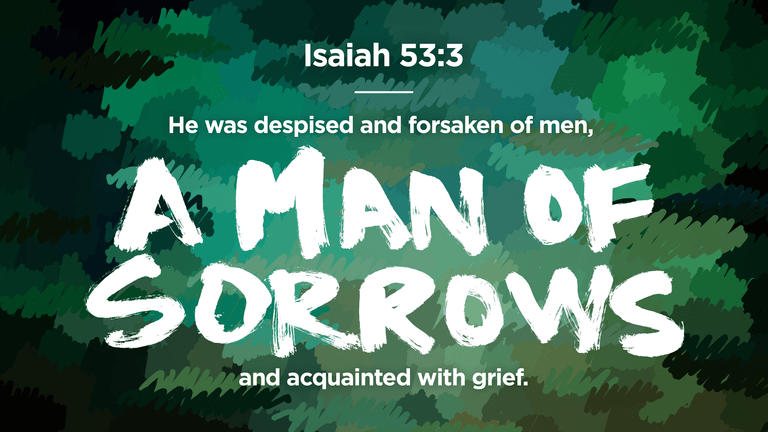
He did it for us—we are rescued forever if we obey him, trusting in his self-sacrifice for our forgiveness and eternal rescue. He was indeed a “man of sorrows, acquainted with grief.” He was insulted, rejected, tortured, murdered. Why? Because he knew it was the right thing to do, the plan that would offer life that lasts forever to those who would join him, walking his Road.

I wrote the poem “He Cries Too” when I was feeling overwhelmed with grief over the ongoing rejection of Jesus’ offer by someone I have prayed for for years. Writing it brought these truths to mind and comforted me: Jesus cares. Deeply! The Father cares. He understands our response of tears to these kinds of situations—our tears align with his own. And there is this promise that brings hope:

 5 Those who shed tears as they plant will shout for joy when they reap the harvest. 6 The one who weeps as he walks along, carrying his bag of seed, will certainly come in with a shout of joy, carrying his sheaves of grain. (Ps. 126:1 NET)

So let’s not give up! When we are hard-hit by sad news, let us keep on walking along, carrying our bag of seed, sowing where and as the Lord directs!  Joy will come with harvest, when it is his timing. What we need to do is follow his instructions with understanding. That brings him joy, and someday we will shout for joy! He loves his dear children, that is for sure.

Prayer Beside Lily Pads

Sitting by the lake, 
your peace rolls in,
rippling rows
dancing with
the water lilies.
They soak in sunshine,
pale yellow arms
reaching up
into light,
their green pads
waltzing with waves.

I watch and wait,
my soul-petals lifted,
loving you
and your creative love
of little things—
like lily pads,
like me.

I am home in Detroit now—it was a long day yesterday, cleaning up from vacation and driving south. But that time in Michigan’s Upper Peninsula brought wonderful gifts as we spent restful time in the forest by the  lake with family.

 And creation was singing, bringing to mind truths that strengthen and comfort me.

I sat beside the lake alone for an hour while all the others were out boating. I was chilly since the wind was blowing. Our Slater family Chalet is near the lagoon of Piatt Lake, and the unexpected thrill of dancing lily pads a few feet away  was worth a long watch-and-listen moment.

This meditation on creation and God’s attention to detail calms me now as I step back into the busyness of normal life at home. I am grateful!

The poem brings these Scriptures to mind—may they encourage you as they do me:

Be still before the LORD and wait patiently for him; do not fret when people succeed in their ways, when they carry out their wicked schemes. (Ps. 37:7 NIV)

He says, “Be still, and know that I am God; I will be exalted among the nations, I will be exalted in the earth.” (Ps. 46:10 NIV)

11 Then God said, “Let the land produce vegetation: seed-bearing plants and trees on the land that bear fruit with seed in it, according to their various kinds.” And it was so. 12 The land produced vegetation: plants bearing seed according to their kinds and trees bearing fruit with seed in it according to their kinds. And God saw that it was good.  (Gen. 1:11,12 NIV)

So God created mankind in his own image, in the image of God he created them; male and female he created them.  (Gen. 1:27 NIV)

The Spirit of God has made me; the breath of the Almighty gives me life. (Job 33:4 NIV)

And even the very hairs of your head are all numbered. (Matt. 10:30 NIV)

The intricacies of the water lilies, the fresh air breathing on them and on me, the complexity of my body and soul: Yes! The Creator, Yahweh, made them all!

13 For you formed my inward parts; you knitted me together in my mother’s womb. 14 I praise you, for I am fearfully and wonderfully made. Wonderful are your works; my soul knows it very well. 15 My frame was not hidden from you, when I was being made in secret, intricately woven in the depths of the earth. 16 Your eyes saw my unformed substance; in your book were written, every one of them, the days that were formed for me, when as yet there was none of them. 17 How precious to me are your thoughts, O God! How vast is the sum of them! 18 If I would count them, they are more than the sand. I awake, and I am still with you.  (Ps. 139:13-17 ESV)

These truths are for you too—he made you, he knows you, he gives you life. Be still and contemplate his meticulous attention to who you are and to the beauty of his creation. Be still and be soothed with wonder!

Taste the Glory

Taste the glory! 

The very Breath of God 
inhabits me, 
holds my soul, 
permeates my mind, 
transforms my heart. 

His touch is whisper--  
soft behind the conscious 
verbiage, constant 
inner conversation;  
my appetite is piqued. 

I listen to the wind, 
wait for sentience 
to unlock the starving 
fibers of my soul 
to free delight in Him. 

Heat gradually turns up 
to pulsing flame 
and then I hear my name, 
and hot and sweet, joy 
sizzles in my heart. 

I feel the edge of heaven 
at my feet. Someday 
I’ll float within 
the ocean of his love, 
possess as I’m possessed. 

His radiance will be  
my sun, burn fiery hot 
but never harm, 
just fill the world  
with glory. 

I taste the flame 
from far away
and find it pure
ambrosia fit for
children of the God…

An endless feast
is waiting. Now
I nibble as I can,
his love the flavor
of forever -- 

and I am satisfied.


Not only so, but we ourselves, who have the firstfruits of the Spirit, groan inwardly as we wait eagerly for our adoption to sonship, the redemption of our bodies. (Rom. 8:23 NIV)

Satisfy us in the morning with your unfailing love, that we may sing for joy and be glad all our days. (Ps. 90:14 NIV)

Heartfast!

I want to be 
heartfast.

Feet flat
knees flexed
legs taut
stand my ground.
Knocked hard
breath blown
wind gone
still be found
in place
intact
lungs filled
arms ready
eyes up
fixed firm.
He’s why
I’m steady

His hand
in mine
lifegrip
keeping me.
I grasp
His Word –
Truth told
lovingly,
not just
my own
to hold
but to share.
Love's light
bursts out
flings fire
everywhere.

I want to be
heartfast.

Inside
heart core
King’s seal
marks his own.
Won’t melt
can’t break
sure pledge
from his throne.
Centered
anchored
hearthold
riveted
heartsight
straight ahead
one prize
coveted --

Heartfast.

It was 26 years ago that I wrote that private testimony to what was my key goal: faithfulness to my King. That had been the driving impetus to my decision, when I was 12, to let go of childish wanderings that focused on other things. I truly decided to follow Jesus with all my heart, no turning back!

When we make a decision like that, we are actually moving into just the right position, one where the Master takes over direction and gives purpose to life. He also shows us what his Kingdom principles are, and mentors us daily so that we can learn to live them out. We are living in his Kingdom!

Contemplating this has given “The Lord’s Prayer” much more depth of meaning this year. I had heard this said before, but now it sings in my heart—especially after hearing Matt Maher’s song frequently:[1]

Father, let Your Kingdom come
Father, let Your will be done
On Earth as in Heaven
Right here in my heart

 Yes! That cry for the Kingdom to come, for Abba’s will to be done on earth as in heaven—through the years had I heard it as a cry out to God to rule the whole world and change it from chaos to perfect order. Adding those words about “my heart” to Jesus’ Prayer, in the song, broadens the impact in a way that is relevant to me right here, right now.

Dallas Willard has been one of those authors whose works have mentored me on my spiritual journey. There was a conference in 2013 to contemplate his teaching, and the book Living in Christ’s Presence was put together as conversations between him and John Ortberg during that time—a kind of resume of key aspects of Willards’ writings. The theme that struck me with renewed impact was this focus on the Kingdom:

“Jesus came as the kingdom bringer. His gospel was the availability of the kingdom. His purpose was to manifest the kingdom. His one command was to pursue the kingdom: ‘Seek ye first the kingdom of God.’ His one plan was to extend the kingdom. But many people do not understand the phrase the kingdom of God, because it’s in archaic language . . .We don’t have kings in this country.”[2]

The key, then, is understanding that a king has dominion. God rules: he has dominion. We are made in the image of God, so we have some personal dominion and we do love to exercise it: my rights, my property, my space . . . This is why, Willard points out, it is hard to lead people. They resent having their personal dominion infringed upon. Then too, kingdoms intersect. They overlap in marriages, neighborhoods, nations. As we know, this leads to issues. Exercise of dominion leads to conflicts in this world.[3]

So why would we want to be part of God’s kingdom? Why would we want it to rule?  Because it is good. No more brokenness. The King is completely good. As Jesus said, it is like finding treasure. Willard speaks to this:

“The right vision of the kingdom isn’t just theologically accurate. It will awaken tremendous desire in you . . . a vision of what is true that evokes a desire in us that is stronger than our desire for anything else. . . There’s the kingdom of God and there’s the kingdom of earth, and Jesus’ plan is to bring up there down here.”[4]

So when Jesus said that the kingdom would not be coming with signs that everyone could see, he was talking about God’s dominion taking over a person’s life, their personal dominion. He said that the kingdom is right there among them, accessible  (Luke 21:20,21). He also said that it belongs even to little kids (Luke 18:16), those little ones that wanted to come to him.

The kingdom, our King’s rule, is available. It is “in your midst.” What we have to do is become like the child who decides that he does not have to have his own way after all: no, Papa was right, I need to let him tell me what to do. Then the Kingdom takes over our training, and as we learn to listen to the King we become his emissaries, as well as his beloved children! We leave a broken kingdom to become citizens of the one ruled by love, justice, compassion. And it is a kingdom where we have intimacy with the King. We don’t have to go through his brothers, his mother, his other agents. He knows everything about us and still has patience and good purpose in all that he does in us and through us; he invites us to come to him whenever we want. It could not be better!

Now, our part is to be “heartfast!” Devoted to the King. Looking forward to the day when the Kingdom will not only be available to enter, but will be in charge over everything and everyone around us. No more chaos. No more pain. Right now we do all that the King tells us to, cooperating with him to spread the news about it just as his first disciples and apostles did (cf Acts 8:12; 28:23,31).

Since the word “kingdom” is not always understood today in our circles, we can use language that fits the circumstance and the setting. “Wouldn’t you love to live in a nation where there was no racism or favoritism? Wouldn’t you love to know a person who would accept you lovingly for who you are and empower you to leave behind everything that has been dragging you down, entering a new space where you find health as well as rules that bring peace?”

I am just so grateful to have the Father’s Kingdom right here in my heart! Many of you know that privilege too. May others grab that free entry as the good news about it spreads, price of entry already paid—by the King himself![i]


[1] The Lord’s Prayer (It’s Yours)

Matt MaherThe Lord’s Prayer (It’s Yours) • 2022

[2] Willard, Dallas. Living in Christ’s Presence: Final Words on Heaven and the Kingdom of God.  (IVP Books: Downers Grove IL, 2014).

[3] p. 56

[4] p. 57,58


[i] Image found at www.pexels.com, credit to pexels-lucasleonelsuarez-22608904

Coming Close!

At last the Tabernacle 
was in place,
curtains hung,
priests consecrated.
And in one awesome moment
your glory, Yahweh,
moved in.

Not even Moses
(who saw you
on the mountain)
could enter now.
Your presence packed the tent
with holy danger,
essence of you
made visible
to sentient humans:
fire, a mass of cloud
residing, lifting,
shifting terror into hearts.

"Don't come too near!
"Don't touch!

Perhaps a girlchild,
curious,
crept near the tent
to see what secrets
might be leaking
through the violet-
and red- and blue-
etched curtains
holding you in,
people out.
But access was barred.
No way in for her!

Her mother's hand
would have pulled her back.
"Not there, dear one!
It is Yahweh himself
come to live among us,
come to guide us
with his Presence.
Any who go near
undesignated,
unprepared,
will die!”

See the ringing robes
on Aaron?
See the oil drip
from his beard?
Only he can go
inside, into
the holy place
where God lives.
Stay back --
watch from here!"

Your glory
was so close,
so unknowable
except by peripheral vision...
but now you have become
Immanuel,
God with us!

And I, girlchild,
can run into the place
where you live
and, fearless,
call you "Daddy."
And you, on the mercy seat,
forgive my brazen heart,
my unawareness of
your majesty,
my ignorance of glory
(pressed down,
running over).
You wisely wait to show me
inklings of the truth
when I can bear it
and still come close,
chosen, set aside for you,
no curtain now
between us!

We are free to enter the Holy Place and talk personally to King Yahweh, our Father! It was not that way until Jesus changed the rules.

In 2001 (when I wrote “Coming Close”), Moïse and I were translating Exodus. The construction of the temple brought us multiple challenges as we tried to make the complicated details comprehensible in Nyarafolo. Before that, I had never had to digest how important it was that the place representing the Presence of the Holy One be completely “set apart.” It was literally inaccessible to ordinary people. Only designated priests, washed with water right there at the temple, clothed in prescribed garments hung with bells to announce who they were, and only when they had offered the required sacrifice for sin did they have the right to enter the Most Holy Place behind the curtain—and only at certain times. In Exodus 40 we are told that after the tabernacle had first been set up by Moses, not even Moses  could enter when the glory of Yahweh descended and filled it, confirming his approval and his Presence.

But when Jesus died, an incredible miracle happened that showed that he truly is the Way to God, the one who gives access to the Holy One. He was suffering on the cross, and creation was definitely reacting:

44 It was now about noon, and darkness came over the whole land until three in the afternoon, 45 for the sun stopped shining. And the curtain of the temple was torn in two. 46 Jesus called out with a loud voice, “Father, into your hands I commit my spirit.” When he had said this, he breathed his last. (Lk. 23:44-46 NIV)

That curtain that separated ordinary people from God’s Presence was torn! His self-sacrifice paid for sin once for all, and now we who have accepted that forgiveness can freely enter his Presence, drawing near to our God and Father! It is because he has made us “holy,” consecrated, set apart for him.  A new way into the Most Holy Place has been created. The author of Hebrews makes this truly explicit:

10 For God’s will was for us to be made holy by the sacrifice of the body of Jesus Christ, once for all time. 11 Under the old covenant, the priest stands and ministers before the altar day after day, offering the same sacrifices again and again, which can never take away sins. 12 But our High Priest offered himself to God as a single sacrifice for sins, good for all time. Then he sat down in the place of honor at God’s right hand. 13 There he waits until his enemies are humbled and made a footstool under his feet. 14 For by that one offering he forever made perfect those who are being made holy. 15 And the Holy Spirit also testifies that this is so. For he says, 16 “This is the new covenant I will make with my people on that day, says the LORD: I will put my laws in their hearts, and I will write them on their minds.” 17 Then he says, “I will never again remember their sins and lawless deeds.” 18 And when sins have been forgiven, there is no need to offer any more sacrifices.

19 And so, dear brothers and sisters, we can boldly enter heaven’s Most Holy Place because of the blood of Jesus. 20 By his death, Jesus opened a new and life-giving way through the curtain into the Most Holy Place. 21 And since we have a great High Priest who rules over God’s house, 22 let us go right into the presence of God with sincere hearts fully trusting him. For our guilty consciences have been sprinkled with Christ’s blood to make us clean, and our bodies have been washed with pure water.  (Heb. 10:1 NLT)

That says it all. Let us draw near—go right in—entering freely into God’s Presence whenever we want, delighting in his loving welcome! He is never too busy to receive us. And that applies to us individually and also when we are in a crowd, praying. Ever since the curtain was torn, the one prerequisite is that each person has accepted the complete forgiveness offered to them. So “let us go right into the presence of God with sincere hearts fully trusing him!” There is just one great High Priest, and he is our Abba, “Daddy”!

Did you go in today? He is never too busy to receive you. It is true that his glory as Eternal King is beyond anything we can imagine or handle on our own. But he has made us welcome by Jesus’ sacrifice and our acknowledgement of its essential work on our behalf. What a privilege—not to be neglected or held lightly!

Still Praying

Patience. 
Waiting.
Longing for movement
in the mist that blinds us,
sends us to the corner,
still praying.

Patience.
Loving.
Putting up with tantrums
and the obstinate
stupidities of loved ones,
still praying.

Patience.
Persisting.
Keeping on in spite of
constant irritations, worse yet,
in face of outright pain,
still praying.

Patience.
Hoping.
Willing to hold on
to “someday”, over the long haul,
no short-term gains in sight,
still praying.

Patience.
Trusting.
Knowing Yahweh to be good
clear through, coming through
for me and for his truth.
Still praying.

Patience.
Begging.
Asking him to radiate
his power into my deep inside,
so that I can endure.
Still praying.

Have you been there too? Stuck in a hard spot, begging for help? Deeply concerned for the physical or spiritual well-being of a loved one, crying out for intervention? Scared of the chaos that doesn’t go away in your country, city or church, pleading for resolution?

I wrote this poem over twenty years ago, and I’m still praying for some of the subjects I had in mind.

Whatever our concern, when we realize that divine action is desperately needed, if we believe that our God is King of Everything, we turn to him. Without shame we run to the Throne, throw ourselves down before him, and beg.  It’s called supplication or petition, but I sometimes find those words weak. In some cases I might bring before the King a petition, signed by friends or family or the pastor. But many times I am bowing before him, pleading in desperation.  And not just once; it can go on and on for years.

So does it even matter? Why are we told several times in the Word to practice this kind of prayer? And how can we do it constantly, without stopping?

And pray in the Spirit on all occasions with all kinds of prayers and requests. With this in mind, be alert and always keep on praying for all the Lord’s people. (Eph 6.18 NIV)

Wow! That certainly is comprehensive:  all occasions, all kinds of prayers, always keeping on praying, for all the Lord’s people! Is that possible to carry out?

Do not be anxious about anything, but in every situation, by prayer and petition, with thanksgiving, present your requests to God. (Phil 4:6 NIV)

Once again, we are to pray in every situation that hits our anxiety meter, calming it down by begging the King for resolution. Qualification: we are to be giving thanks!  Yes, instead of just “casting our cares” on him, we must remember to thank him for listening to us, for caring enough to let us keep on coming to him with our requests (notice that the word there is “requests,” not “imperative demands”). We are to come with confidence, aware that Abba will receive us and listen, grateful that he loves us and that he is already informed.

We know that because of the Prayer Circle that we contemplated in the last two blogs: the Spirit lives in us and tells Abba God what is going on and what concerns us, presenting our case; Jesus intercedes for us (Heb 7:25) as our advocate (1 John 2:1); the Father loves us and makes his home in us through the Spirit (John 14:23). He is Sovereign, and he will respond in accordance with his good purpose. Because he is the supreme ruler, is completely good, and is love in its true essence, his purpose is often beyond what we can see in our time and space. Much of his purpose is what we are waiting to see happen when he makes all things new, both human believers and this broken world. This is a confident assurance, “hope” that is based on solid truth. That is why the context of how he answers our prayers matters:

25 But if we hope for what we do not yet have, we wait for it patiently. 26 In the same way, the Spirit helps us in our weakness. We do not know what we ought to pray for, but the Spirit himself intercedes for us through wordless groans. 27 And he who searches our hearts knows the mind of the Spirit, because the Spirit intercedes for God’s people in accordance with the will of God. 28 And we know that in all things God works for the good of those who love him, who have been called according to his purpose. 29 For those God foreknew he also predestined to be conformed to the image of his Son, that he might be the firstborn among many brothers and sisters.  (Rom. 8:25–29 NIV)

God’s purpose is that we might be made like his Son, Jesus—fully mature, healthy, completely set apart for him and for what he plans. So we have an excellent reason to pray with patience, hoping and trusting and begging for his gift of strength and understanding of his will so that we can make it to the finish line. That is what Paul said he and his companions were doing:

For this reason, since the day we heard about you, we have not stopped praying for you. We continually ask God to fill you with the knowledge of his will through all the wisdom and understanding that the Spirit gives, 10 so that you may live a life worthy of the Lord and please him in every way: bearing fruit in every good work, growing in the knowledge of God, 11 being strengthened with all power according to his glorious might so that you may have great endurance and patience,  and giving joyful thanks to the Father, who has qualified you to share in the inheritance of his holy people in the kingdom of light. (Col 1:9-12 NIV)

When we are getting to know God more and more intimately, we learn how to live according to his purpose. It is important to see that this is an ongoing process, not a one-time-done job: We are bearing fruit, growing in knowing God, being strengthened, giving thanks. When we are relying on him, walking through life with an inner focus on him, there is natural conversation between us. Obviously, Paul and his coworkers did not blab prayers every minute of every day, although they were “continually” praying for these believers. As Charles F. Stanley puts it:

“First, the apostle did not mean that we should walk around all day mumbling to God. Rather, he taught that we can live in a constant attitude of intercession, even as we go about our daily routines. Of course, some days we’ll pray much more than others. But regardless of the particular items on our ‘to do’ list, we can maintain a natural, ongoing conversation with the Lord that encompasses our whole lives. God has called us to be people of prayer, and regular communication creates intimate fellowship with our Savior. . . When we develop a prayerful outlook, eventually our communication with the Lord becomes our first instinct in every situation — not only when we face a challenge or encounter a difficulty.”[1]

Imagine having a “constant attitude of intercession”! It could be like this: I hear voices shouting at each other in a house across the street; I pray. I meet up with a friend and am deeply hurt in the conversation; I bring it to my Abba, thanking him for consoling me when he reminds me that Jesus was insulted many times during his life on earth. I have been asking the Spirit to touch someone whose heart is closed to following Jesus, and they post yet one more thing on social media that shows their rigid stance; I bring it to the Prayer Circle and beg for intervention, thanking the Father that there is still an open relationship between me and that person. I am cooking a birthday cake for a grandchild and pray for their growth in their faith, thanking the Lord that they have already asked to be baptized.

That is how I want it to be! This is how the Word is speaking to me. May prayer be a “first instinct” in each situation!

It takes practice. It takes staying on alert as well as in communication with the Lord. One way I have found to practice it is to turn my morning walk into more than counting my steps; it has become a prayer walk too—praying for neighbors, the neighborhood, friends who come to mind, family, and thanking the Creator for all the flowers and trees. Mundane tasks can be turned into opportunities for thanksgiving and prayer as well. One excellent reminder that has come my way this week is this:

Whatever you do, work at it with all your heart, as working for the Lord, not for human masters (Col. 3:23 NIV)

When we can live like that, heart tuned in to this Prayer Circle that is praying for us, the Triune God who is our intercessor and guide, we are walking his Path in the right direction and praying “continually.” May it be so!


[1] From The Charles F. Stanley Life Principles Bible, 2nd Edition, NIV, https://www.thenivbible.com/blog/what-does-it-mean-pray-continually/ (1 Thessalonians 5:17)

Prayer Circle

I'm not saying 
I will beg the Father
on your behalf.
He already loves you.
When I intercede
I will be lifting you
into his lap for blessing,
or, hearing from the Spirit,
we will be conversing
about how much you've grown
and how to grow you next,
or I will be offering, as always,
my purity as covering
for your shame.

When you have needs
and come to him
for answers in my name,
I will corroborate
your right to ask
because you're mine,
because you love me.
And our one heart
will hold you close
within the circle
of these prayers.


This is amazing truth: Jesus prays for me!  Jesus prays for you, too! He intercedes for us, his followers! I am grateful, aware of my minute standing in this huge world. There are so many of us! Add to this the truth I contemplated last week, that the Spirit intercedes for us, and then think of God  himself, Yahweh, responding according to his purpose! I imagine it as a prayer circle as I work at unpacking the united conversation of the Trinity.

When I was a little girl growing up in the mountains of eastern Congo, breakfast with my missionary parents was a treasured moment. After breakfast they would be at work; we kids could run and play with friends, watched over by our Congolese nanny. It was at breakfast that we were together before the day began. They had a little box of Bible verses they wanted me and my younger brother Dwight to memorize. Reviewing them always highlighted one for me:

 Draw near to God and he will draw near to you.  (Jas. 4:8 RSV)

I clung to that as I grew up, wanting to know him the way my parents did. I was trying to “draw near,” often wondering if I was making progress. A.W. Tozer wrote about this in The Pursuit of God, a library book I read as a young teen at boarding school. It stirred me deeply. And then as an adult, this truth hit me:

Consequently he is able for all time to save those who draw near to God through him, since he always lives to make intercession for them. (Heb. 7:25 RSV)

My Lord Jesus is interceding for me! Because of my trust in Jesus, and his intercession showing his awareness of my struggles, I had been drawing near to God, learning increasingly how precious it is to know him better and better. And I knew that there are three persons in the Godhead. This revelation that Jesus would talk to the Father about me, standing up for me and explaining my needs, was a hard one to wrap my mind around. They talk to each other? How about the fact that our Advocate, the Spirit, is interceding for me too?

I began to relish this picture of the Trinity’s ongoing conversation about the believer who is attached to them. It is clear that the Spirit lives in that person to teach them how to live, to comfort them with his presence now that they are joined to God:

16 And I will ask the Father, and he will give you another advocate to help you and be with you forever– 17 the Spirit of truth. The world cannot accept him, because it neither sees him nor knows him. But you know him, for he lives with you and will be in you. 18 I will not leave you as orphans; I will come to you. 19 Before long, the world will not see me anymore, but you will see me. Because I live, you also will live. 20 On that day you will realize that I am in my Father, and you are in me, and I am in you . . .25 “All this I have spoken while still with you. 26 But the Advocate, the Holy Spirit, whom the Father will send in my name, will teach you all things and will remind you of everything I have said to you.  (Jn. 14:16-10, 25-26 NIV)

Jesus was painting a spiritual picture for his disciples: he is in the Father; the disciple is in Jesus (so he’s in the Father too), and Jesus is in the disciple through his Spirit living them. The Spirit helps them and intercedes for them:

 In the same way, the Spirit helps us in our weakness. We do not know what we ought to pray for, but the Spirit himself intercedes for us through wordless groans. 27 And he who searches our hearts knows the mind of the Spirit, because the Spirit intercedes for God’s people in accordance with the will of God. (Rom. 8:26,27 NIV)

I was contemplating that precious work of the Spirit in me, in us, last week in this blog. And I thought: yes, I will go on working through the inter-communication within the Trinity that is revealed to us, with Jesus interceding for us too. What a delight it was to go to church on Sunday and hear my pastor—my brother Brent Slater—circle through his explanation of Hebrews 13:8 to include this very truth that Jesus is, forever, our intercessor! He always intercedes, and never changes:

Consequently he is able for all time to save those who draw near to God through him, since he always lives to make intercession for them. (Heb. 7:25 RSV)

8 Jesus Christ is the same yesterday and today and forever. (Heb. 13:8 NIV)

He made it clear that we future believers were also the focus of his prayer:

20 “My prayer is not for them alone. I pray also for those who will believe in me through their message, (Jn. 17:20 NIV)

He specified that the Holy Spirit is our Advocate, (John 14:26), and his disciple John underlined that Jesus is our advocate too:

My dear children, I write this to you so that you will not sin. But if anybody does sin, we have an advocate with the Father– Jesus Christ, the Righteous One. (1 Jn. 2:1 NIV)

This should not stun us—it just fleshes out the meaning of the unity of the three Persons who are one God. Jesus wanted his disciples to understand this, and I am deeply grateful that he used his disciple John to share with future believers those truths about their unity and its deep importance for us.  His own words, handed down to us by John in John 14-17, explain that Jesus and his Father are “one,” living in each other. Jesus’ words came with authority from the Father, and the Father was doing his work through Jesus:

Don’t you believe that I am in the Father, and that the Father is in me? The words I say to you I do not speak on my own authority. Rather, it is the Father, living in me, who is doing his work. 11 Believe me when I say that I am in the Father and the Father is in me; or at least believe on the evidence of the works themselves. (Jn. 14:10 ,11 NIV)

A bit later he made it clear that he would be sending the Spirit to live in them, and all that he would communicate to them internally would also be coming through the Trinitarian line, from the Father and Jesus to the Spirit:

“I have much more to say to you, more than you can now bear. 13 But when he, the Spirit of truth, comes, he will guide you into all the truth. He will not speak on his own; he will speak only what he hears, and he will tell you what is yet to come. 14 He will glorify me because it is from me that he will receive what he will make known to you. 15 All that belongs to the Father is mine. That is why I said the Spirit will receive from me what he will make known to you.” (Jn. 16:12-15 NIV)

Jesus’ words of comfort and revelation to his loved ones were sealed for us in his prayer to his father, which closes that passage. A key theme is, again, this “oneness,” a unity of persons. He prayed:

 I will remain in the world no longer, but they are still in the world, and I am coming to you. Holy Father, protect them by the power of your name, the name you gave me, so that they may be one as we are one. (Jn. 17:11 NIV)

What a model of unity we are called to live up to: that constant unity that circles communication through the Spirit and Jesus and the Father! It is true that we can only do this through the power of God. His name represents the truth about him:  Yahweh means “the one who is.” He always has been and always will be. The way Pastor Brent put it in English, he is the “is-ing one”. And Jesus (whose name means “Yahweh saves”) is one with him, and the Spirit is their envoy to us, living in us.

Jesus replied, “Anyone who loves me will obey my teaching. My Father will love them, and we will come to them and make our home with them. (Jn. 14:23 NIV)

He said that he and the Father would come to his follower and make their home in that person. And how do they do that? They send their Spirit, the Spirit of truth:

And I will ask the Father, and he will give you another advocate to help you and be with you forever– 17 the Spirit of truth. The world cannot accept him, because it neither sees him nor knows him. But you know him, for he lives with you and will be in you. (Jn. 14:16 NIV)

What a wonder this is! When we turn to God and come to him through Jesus, cleansed from our wrong-doing, he wants us to develop right understanding of his truth, but also to grow in our fellowship with him. When you live with someone all the time, especially in a place as intimate as inside us (where nothing is hidden, and all our thoughts and emotions are communicated), you get to know each other and a deep friendship grows. Trust and companionship lead to living out what has been agreed on. The fellowship of the Trinity is like that, as in the prayer circle (described in the opening poem).

He gave us family as an image of what this could be like: a husband and wife who become one, unified, and children who grow up loved by their parents. Our problem is that we are broken and the image we pass on can send the wrong message. When it is union with God—with the Father, Son, and Spirit—we can grow constantly in our experience of this fellowship. And as we come closer and closer to him, he will keep on coming closer and closer to us. He longs for us to know him and be part of that wonder, that unity. In order for that to happen we need to dedicate ourselves to it:

And I set myself apart on their behalf, so that they too may be truly set apart. 20 “I am not praying only on their behalf, but also on behalf of those who believe in me through their testimony, 21 that they will all be one, just as you, Father, are in me and I am in you. I pray that they will be in us, so that the world will believe that you sent me. (Jn. 17:19-21 NET)

Most English translations of what Jesus said here say “I sanctify myself . . .so that they may sanctify themselves,” or else they use the word consecrate. All these words mean that God’s people must be “set apart” for God’s purpose, just as the priests were in order to serve and worship in the temple, where their furniture and tools were also “set apart” for that purpose. When we dedicate ourselves to follow Jesus, to draw near to the Father and to communicate with him through the Spirit by praying in Jesus’ name (John 14:13,14) and obeying his commands (John 14:23), then we can be “one” with God.

This then makes it possible for all those who are deeply attached to him this way to be one with each other, as well. May it be so!

I have given them the glory that you gave me, that they may be one as we are one– (Jn. 17:22 NIV)

The Spirit Presents My Case

I know how you could work this out, Lord— 

bringing some particular pressure to bear,

inserting in their mind this realization,

convicting them of sin and errors.

But you have not been taking my advice!

My hours in prayer, my carefully concocted plots,

have seemed to come to nothing, just so much

dust in light beams, dissipating, gone.

I’m growing a suspicion that you’ve smiled

at my smart strategies, my wishful webs,

seeing through them to the driving underlying

heartthrob in each one, the true main thing.

And, Spirit interceding for each need, each goal,

you’ve been about your business all along,

accomplishing your purposes your way,

working in each instance for my good!

Once more I’ve had an inkling of  

your crisis management, the way you draw on

resources I can’t know about, can’t work into my plans.

Who has ever told you something new, unknown?

Who has clarified your thinking, made you wise?

My Father, once again I’m mesmerized  

by how you do your weaving, subtle but intense,

and in your timing wisely work things out—

not always how I thought you would,

but you do give me strength when I am weak.

I hear you urging me to watch and wait. Your Spirit

guides, consoles me, tells you what is at stake.

The interconnectedness of the Trinity is a truth that changes everything for those of us who are attached to our God. He made us and watches over us, he is with us always, he lives in us, and at the same time he rules the universe. He rescued us fallen humans by becoming human and dying for us, but lives forever, and never left his throne while accomplishing that plan. He then made a way for us to have constant comfort and guidance and also instant access to his throne: his Spirit lives in each of his children. He coaches us, and consoles us when we are hurting. But as part of the Trinity, he also communicates instantly with God the Father; they are always on the same wavelength, with nothing ever interrupting them.

We humans are made “in his image” (Genesis 1:27). We have a physical aspect and a spiritual one, and our mind and “heart” work together, each majoring on certain tasks. But we are each one person. The different parts of our person work together.

Imagine we could witness the intercommunication happening in our own person:

My eyes see a post or an action, my heart leaps in compassion or anxiety, my mind thinks: how on earth can I take care of this? what should I do? respond? intervene?, my spirit cries out to Yahweh: Abba, help! Then, I respond as I am guided: I speak words out loud or write them and send/post them, or else wait in silence as I’ve been told to do. Depending on what happened my arms may reach out to act.

Thinking this through helps me understand better the astonishing revelation that the Holy Spirit, living in us, is actually our Advocate. He presents our case, our petition, to the Judge and pleads on our behalf—but does it in a way aligned with that Ruler’s will. He knows the Lord’s ultimate purpose and how that applies in the moment. He also  knows the supplicant’s need and what is really at stake so is advocating for their good.

This is the Scripture that most clearly explains the process:

26 In the same way, the Spirit helps us in our weakness. We do not know what we ought to pray for, but the Spirit himself intercedes for us through wordless groans. 27 And he who searches our hearts knows the mind of the Spirit, because the Spirit intercedes for God’s people in accordance with the will of God. 28 And we know that in all things God works for the good of those who love him, who have been called according to his purpose. 29 For those God foreknew he also predestined to be conformed to the image of his Son, that he might be the firstborn among many brothers and sisters. (Rom. 8:26-29 NIV)

There are moments when we turn to our Lord and cry out for him to intervene, but are at a loss when it comes to seeing how our prayer could actually be answered. We find ourselves pleading, babbling. What we are unaware of is that the Spirit living in us is reinterpreting our petition and passing it on to the Father in a way that we cannot hear (passionately, without words), but he communicates the true need of the pray-er as understood by the One who directs all things for the good of his children. And that person, Yahweh, is searching our hearts to connect with the Spirit and hear what’s up.

And he who searches our hearts knows the mind of the Spirit, because the Spirit intercedes for God’s people in accordance with the will of God. (Rom. 8:27 NIV)

And his ultimate purpose is that we become like Jesus. That is not usually our focus when we cry out in desperation. We want a certain outcome in this world. A mother praying for her wandering child wants to see them choose the Way, the Truth and the Life rather than the call of the culture or their wrong desires. When a man’s wife is severely injured in an accident he desperately wants to see her healed. When a conflict between factions erupts in war in a person’s country, they cry out for peaceful resolution and personal protection.

So what if the answer does not come right away, or the way they thought it would? That is one of our toughest struggles, waiting longer, or accepting a different outcome than what we longed to see. Our one solid comfort is knowing that we are loved by the Sovereign, and have direct communication with him at all times because of this union with him: his Spirit inhabiting us and advocating for us. We are never cut off from God. He is never unaware of our prayer, or of our weakness or need when we cannot even articulate a prayer.

He is for us, he is not against us. He is completely good, and he is love. He loves us with unending love that has no limits. Because of that, he wants us to grow beyond our current frailties into completely healthy strong sons and daughters like his Son, Jesus. Looking at it that way, our response must be to trust him. We don’t need to be afraid to let him know what we are dealing with and what we long to see happen—he wants us to tell him, at least to open ourselves to him when we cannot find words. The Spirit will interpret what is in our hearts and communicate it. We can run to him with gratitude because he always listens, his purposes for us are excellent, and he is our loving Abba. These truths allow us to be glad we have this close relationship with him, no matter what else we are dealing with:

Rejoice always, 17 pray continually, 18 give thanks in all circumstances; for this is God’s will for you in Christ Jesus. (1 Thess. 5:16 NIV)

Prayer When Wiped Out

I admit it: I’m wiped out. 
Not enough sleep? Too much stress?
Constant distractions? Deadlines?
Whatever it is, you remind me:
you restore my soul, my life,
my being: me, who I am.
Your Spirit breathes calm words
into my consciousness,
pumps gracious serum of truth
into my arteries. I breathe.
And you fill my inner being
with the fact that you here.
And where you are, there is health.
there is health. And love.
I let go and listen.

Your essence of purity dissolves
the clinging dirt accumulated
by walking this narrow path
surrounded by garbage.
Your serenity speaks peace
inside the swirling mist
of multiple concerns, responsibilities.
The reminders of who you are
(most powerful of all, High King,
my friend and my dear Abba)
crumples my fears into a wad
of inconsequential papers
to throw away, knowing that
if you keep track of each gray hair
that leaves my head each morning,
you also know about these things.
And care. And you are good—
all good. It is enough.

You’ve been there too—in those moments when a concatenation of tough stuff leaves you feeling wiped out. One of the best ways to deal with it is to remember that you are not alone! If you have entered God’s Family, you have become “united” with him, “one” with him. Yes, it’s hard to understand. But our Lord Jesus himself promised that he would not leave us alone. No! He would come to us, living in us through his Spirit:

Then I will ask the Father, and he will give you another Advocate to be with you forever– 17 the Spirit of truth, whom the world cannot accept, because it does not see him or know him. But you know him, because he resides with you and will be in you. 18 “I will not abandon you as orphans, I will come to you.  (Jn. 14:16-18 NET)

He is our eternal Advocate! There is a lot of discussion about how to translate this special name for the Spirit, “paraclete” in the Greek. English doesn’t have one word with all of the meaning wrapped in the Greek word, so we get “Comforter” or “Counselor” or “Helper” or “Advocate”. According to the Oxford Languages Dictionary, an advocate is “a person who publicly supports or recommends a particular cause or policy.” Similar words cited are champion, upholder, supporter, backer, promoter. I like understanding it that way, especially “upholder.”

The main thing to hold onto is that the Spirit does all that is connoted by these titles, comforting and counseling and helping us. And he lives in us. We don’t have to call him in his office and make an appointment. That makes all the difference.

Jesus also said that we “know him”!  How does that happen? Well, when someone lives with you and you are in the same family, you talk to each other—especially when you are in a love relationship. You share delights and concerns. If you don’t, you pass like shadows on a sidewalk. Your relationship is a legal one, but not at all personal or intimate. So to know the Spirit we need to pay attention to him and interact with him. He may be the one to address us about something, prompting us to take action or change an attitude. When we download our concerns, he hears; we need to listen to his response.

For me his answer is usually a reminder of promises or commandments in the Word. When I wrote my “wiped out” conversation above, I needed to take time away from the distractions that were wearing me out. I listened, and was restored, because I knew I was not alone; instead, deep inside I was being reminded that the King of the Universe, my Rescuer, was taking care of me. He has promised to be with me, and explained that his Spirit would be constantly living in me, at work in me.  I could feel the distresses being swept into a dustpan and thrown out. I knew that he had been there, aware, every stressful moment. Nothing I was saying was new to him, but he wanted me to confide in him. No detail escapes him, and I was reminded:

Even all the hairs on your head are numbered. (Matt. 10:30 NET)

I lose a bunch of hairs into my brush every  morning! What attention he pays to his own, knowing even how many there were! So, do I pay attention to him and all the comfort and counsel he gives? It has to be a two-way street to be a real relationship.

When I was growing up as a missionary kid, I loved participating in the regular “singspirations” that the local mission team would have. A hymn that my mom always wanted us to sing became one that often melts into my “inner jukebox” when I’m walking in the early morning:

I come to the garden alone,
While the dew is still on the roses,
And the voice I hear falling on my ear
The Son of God discloses.
And He walks with me, and He talks with me,
And He tells me I am His own;
And the joy we share as we tarry there,
None other has ever known.[1]

When as a young teen at boarding school I began that early morning search for quiet outdoors, I would hum it. And I wondered what it meant to Mom, especially that shared joy that “none other has ever known.” Knowing Mom and her encouragement to us to spend time with the Lord, I think these words communicate that it was an intimate relationship, his with his Lord, so personal that others could not know it the way he did—yet they could be having their own personal relationship that was precious to them. Just private, interior, and treasured by each one.

Recently I was struck deeply by this farewell blessing that Paul wrote to the Corinthians:

May the grace of the Lord Jesus Christ, and the love of God, and the fellowship of the Holy Spirit be with you all. (2 Cor. 13:14 NIV)

Jesus’ grace, the way he gave me a gift I in no way deserve—salvation—is a precious truth. So is the love of God, shown in so many ways by the One whose very essence is love. But how about the “fellowship of the Holy Spirit”? I meditated on that as I walked outdoors one morning, and felt a strong reference to the deep relationship I have with this person who lives in me, listens to me, and prompts me to move in ways that matter. So do you, each one of you who knows him.

But when I looked up the verse in commentaries I found lots of discussion about the meaning of that last phrase about the fellowship of the Spirit. It could refer to this intimate relationship that a true believer has with the Spirit of God, the Spirit of Jesus,  the Holy Spirit who lives in them. It could also refer to the fellowship that believers have with each other because they are each inhabited by the Spriti. I appreciate the voices that approve both meanings, and explain the order of the names of the Trinity with their attributes in that verse in 2 Corinthians 13:14 like this commentary does:

The closing call for God’s blessing is especially significant because it is the only place in the NT where God the Father, Son and Holy Spirit are explicitly mentioned together in such a blessing. Paul highlights the grace of the Lord Jesus Christ (cf. 8:9), the love of God (supremely demonstrated in reconciling the world to himself in Christ; cf. 5:18–21) and the fellowship of the Holy Spirit (i.e. participation in the Holy Spirit through being his temple and participation in the fellowship of believers created by him).[2]

Yes, both kinds of fellowshiip are key facets of believers being the home residence of the Spirit! Again, the Oxford Languages Dictionary gives a definition of “fellowship” that can strengthen how we understand it: “friendly association, especially with people who share one’s interests.”

The Spirit is in us to unite us with our Father and Savior, and keep us guided according to his purposes, as well as comforted when we need it. We need to interact, to take advantage of this relationship. When we are together with another true believer, we are bonded together by our faith and commitment to our Lord. We’ve got to remember this and work towards more mutual acceptance and understanding—our differences should not divide us:

Therefore, as God’s chosen people, holy and dearly loved, clothe yourselves with compassion, kindness, humility, gentleness and patience. 13 Bear with each other and forgive one another if any of you has a grievance against someone. Forgive as the Lord forgave you. (Col. 3:12 NIV)

Sometimes this may seem impossible—way too idealistic. But it depends on whether we try to live up to the Family standards that we’ve been given. When we put up with each other like this, with forgiveness and gentleness, we can maintain a harmonious and mutually respectful relationship. We have fellowship through the Spirit who lives in each of us. At the same time, we have this very personal interaction with God’s Spirit, with the benediction that comes from his ongoing work in us. It does take humility, compassionate patience and receptivity to what the Spirit communicates.

What a gift! We are never alone, and always have access to the Throne. Our Advocate is intimately connected to us, living in us, counseling us. Pentecost was the beginning of the fulfillment of Jesus’ promise to never abandon us. That means that even our “normal” days are spent with him—not only crises when we cry out for help.

This is our daily, moment by moment, source of peace, restoration, and guidance. Thank you, Lord Jesus, Father and Holy Spirit!


[1] Charles A. Miles

[2] Colin G. Kruse, “2 Corinthians,” in New Bible Commentary: 21st Century Edition, ed. D. A. Carson et al., 4th ed. (Leicester, England; Downers Grove, IL: Inter-Varsity Press, 1994), 1205.