Call for Urgent Care

Your body, Lord, needs urgent care! 
Right hand fights against its own left hand.
Ears hear different music, east and west.
Eyes are bloodshot, crossed and blurred,
seeing only what each wants to see.
Lungs breathe in polluted air
whose fumes push out the Spirit.
Legs crossed, the veins bulge, blocked;
feet stay firmly rooted, passion lost.
The mouth spouts careless, cutting words
instead of truth in love, and the weak heart
is full of palpitations, missing beats.

Come Lord! Do surgery now!
Scrape out accumulated dirt,
untwist the tangled nerve connections!
Transplant organs that no longer function!
Purify the centers in the brain
that create speech and govern all the limbs!
Transfuse the blood of your good Son
into the circulation network, make it hum
instead with love and motivation –
so that limbs uncross and run,
so that arms coordinate and reach to hug!
Come do your surgery! Yes Lord, come!

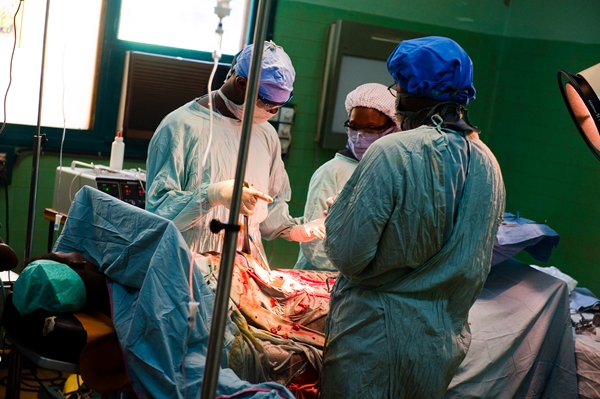
I was talking with a friend and she mentioned that it often startles her that I use surgical vocabulary in some of my blogs—and we talked about the influence my dad  (Dr. Dwight M. Slater) the surgeon had on me. He would come home for lunch and tell us kids about the interesting surgery he had done that morning, sometimes grabbing a piece of paper to draw out the process he had had to go through to remove a tumor or repair a body part. I was used to that talk, even “blood and guts” stories while we were eating! Back then I thought that I would probably be a doctor some day too, so when I became a teen I began to assist Dad in surgery. Remember—we were in northern Côte d’Ivoire, and this was the ‘60s when he had to train all his assistants, whether they had ever attended school or not.

I was fascinated by the manoevers the surgical team made together, but most of all by Dad’s essential tool: the scalpel. He had shared many times, when giving his testimony in U.S. churches, that it was the tool in his hand to be used by God (like Moses’ staff, Exodus 4:2).

Then yesterday while spending a few more minutes sorting through files of sermon notes that Dad left behind, I found a series he had given at “Glory Week,” a week set aside at Ivory Coast Academy (MK boarding school) for spiritual emphasis. I can’t wait to share his insights; some of them truly apply to this week’s contemplation of the need for “urgent care” when the Christian community, the Body of Christ, is infected with serious dissensions. This is not the first time in history when we feel it. All we need to do is study the source of all the divisions that have produced separations, sometimes the closing of a church.  It’s true that we must stand firm for truth, but we must also be willing to admit our own failing to comply with our Lord’s commands and our sheltering of such sin in our hearts. Here are some gleanings from Dad’s words:

“If there is one tool or instrument that characterizes all of surgery, it is the knife. What if a person is wheeled into the OR, has anesthesia, the instruments are put out on the table, needles and sutures laid out, the OR light turned on. Later he is wheeled out of surgery and talks to his relatives and friends. But one thing was missing—no knife was used! No incision was made, no diseased tissue was removed. Here is why that person didn’t have surgery: the knife didn’t touch him. It was all just a big show. Nothing really happened. The disease is still there.

“Too often a Christian goes through all the show of confession and repentance without ever letting the Holy Spirit of God actually cut sin out of their life. They may admit that there is surgery needed, go to the altar and kneel, but the knife is not there. A knife must be used!”

Dad then went into Jesus’ teaching about the use of a knife to remove sin in Matthew 5:29,30. You know what shocking words he used: if your eye or hand offends you, cut it off! What Jesus was underlining is that sin must be removed for the rest of the body to be saved from the consequences of its rot.

It is true! If you have a cancerous tumor and you admit it is there, but refuse all surgery or chemical treatment, there is no hope for recovery.

When we leap to judgment and assign wicked motives to a Brother or Sister who understands Scripture’s application differently from us, and “shout” hurtful words at them without engaging in healthy discussion, we are not acting in line with the kind of spiritual fruit we are to be living out:

But the fruit of the Spirit is love, joy, peace, patience, kindness, goodness, faithfulness, 23 gentleness, and self-control. Against such things there is no law. (Gal. 5:22 NET)

4 Love is patient, love is kind, it is not envious. Love does not brag, it is not puffed up. 5 It is not rude, it is not self-serving, it is not easily angered or resentful. 6 It is not glad about injustice, but rejoices in the truth. 7 It bears all things, believes all things, hopes all things, endures all things. (1 Cor. 13:4-6 NET)

We must not just say we know all that, then walk away from the surgery table. Let’s dive into the Word of God and ask our Lord to use it to surgically remove all rotten fruit, all unloving characteristics from our inner being. His Word can do it: it is the sharpest scalpel ever! His Spirit already knows about any sin we are conveniently hiding, and he will apply the holy scalpel to bring us to health and fruitfulness! 

For the word of God is living and active and sharper than any double-edged sword, piercing even to the point of dividing soul from spirit, and joints from marrow; it is able to judge the desires and thoughts of the heart. And no creature is hidden from God, but everything is naked and exposed to the eyes of him to whom we must render an account. (Heb. 4:12-13 NET)

*Photo credit: Josh Wohlgemut

Unnamed but Chosen

She lived in a land of darkness 
oppressed by cruel foreigners.
She carried deep personal shame:
“barren” was her common name.
No hope for a descendant!
No sign she could conceive!

Her husband had not spurned her,
his name must have consoled her:
“place of rest: Manoah.”
So she was quick to tell him
that a God-sent messenger
had brought her stunning news!

What? She would birth a son,
a unique one, set apart
even before he was born
to begin to rescue Israel
from the enemy Philistines!
He would be consecrated
to serve El, their fathers’ God!

She recognized awesomeness,
a supernatural quality,
in this envoy sent from God!
She believed and so she hurried
to pass on the message
to Manoah—not all details,
but a child was coming,
a Nazirite, dedicated in her womb!

Manoah accepted her news,
but needed it signed, sealed,
delivered straight to him.
So he prayed, and Yahweh
heard and sent his envoy
once again—to the woman!
She was unnamed, but chosen
to be herald of the news!

She was out there on their farm
when the “man of God”
showed up again, to her.
This was true, she knew:
he was answered prayer,
confirmation that God heard.
Manoah rose from his rest,
followed his wife to the farm.
Yes! The envoy had returned!

To raise the coming child,
the messenger explained,
his wife must be a Nazirite
right now, her pregnancy
a preparation of their son.
She too was set apart,and known,
essential to God Yahweh’s plan!

The messenger insisted that
he too must stay unnamed,
his name was unintelligible
to someone like Manoah.
He also refused to dine;
instead, he said, burn the food
as sacrifice to Yahweh!

So the couple set on fire
the goat and the grain, on a rock.
As flames rose to the sky
so did the envoy! Shock!
It was all clear: this showed
he was no ordinary man!
They fell face down in awe!
Manoah feared they’d die,
but his wise wife pointed out
the truth: their sacrifice
had been accepted; the rest
was in Yahweh’s great hand.

She remained unnamed
but no longer shamed!
She followed through
and gave birth to a son
named after the Sun,
then did what she could
to teach him to not follow
gods worshiped by the others
around them in those days.

It was now time for Yahweh
to stir up some trouble—the kind
that would remind his people
he was still in charge.
It was a mysterious plan
they would not understand.

I find it hard to read through the Book of Judges; it is so full of despair and violence. But then there are those break-through moments when the God of infinite patience and love finds a way to shake things up and turn his people back to worship him, Yahweh.

This time the unnamed woman, “Manoah’s wife,” caught my attention (see Judges 13). Unlike Sarah and Hannah who also had unexpected pregnancies, she is kept in the background. No name! Just the wife of a man who is identified! Yet God sent his messenger to her, and knew that she would carry through. She did the right thing: she ran to tell her husband and involved him in the story. But it was harder for him to recognize the supernatural nature of the messenger, and that showed up when he offered to feed him, then asked him his name. Names are important, but this messenger was underlining his supernatural origin: no way would he reveal his name, since it was way beyond Manoah’s understanding. Finally Manoah “got it” when the man rose into the sky in the sacrificial flames.

So why does the woman remain nameless? She was important. She had been given the information that her son would “begin” the rescue of Israel from the Philistines—and that is what Samson, her son did. He never conquered them completely, to deliver his people. He slipped and fell in lustful ways and unwisely betrayed the secret to his divinely-endowed strength. His role was to begin to rattle boththe  enemy and the oppressed. Yahweh was reminding them of his role in their background and in hope for their future.

His mother, still with no name,  was a believer in the God of their ancestors.  She recognized  that the angel came from El, the generic name of their God, spontaneously while her husband did not. She knew about the rules for dedication to El’s service as a Nazirite, which was usually a temporary vow with dietary restrictions, and she was willing to commit to them. The angel spoke of Yahweh when he told the couple to sacrifice their food to Yahweh, but the only time one of the couple actually used the revealed name of God, “Yahweh,” was when Manoah’s wife said to him: “If Yahweh wanted to kill us, he would not have accepted the burnt offering and the grain offering from us.” (NET 13:14).[1] She was stepping into a new relationship with Yahweh, trusting his erasure of her sterility and his gift through her of a deliverer for his people.

She named her son “Samson,” a common name in that region which in Hebrew meant something like “sun-like.” I wonder if she hoped he would bring light into their darkness. So how did she feel when he fell in love with a Philistine woman, a daughter from the ungodly oppressers of her people? She must have wondered how God was going to use this strong son of hers, as faulty as he was. When God had sent other leaders, it had been in response to Israel “calling out to God.” In this case, his people were actually silent. How would he act? Then when God began to empower her son (14:6) it was not what she must have expected: he won a fight with a violent lion! And the story goes on.

What we do know is that this woman was a chosen vessel of Yahweh to begin restoring his people to freedom. Manoah is named, so the reader would think he was going to be a hero, but instead “this is an element of the narrator’s art in leading you to expect one thing only to discover another.”[i] What we learn is that God cares for people that society sees as insignificant, and he often chooses to use them for his big purpose.

Any of us who have read this far and feel like we are insignificant, even nameless, actors in God’s story can take inspiration from the role of Manoah’s wife. She stands out as a woman of faith and obedience to her Lord, Yahweh, the God that her people were no longer following with devotion. May we follow her example! We don’t need to be recognized, to have fame. We cannot know what God will do as a result of our daily commitment to him. But we do know that he uses his devoted people—even wives who find themselves in the background—for his purposes! And that is good.


[1] Robert B. Chisholm Jr., A Commentary on Judges and Ruth: Commentary, Kregel Exegetical Library (Grand Rapids, MI: Kregel Academic, 2013), 401–402.


[i] Butler, (2009:323) cited by Mary J. Evans, Judges and Ruth: An Introduction and Commentary, ed. David G. Firth and Tremper III Longman, vol. 7, Tyndale Old Testament Commentaries (London: Inter-Varsity Press, 2017), 146.

Tangible Intangibles

to grasp the love that 
cannot be held
to know the love that
cannot be known
to be rooted in love that
sent God’ Chosen
to die by torture

yes, even this is possible
although incomprehensible
even this can be accomplished
although never finished
even this will be my goal
although it hangs on
things yet unseen

I will dig deep into what is
unfathomable
explore the territory that
is unending
grow green and produce fruit
unimaginable
but God’s true plan

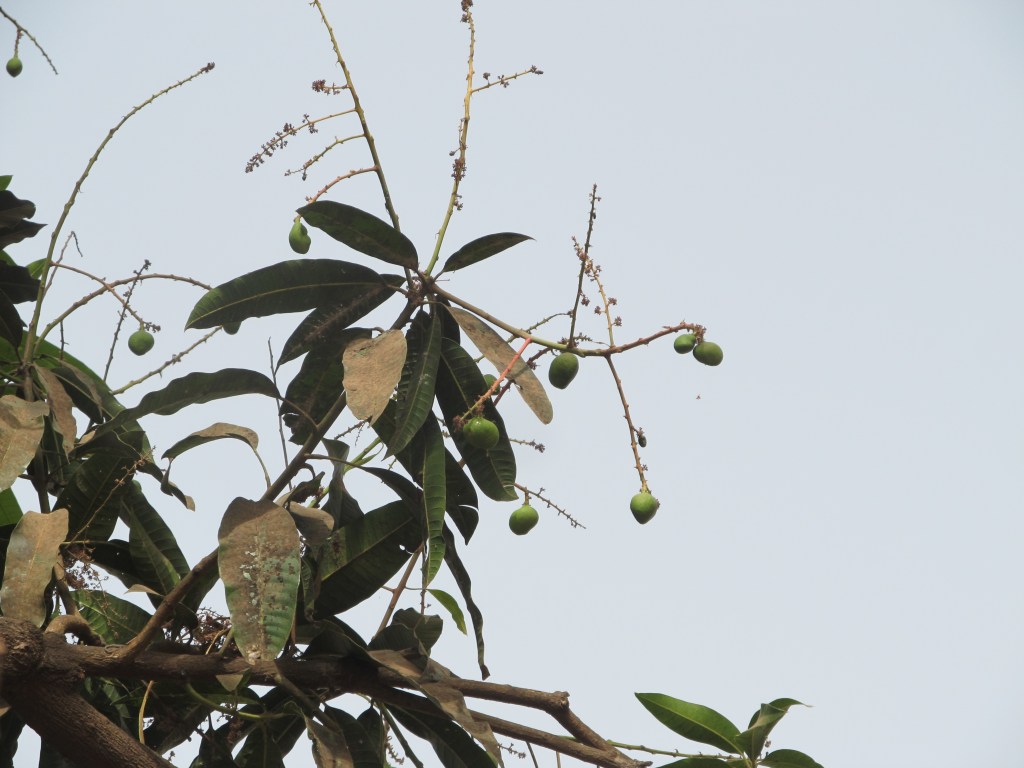
If I had been able to go back to my other home, Ferkessédougou, Côte d’Ivoire, this year, I would be once again searching the numerous mango trees for the tiny buds that can barely be seen. They are green, so small that they are hard to notice unless they are silhouetted against the sky. But they bring hope, because in a few weeks they will be large and turning orange and yellow, some of them ready to bring delight to the taste buds.

They appear in the dry season and you need to wait  for the “mango rains” to come in March so that fruit begins to ripen, soon dropping from the trees if it hasn’t been picked. Can you tell we miss the harvest?

It strikes me that even though the mangoes are not yet there as edible fruit, we know they are coming. We can imagine the juice running down our arms when we grab one off the tree, even if now we only see a minute beginning.

Our faith in the supernatural operates much the same way.  The entire reality of God’s being and character are beyond our human comprehension. We can see fingerprints of what God has been doing, even when we didn’t realize at the time what the effects would be. Looking back is easier—like when you bite into that ripe mango! You can see what was in process. Looking forward requires trust, and it keeps growing as we notice what he has done and is now doing. Digging into his Word, we learn more and more about him but also draw closer to him, understanding who he is and that he lives in us. We are growing.

Some things are like buds and still await full understanding. They can seem intangible because they far surpass our ability to wrap our minds around them—like the greatness of God who made and sustains the universe, like the limitless extent of his love that desires the intimacy of living inside us, like his rule over the world when we see evil continue to impact it. We are finite; he is infinite. We are created; he is the Creator. We are citizens of heaven but have not yet set foot there. We notice his promptings, sometimes even his clear direction, but we cannot yet know all of his purposes in and through us.

It takes faith and acknowledgement of what is now intangible, complete trust in the Sovereign Yahweh who is also loving Father to his sons and daughters. May we turn over our tiny green buds of hope and faith, putting them in his hands, to be ripened into the fruit he desires. He is ready to pour into us all that we need for growth! So let us keep on keeping on, pressing forward to understand more and more what is true and promotes our spiritual growth—especially to know God with greater understanding and intimacy, experiencing his love and faithfulness as we walk through life following his direction, nourished by his Word!

For now we see in a mirror indirectly, but then we will see face to face. Now I know in part, but then I will know fully, just as I have been fully known. (1 Cor. 13:12 NET)

The LORD takes delight in his faithful followers, and in those who wait for his loyal love. (Ps. 147:11 NET)

See what sort of love the Father has given to us: that we should be called God’s children– and indeed we are!  (1 Jn. 3:1a NET)

And we have come to know and to believe the love that God has in us. God is love, and the one who resides in love resides in God, and God resides in him. (1 Jn. 4:16 NET)

And we know that the Son of God has come and has given us insight to know him who is true, and we are in him who is true, in his Son Jesus Christ. This one is the true God and eternal life. (1 Jn. 5:20 NET)

The Cleansing

I stand in the wind 
while it whips along,
plastering my body
with fine dust,
the powdered aftermath
of life and death
and thirsty earth.
Deadwood and seedpods
hit the roof, my legs.
Birds of prey swoop overhead
looking for the innocent,
uncovered, to devour.

O Wind of God,
protect your own.
Hover over, cover us.
Breath of Life, strengthen us.
Heart of Sun, empower us:
your heat, our hope;
your air, our life;
your still small voice
our Word of choice,
while all around us
innuendo and
assumptions swirl.


I brush dust from my face
as His breeze flies by,
consoles my soul
then shivers all the trees
with swoops of power.
The Spirit breathes
and lifts away debris.
The land is swept,
cleaned up and clarified.
I watch. I wait. I listen for
the Whisper of
my heart’s desire.

Be still and know
that I am God,
and I still rule.
Wait patiently for me.
Let go of your concern
regarding those
whose schemes succeed.
My strength is
all you need.
I fight for you;
and you, my child,
need only to be still.


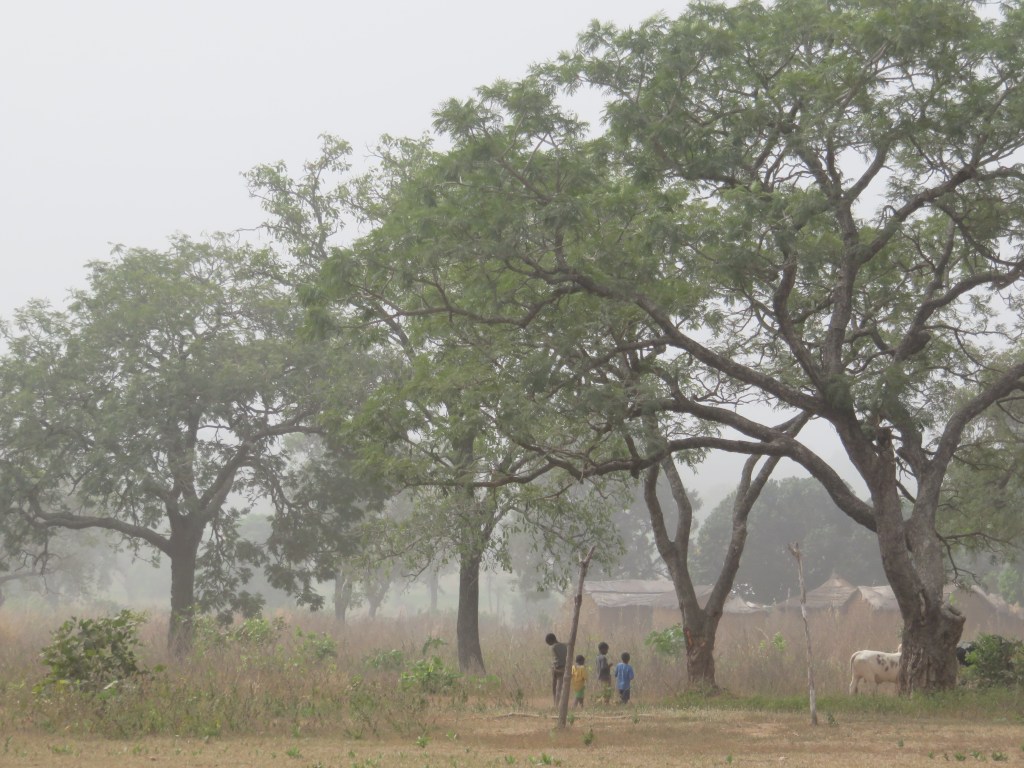
In the region south of the Sahara where we lived in Côte d’Ivoire, December through February there is an intense dry season, harmattan. The night wind of the desert blows south, picking up other dirt and debris along the way, dropping some of it like rusty powdered sugar on whatever it passes over. It was a significant symbol of chaos all around. When I would spend time in my yard for quiet, early on Saturdays, I would be brushed and reddened by the dusty wind myself.

Yes, chaos was a reality in my life in 2010 when I wrote the poem, and it is all around today. So this word from the God who is King of the Universe quiets my anxiety once again.

The Spirit is literally the “breath” of God in the Hebrew language, blowing over the waters (in Genesis 1:2), coming down on God’s servants to speak to them and through them (as in 2 Chron. 24.20). Picturing his work in the harmattan wind that was picking up the dirt of the nations, lifting the plastic bags dumped on the public spaces and sweeping them onto the roads and into the gutters, this brought me reminders that the wind of God is always at work—even when all we notice is the fractured world around us!

So we need to review what he told us we should do when we are frightened, like what he said to Israel when they were blocked in their flight from Egypt by the Red Sea, and Pharaoh was chasing them down:

The LORD will fight for you; you need only to be still." (Exod. 14:14 NIV)

Ah! Just be still!

He said this to David as well when he was distressed by evil actions around him:

Be still before the LORD and wait patiently for him; fret not yourself over the one who prospers in his way, over the man who carries out evil devices! (Ps. 37:7 ESV)

That is the counsel of Yahweh, who rules: do nothing, be quiet, wait! In his timing he will work out his plans for justice. The breath of God is at work: it lifts debris to sweep it away, and brings us fresh air to breathe. His breath, the Spirit, is in us, cleansing us too (pointing out what needs repentance and change). Listen to God’s word, Jesus’s words; they clean us up. He told his disciples:

You are already clean because of the word I have spoken to you. (Jn. 15:1 CSB)

We listen, digest what the Word has passed on to us, let it do its work. Then we can rest in the goodness of God, who knows way more than we do about how all of this will turn out and will guide us through it.

So how can we wait, when his actions seem to take a long time?

Some of my friends who are legal immigrants are living in fear these days, knowing that others like them are being grabbed and taken away by government agents. They cannot speak out, for fear of being labeled a threat—even naturalized citizens are afraid as well. Where can they find comfort in the Scriptures?

I have suggested Psalm 73, which starts with anguish about the wickedness seen all around, then changes posture to one of repentance for not trusting God, who is always holding his follower by his right hand, guiding him with his counsel (vv. 23, 24). Today I add this Scriptural advice for us all: the place where our inner being is to rest is in knowing God and his character.

Yes, there is a time for speaking out—the prophets definitely followed God’s promptings, spoke out against evil, and suffered for doing so. Even when the Lord leads us to speak out and we get backlash, the one place where we can find inner peace is in the recognition of God’s sovereignty and his desire for justice, which includes the protection of the foreigner and the poor. Action requires great wisdom, since definitions of justice and compassion differ greatly in this world.

So while the wind blows dust all around, let the breath of the Spirit wipe you clean and reassure you that God is at work to accomplish his purposes. He will counsel you as to what action to take or not to take, when to speak or write or stay silent, and how to quiet your anxious thoughts:

For everything there is an appointed time, and an appropriate time for every activity on earth: 2 A time to be born, and a time to die; a time to plant, and a time to uproot what was planted; 3 A time to kill, and a time to heal; a time to break down, and a time to build up; 4 A time to weep, and a time to laugh; a time to mourn, and a time to dance. 5 A time to throw away stones, and a time to gather stones; a time to embrace, and a time to refrain from embracing; 6 A time to search, and a time to give something up as lost; a time to keep, and a time to throw away; 7 A time to rip, and a time to sew; a time to keep silent, and a time to speak. 8 A time to love, and a time to hate; a time for war, and a time for peace. (Eccl. 3:1 NET)

Be still before the LORD and wait patiently for him; fret not yourself over the one who prospers in his way, over the man who carries out evil devices! (Ps. 37:7 ESV)


Note: "The Cleansing" is a poem included in my book of poetry, When He Whispers: Learning to Listen on the Journey. WestBow Press, 2021. Available on Amazon.


Love Letter in Response to Deuteronomy 33:12

The one Yahweh loves rests 
between his shoulders!
Here I am, God, loved by you!
I too often forget that
you came to us as Jesus—
you two are one!—who died
on the cross, for everyone—
yes, for the whole world
but for me too! Insignificant me!

You love me! It sinks in, softly.
I rest on your chest, quiet, content,
held so close. I don’t want to forget
that I, too, am chosen, set apart.
You have guided me constantly
through a life of joys and grief,
and yes, times of stumbling,
but held close to your heart.

I am yours, now and forever!
You are mine, the Mighty One,
the only true God, Rescuer,
our Maker, King of the Universe:
loving Father, loving Son,
Holy Spirit, three in one!
You are my precious resting place,
my source of grace in your embrace.
You love me, God, and I love you!

I was reading the blessings on the twelve tribes of Israel, in Deuteronomy 33, when the one given to Benjamin grabbed my heart:

About Benjamin he said: “Let the beloved of the LORD rest secure in him, for he shields him all day long, and the one the LORD loves rests between his shoulders.” (Deut. 33:12 NIV)

Who could want more than that? Then my soul was flooded with the realization that I, too, am loved by God. I am his beloved! So are you! It is easy to remember that he “loved the world” (John 3:16); that is why he sent Jesus to die and provide rescue. But sometimes that generalization can be sweepingly applied to all people without  remembering that his great love has been poured out even on little me, one person among billions. Ephesians is rich in contemplation of our need to delve into understanding this:

I pray that out of his glorious riches he may strengthen you with power through his Spirit in your inner being, so that Christ may dwell in your hearts through faith. And I pray that you, being rooted and established in love,  may have power, together with all the Lord’s holy people, to grasp how wide and long and high and deep is the love of Christ, made us alive with Christ even when we were dead in transgressions– it is by grace you have been saved. (Eph. 3:16-19 NIV)

The Spirit is who empowers us to grasp this truth that we are loved!

Yes, that blessing in Deuteronomy was given to Benjamin, but we are also among the “chosen people” now, and loved by God:

For we know, brothers and sisters loved by God, that he has chosen you (1 Thess. 1:4 NIV)

But you are a chosen people, a royal priesthood, a holy nation, God’s special possession, that you may declare the praises of him who called you out of darkness into his wonderful light. (1 Pet. 2:9 NIV)

We who have accepted Jesus’ loving sacrifice now belong to the LORD God, Yahweh! And there is purpose underlined for us: to praise the One who cares enough for us that he calls us out of the dark world to walk with him, and he is the light.

So rest in the wonder of this peace we have in our very unique privilege of being personally loved by God! Let him hold you “between his shoulders”, which can also be understood as “against his chest.” That is truly the position of Father and beloved child. Relish it, and praise his love to those around you!

The God Who Parts Waters

The river ahead is at flood stage, 
water spilling over the edges
and onto the shore sand all around,
no way to cross, full of sledge.
The other side is out of sight.
We’ve been stranded three days,
waiting for word: what’s next?
Now Joshua tells us to break camp.
We priests must carry the ark ahead
and go stand in the Jordan!
We’re told that God says,
“Trust me! Step into flood waters
and you’ll see what I will do!”

So those of us who carry the ark
(it holds our holy covenant,
precious legal agreement
made with our God Yahweh),
we move ahead with caution,
stepping into rushing waters
just as Joshua told us to.
The waters begin to recede,
the flow from the source upriver
turning into a tall wall! It stalled!
Our feet are standing on dry ground!
How can this be? But yes: it is!
So we stay there in the middle
as the people swarm on past us,
tribe by tribe, eyeing the wall,
thousands reaching the other side
carrying baggage and children.
Even the flocks make it across!

We see the last ones climb ashore
and think that now it’s time to move,
but no! Twelve men come hurrying
back to the middle where we wait,
still holding the ark of the covenant.
They each pick up a special rock,
carefully choosing a lovely one
to serve as a stone of remembrance—
monuments to the powerful truth
that the Living God is among us,
active! He transformed a raging river
into a highway for his people.

We make our way to the other side,
the ark lifted up on acacia rods,
high and triumphant! Yes! Oh wow!
As we step onto footprinted sand
we hear the roar of the water wall
falling, spilling down from the north,
filling the river behind us.
We have all crossed over!
We are safe! Yes, once again
the Mighty One has parted waters!
What our parents told us
about how they crossed the Red Sea,
fleeing from the enemy army,
that has now happened to us.
We are now marching ahead
into enemy territory. Scary, true!
A walk of faith indeed! But we
ourselves have seen his hand at work,
his Presence making a way again
where, indeed, there was no way!

We’ve heard the stories: God parted the Red Sea so that Israel could cross before Pharaoh’s army could kill them, he fought the battle of Jericho through the faith of his people circling the city—and more! Maybe your parents or pastor told you about times when they could not explain a certain answer to prayer, something that happened in their own lives.  Then you face a tough situation and you know only God could make a way through this one.

What do you—what do I—do next?

It’s easy to just pray and hope, or take action. But God’s Word is also clear that we must ask him about what to do before leaping in!

After the Israelites saw God part the Jordan River (Joshua 3), then bring down Jericho’s walls, then direct them in an ambush strategy that allowed them to conquer the major city of Ai, they thought they were set. They were a conquerers and could figure things out on their own. So when men came to them dressed in ragged clothes and with personal food supplies of moldy bread, they convinced them that they were from far away and wanted to make a treaty with this powerful invading nation. The Israelites checked the stale bread, decided these strangers really were from a distant country, and swore a treaty of peace with them. But they “did not inquire of Yahweh” (Joshua 9:14). So those people, from the key city of Gibeon, were never conquered. They did become servants of Israel. But when they were attacked, Joshua and his army had to defend them. This time they acted with Yahweh’s word of approval. It was a learning curve for them: ask God before deciding what to do!

This warning stuck out to me in the ongoing stories of warfare in the book of Joshua. Not asking Yahweh for direction meant that Joshua and his people were relying on their own discernment. And as a result they were deceived.

We each need to remember to ask for guidance when we are confronted with a problem rather than rushing ahead to do whatever comes to mind. It requires listening for that inner voice of the Spirit that lives in us. He may speak through a Scripture verse, via a palpable prompting or the words of a godly partner. But waiting for him to answer is always the right thing to do!

As we keep on stepping into this new year, let’s learn to ask AND listen for our God’s guidance! He is the living God, and he is with us.

The Acacia Speaks: I Was Made for This!

When I saw the old man pass us 
to climb the slope, I shivered as wind
blew through our dense grove.
He had passed this way not long ago,
then spent forty days on the summit
before angrily stumbling back down.
We wondered what was up, and why
he’d thrown away two stone tablets
filled with divine fingerprints of light.
Something really wasn’t right!

He climbed the mount again, tearful,
then came back with two stone tablets
like before. But this time he stopped,
measured our trunks by his arm,
then raised his arm, axe in hand,
and chopped me, a simple acacia, down!
I was sliced in pieces, carefully sanded,
spliced together, the shape of a box,
made lovely in a way I never imagined.
True, my life was gone. I was no longer
a tall acacia with roots deep in soil,
I was remade. But I wondered: for what?

The next time that man came to me
he carried those new stone tablets
shimmering again with divine words.
He placed them inside me!
Oh, the wonder of this role:
I am a treasure chest made special,
the shelter for Yahweh’s words!
The chosen men lift me with reverence
and carry me carefully on rods
whenever the people move ahead,
this homeless crowd of wanderers
looking for their promised land.
I carry the Law and the promises,
the covenant between God and them.
I, the acacia, was chosen, made for this!

Thank you for following the ruminations of a very special acacia tree with me!

As another year begins, are you still wondering what purpose God has for you in this year, or even for your life path?  What are you made for? It is normal for us to think about possibilities. Or maybe certain doors have closed and you are in a waiting mode.

This is an ongoing theme. So when I was reading Deuteronomy 10 it occurred to me that a holy, crucial part of what God was preparing for his people’s entry into their Promised Land was a small box: the ark of the covenant. It contained the tablets of the Ten Commandments and symbolized God’s presence—this made it holy, truly set apart in a way that had to be revered.

What made the ark, the container, so important? It carried what represented the Israelite’s unique relationship to Yahweh. Here is a general definition of the weight of the word  “covenant” in the Bible:

“A solemn agreement or promise, sometimes confirmed by sacrifice or by sharing in a meal, by which two or more parties commit themselves to the rights and responsibilities demanded by their relationship and their agreed course of action, and accept the serious consequences of breaking faith.[1]

I imagined an acacia tree near the slope of Mt. Sinai where the covenant was written, then broken by worship of an idol, then written again. It was a simple tree, but God designated it as the chosen wood for many parts of the tabernacle—and in particular the ark of the covenant. Even the poles that were for carrying it were acacia wood (Exodus 25:10-13; Deuteronomy 10:3). That tree had no idea what lay in store for it while it was growing up! It would become a “holy” instrument for God’s purpose!

We are simple human beings, often without knowledge of what God has in store for us. But those of us who are true followers of Jesus are definitely chosen for a purpose:

He has saved us and called us to a holy life– not because of anything we have done but because of his own purpose and grace. (2 Tim. 1:9a NIV)

A “holy life” is one that is set apart for God’s purposes. We are now in the new covenant, sealed by Jesus’ blood, set apart to serve Yahweh who has brought us into his kingdom. He lives in us, so we are truly holy. And we are members of the community he has chosen:

But you are a chosen people, a royal priesthood, a holy nation, God’s special possession, that you may declare the praises of him who called you out of darkness into his wonderful light. (1 Pet. 2:9 NIV)

We all are to spread the Good News, the praise of the one who has rescued us. We all are to live as citizens of his “holy nation”. We belong to God, and that truly sets us apart!

So whether we know the exact nature of the life ahead of us, when we follow him with all our hearts he will fulfill his purposes in us. He has purpose for each one of us—he will make it clear, step by step, because he promises to guide us.

 I will instruct you and teach you in the way you should go; I will counsel you with my loving eye on you. (Ps. 32:8 NIV)

Just pray this way, like the psalmist:

 Let the morning bring me word of your unfailing love, for I have put my trust in you. Show me the way I should go, for to you I entrust my life. (Ps. 143:8 NIV)

Guide me in your truth and teach me, for you are God my Savior, and my hope is in you all day long. (Ps. 25:5 NIV)


[1] Martin H. Manser, Dictionary of Bible Themes: The Accessible and Comprehensive Tool for Topical Studies (London: Martin Manser, 2009).

Within the Forward Push of Time

minutes tick away
turn into hours then days
and silently
within the forward push of time
blossoms become tiny bulbs
hidden baby mangoes
soak in sun and sap
swelling as the weeks slip by

even without rain

strips of clouds float northward
while we wait for dark ones
to splash respite
someday they will come someday
our Lord is healing his parched land
that burns and yearns
for rain and fruit
that time will come

even when we fail to see it coming

What are you hoping for as a new year pushes its way into place? I wrote “Within the Forward Push of Time” in a bleak “winter,”  a “dry season” actually, when we still lived in Côte d’Ivoire, West Africa. We were used to brown Christmases there, because the rains would have already stopped and most trees would have lost their leaves. The harvest was over and we were now waiting eagerly for March when rains would begin again and the first mangoes would ripen, bringing what we had been longing for. It was always like a miracle: the trees would become richly ornamented with dark orange blossoms in starry fans,  tiny green buds would appear and slowly grow into those longed-for mangoes before the rains arrived! The trees’ root systems were able to find water we could not see.

Here in southern Michigan, we might have wished for a “white Christmas” that didn’t come, but now we are getting snow! All we had to do was wait.

Waiting is often yearning, a deep desire for change, for an answer to prayer, for healing to come. With so much chaos and distress going on in our world, we know we cannot count on human leaders to resolve all the problems. Loved ones drift away from following the Lord, and our only hope is for the Lord to break through barriers and draw them back to himself. The job market dwindles and we wait for the right opening to come—how long will that take? Or it could be time to choose a new path forward; which direction is the right one? Maybe physical pain or debilitating disease is crunching hope for relief.

But if all is well and you have special plans for the new year, you still want the Father to hold you and guide you step by step.

Whatever your situation, wait on him. There may be tiny buds growing almost out of sight, fruit on its way. As time moves on ahead we will see what he has planned. We need to trust him like the psalmist did:

130:5 I rely on the Lord,

I rely on him with my whole being;

I wait for his assuring word.[1]

33:20 We wait for the Lord;

he is our deliverer and shield.

33:21 For our hearts rejoice in him,

for we trust in his holy name.

33:22 May we experience your faithfulness, O Lord,

for we wait for you.[2]


[1]  The NET Bible First Edition; Bible. English. NET Bible.; The NET Bible (Biblical Studies Press, 2005), Ps 130:5.

[2] Ibid., Ps 33:20–22.

The Unthinkable Happened

There was one night 
when the division of dimensions
was ripped open
and the unthinkable happened.
God, the Spirit, the Word,
took his first breath
as a tiny fragile human,
having spent nine months
in utero, being enfleshed,
now emerging as the maiden’s
painful contractions
pushed him out
into the material world
he had spoken into being.

Incredible! All because of love
for scandalous, rebellious people,
all because justice must be served!
Yes, the heavens ripped open
as the heavenly beings
saw this amazing
joining of God to humanity!
One was sent to reveal the news,
then, for a moment,
those exulting crowds of angels
(overwhelmed by the miracle)
were suddenly visible
and audible—
so while the villagers slept
or huddled indoors,
it was the shepherds
in the fields, on guard,
who saw the messenger,
gasped in wonder
at the sight and the song
of the massive choir
and their message of hope.

This chorus had never been
heard before by human ears,
no one had seen such a mass
of watchers, of singers
from that other dimension.
And then the opening closed.
The world was still, waiting.

But the shepherds had to find
this newborn savior,
whatever that might mean—
who could understand?
who could unravel this mystery?
And they did find him
just as they’d been told,
and were gripped with wonder.
How could they be silent?
Wonder overflowed and so
they told any who would listen.

Did those who heard believe?
Did they think the shepherds mad,
these unimportant workers who said
they’d heard heaven’s angels sing
and had seen the baby
whose birth tore the screen apart?
Do we believe?
Do we comprehend
the true significance
of that bonding so momentous:
heaven and earth,
God and humankind?

I doubt that most of us truly comprehend the deep meaning of God becoming human, but we try and try, and each effort takes us to a place of greater inner tingling and emotional gratitude. First of all, we usually don’t really get the crucial necessity of a perfect sacrifice in order for us to be completely forgiven and made new. God tried to explain this through the detailed laws regarding sacrifice in the Old Testament, and he underlined the necessity of punishment for wrongdoing and his willingness to forgive truly repentant people through the prophets and the way that he dealt with the wicked kings.

We sing “Mary, did you know . . .” to underline our own lack of understanding—we know that she could not comprehend all that was involved with Jesus’s birth. She did not know that he would save her, and all who believed in him, from their sins, that he would be murdered then raised to life to accomplish that. She did know that he would be the powerful loving God-sent one that would bring justice to earth, pulling down the rich, proud rulers and lifting the poor to their rightful place. His attention to her, using her, was a sign of that change that would eventually turn the world upside down. We are still waiting for that to be completed. But Jesus, God the incarnate, is indeed our Rescuer, our Way to being reborn and inheriting eternal life! Her prayer, written in Luke 1, moves me deeply; I can relate to her joyful hope. He is still at work here on this waiting earth:

And Mary said,

“My soul exalts the Lord,

1:47 and my spirit has begun to rejoice in God my Savior,

1:48 because he has looked upon the humble state of his servant.

For from now on all generations will call me blessed,

1:49 because he who is mighty has done great things for me, and holy is his name;

1:50 from generation to generation he is merciful to those who fear him.

1:51 He has demonstrated power with his arm; he has scattered those whose pride wells up from the sheer arrogance of their hearts.

1:52 He has brought down the mighty from their thrones, and has lifted up those of lowly position;

1:53 he has filled the hungry with good things, and has sent the rich away empty.

1:54 He has helped his servant Israel, remembering his mercy,

1:55 as he promised to our ancestors, to Abraham and to his descendants forever.”[1]


[1] Biblical Studies Press, The NET Bible First Edition; Bible. English. NET Bible.; The NET Bible (Biblical Studies Press, 2005), Lk 1:46–55.

God Offers Us His Warm Embrace

God, who fills the universe,
who made it all, the stars and space,
did choose to put mankind on earth
and focus on this tiny place.

The perfect world he made for us
was broken by our parents' sin,
and nothing we try is enough
to heal it, make it whole again.

Our God, whose heart is endless love,
could never leave his children lost.
He left his palace up above
to be a man, at a huge cost.

Scrunched into human form, Jesus
would usher in God's Kingdom come,
to put an end to what kills us,
for he would die, God's holy Son.

This baby was no accident,
born in a stable, far from home;
Messiah, chosen one, God-sent,
his death killed death, made us his own.

Alleluia! We sing God's praise!
He offers us his warm embrace,
If we accept, we have our place
In his Kingdom come -- amazing grace!

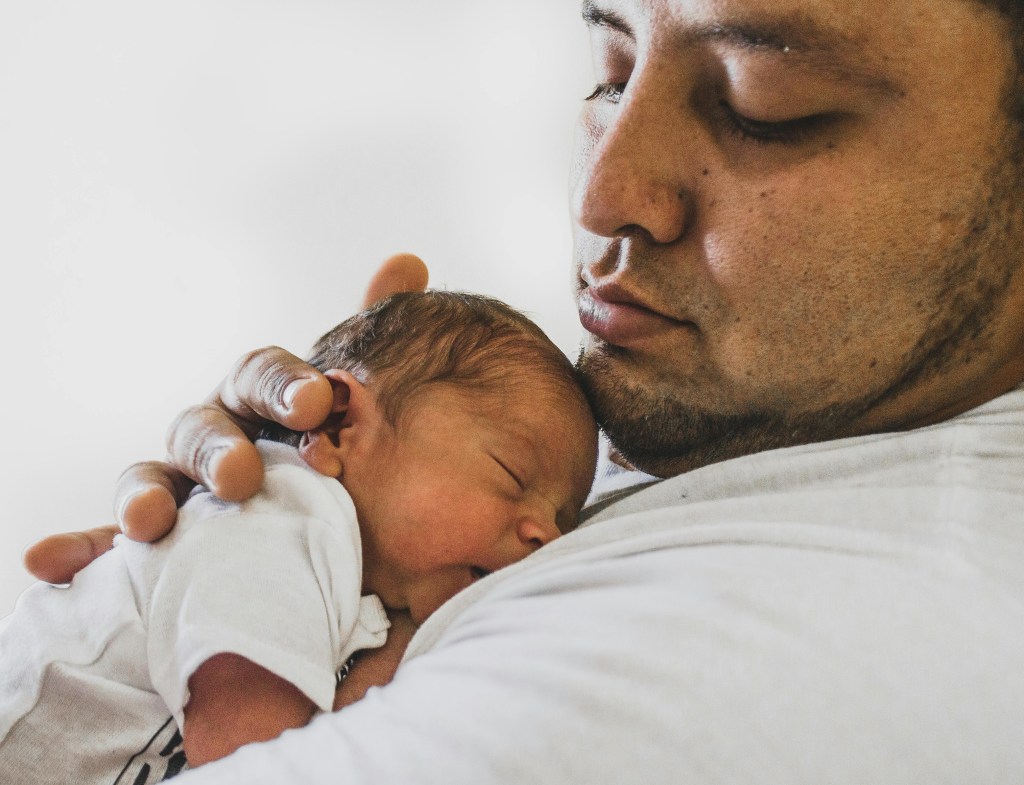
Just think about it: God wants to hug us and bring us into his Family! And to make it possible, he came in human form to live in troubled times with minimal resources that most of us now consider essentials: furnaces, electricity, cars, computers, the Internet. He chose that time for his own reasons and showed us the fervor of his love—the extent he would go to in order to give us an open door to his Kingdom.

Do we shrug and turn away, choosing to live our lives our own way in the limited time span we have? Or do we jump into his arms and live a life covered with his love and the promise of forever with him?