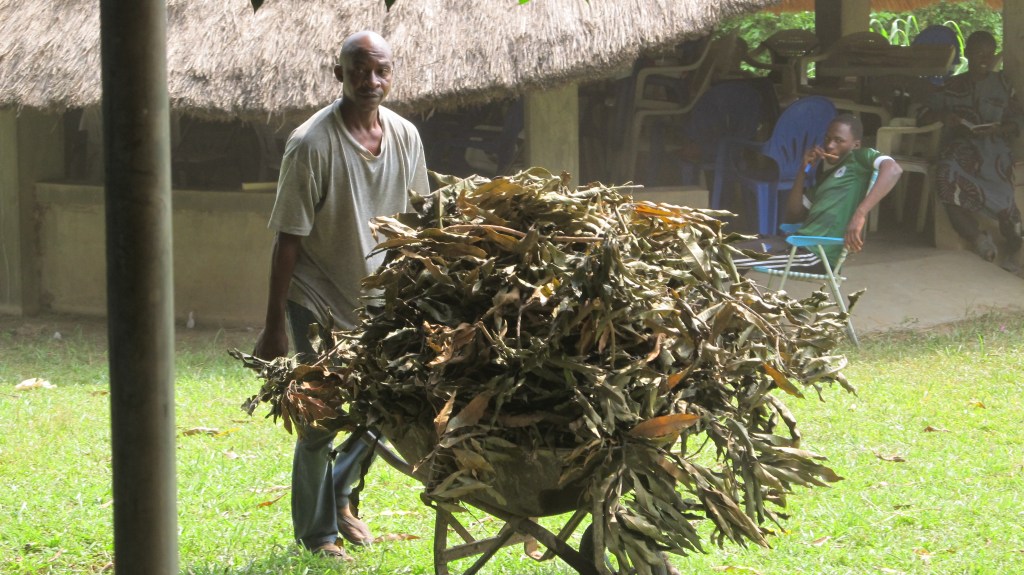
Leafless branches litter the wet earth
in the aftermath of the storm.
It came suddenly out of the north
with a powerful wind
that whipped through the trees
and cleaned them out.
Cobwebs are gone.
The dead weight of lifeless wood
was lifted away and the tree is free,
stretching up toward sky and sun.

Spirit-wind, breath of God,
sometimes gently whispering hope
and polishing my skin,
you also can come ripping through
like a forceful hurricane.
I can tell what you’ve produced:
quiet moments that bring to life
blooms with rustling beauty,
or telltale signs of pruning
that those gales leave behind.
Of course I felt the wrenching
as dead limbs were torn off,
lashed by invisible force, blown away.

What is left is living, ready to thrive,
to bud and ripen good fruit.
I’ve been feeling that stash of love!
Thank you for freeing me,
lifting the grip of sins
and weight of false expectations.
I bask in the light of your smile
and the tender touch of your Breeze,
ready to keep on growing,
knowing that all you do is for my good:
to make me more like you,
bearing fruit to feed the world.
Nature truly speaks. Affter that wind whipped through our courtyard back in Ferkessédougou, any branch that was weak had been broken off and was waiting to be picked up and thrown away. The mango trees and lime trees, in particular, had been pruned. In the months to come, we would begin to see the beginnings of delicious fruit we longed for.
This imagery is what Jesus used when talking about the branches, we who are his disciples and are attached to him (John 15). Those branches that stay firmly attached will be fruitful because he prunes them so that they are healthy, not weighed down with unproductive twigs. Any weak, withered shoots are cut off and thrown away. He makes it clear that this is a kind of cleaning up! The branch is freed of excess weight that does no good, or twigs that have been infected. Then it can produce lots of excellent fruit.
Applying the image to us means that we need to have him clean us up so that we are not dragged down by all that is not productive or is diseased. The way that he does this is through his commands that show us how to live in a healthy way: his word. I used to wonder why he told his disciples that they were already “clean,” in the middle of his discourse about cutting off branches:
I am the true vine, and my Father is the gardener. 2 He cuts off every branch in me that bears no fruit, while every branch that does bear fruit he prunes so that it will be even more fruitful. 3 You are already clean because of the word I have spoken to you. (Jn. 15:-1-3 NIV)
Then one day I read the footnote in my NIV 2011 Bible: “The Greek for he prunes also means he cleans.” So Jesus was taking the imagery of the vinekeepers’ work and making its interpretation clear when he applied it to the spiritual work he was doing in his disciples. He had spoken God’s words to them, and as they learned to practice what those words said was right in God’s eyes, they were being cleaned. Sin was being taken out of their lives and they were being made healthy spiritually. The NET note for the verse underlines this: “The phrase you are clean already occurs elsewhere in the Gospel of John only at the washing of the disciples’ feet in 13:10, where Jesus had used it of the disciples being cleansed from sin.”
Over and over he has repeated the prerequisite for being a healthy “branch” that remains attached to the Vine, himself: they must “remain in” Him:
4 Remain in me, as I also remain in you. No branch can bear fruit by itself; it must remain in the vine. Neither can you bear fruit unless you remain in me. 5 “I am the vine; you are the branches. If you remain in me and I in you, you will bear much fruit; apart from me you can do nothing. (Jn. 15:1 NIV)
That emphasis refers to staying firmly committed to Jesus, living life for him and because of him. We must make him our source of spiritual life and empowerment in the same way that a branch draws all its sustenance from the trunk of the vine. But it also underlines a warning: to not ever turn away from him and become “unfruitful.” So how do we stay firmly attached, remaining in him? Continuing his teaching, Jesus said:
10 If you keep my commands, you will remain in my love, just as I have kept my Father’s commands and remain in his love. (Jn. 15:10 NIV)
His words, his commands, show us what it means to be devoted to him. If we obey them, we are living out our commitment, staying attached. And there is one essential command that that we must obey to stay firmly attached to him:
My command is this: Love each other as I have loved you. (Jn. 15:1 NIV)
This is a High Calling! Jesus suffered to the extreme, to the nth degree, and gave himself over to death on the cross to pay the penalty for our sins, all because of his love for humanity—his love for you, for me. Are we practicing this kind of love in our community? Are we pouring ourselves out for the good of others, doing it out of love that flows from our intimate loving relationship with Jesus, our God and Savior? We must turn our hearts and actions in this direction in order to “remain” in his love!
True, we are incapable of performing this through our own strength. We wither, because if we just try to do it ourselves we are not drinking in the life-giving “sap” that flows from the vine into us, the branches. But as we increase our intimate personal relationship with our Lord, opening ourselves constantly to his work in reshaping us and giving us spiritual strength, we will become increasingly aware of how he want us to love like he does. This is not just emotional attraction. It is agape love (ἀγάπη) that values the other person. I appreciate this explicit rendering in the Danker Greek NT Lexicon: “think of God and you think of agape” ! The Friberg Analytical Greek Lexicon defines agape this way: “love as based on evaluation and choice, a matter of will and action.”
When my Nyarafolo team and I were trying to figure out a way to express God’s love as the reason that he sent Jesus to us, it was a daunting challenge. The automatic way to express that you love someone in their language is “they please me.” We realized that it could not work in John 3:16. It would be incorrect to say that God was so pleased with the world that he gave his Son to die for us! No! He saw our wickedness, our ongoing brokenness. Abdoulaye Ouattara was a team member that we had sent to a seminary to get training for translation. So I urged him to explore various expressions that would fit the concept of agape . He found this one which is now in the Nyarafolo Scriptures: “for the worth of humanity (their essence) was so very great to God that he gave his Son . . .” We meant so much to him that he gave us his life for us! This is true love indeed.
How should we apply that when it comes to “loving one another” in the community of Jesus followers? How about when that person is difficult to understand, or irritating? What if they are still beginners in their walk and we see them tripping? How would agape love choose to act toward them? In each case, we need to remember the measure of God’s love for us, shown by the very personal self-sacrifice he actually carried out for our sake. Let’s ask our Savior to cleanse us with his word, to remove our broken impulses and unloving words and actions. Pruned, we are made ready to grow. We must listen and follow his counsel in each situation, testing to see if we are listening attentively. We know that his counsel will be to choose to act with kindness and unselfishness for the good of those in our community, following his example!
Now grab this: the amazing result of obediently living out agape love is not fatigue, as one might think. It is joy!
10 If you keep my commands, you will remain in my love, just as I have kept my Father’s commands and remain in his love. 11 I have told you this so that my joy may be in you and that your joy may be complete. (Jn. 15:1 NIV)


I love the way you clarify how the storms we all would prefer to avoid can actually cleanse us and help us grow healthier!
LikeLike
Yes, Lynne, it speaks to me that way too! I sometimes need a reminder.
LikeLike