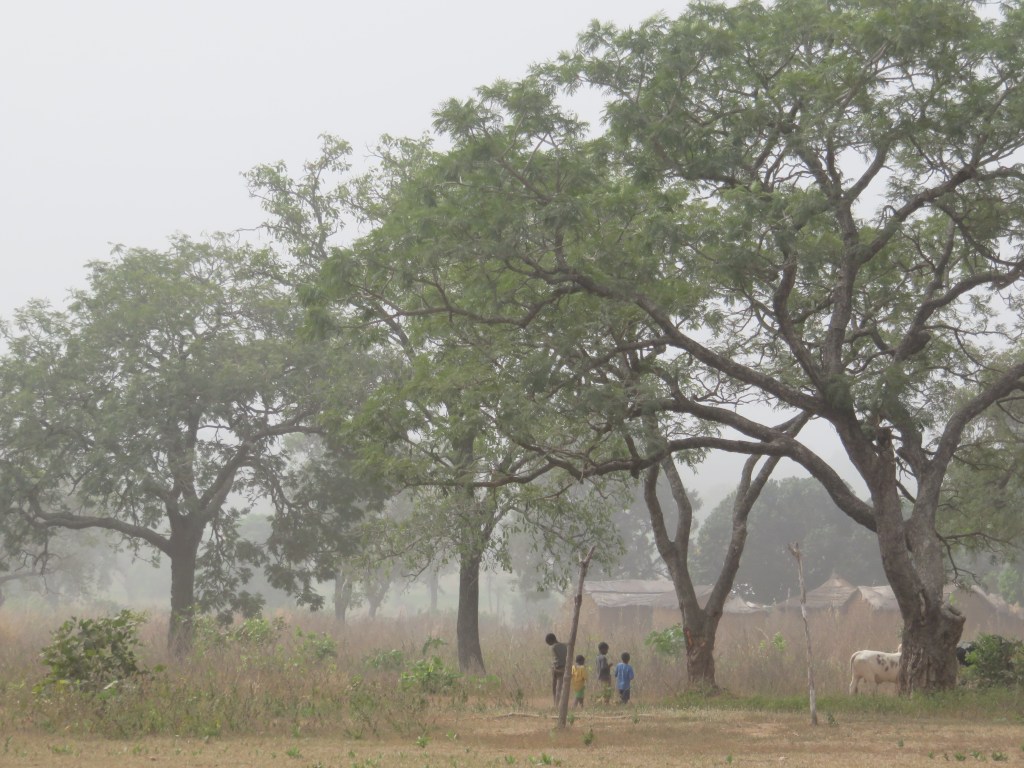
Can We Do It?

I’m cringing at this growing dump 
of insults, hurled in public spaces
or in texts or face-to-face.
Grudges fondled and fermented
could ignite a searing blaze.

Our natural response is fear
and hatred of this “enemy”
whose words and push-back
feed distress, a tangled mess
that leads us toward catastrophe.

But, Yahweh, You have told us this:
“You can walk on waves so high
they crash with stormy energy
on the unwary passerby!”
--if on you we’ve fixed our eyes.

But can we do this? You said we
must shock a cruel enemy
by answering insults with love!
We need you in our hearts and minds,
empowering us to be this kind!

May eyes be opened, hearts swept clean
as Spirit-wind blows hate away,
and unexpected love reveals
a different world, a Kingdom come
where harsh rejoinders have no sway!

Yesterday I was walking, just after sunrise, down Woodward Avenue here in Detroit with my walking partners. There is a huge metal dumpster parked beside an abandoned building that has been for sale for years. Suddenly I was stunned as I noticed for the first time the words written in bright green on the lower left corner of the dumpster’s back. There it was: “Real Christians LOVE their enemy Matthew 5:44″.  Did you see that on the photo above?

I’ve been contemplating that very truth lately and working at applying it in my own life.

When Jesus was preaching his sermon on the Mount, he underlined that doing what he said, what God’s Word says to do, is essential:

17 “Don’t assume that I came to destroy the Law or the Prophets. I did not come to destroy but to fulfill. 18 For I assure you: Until heaven and earth pass away, not the smallest letter or one stroke of a letter will pass from the law until all things are accomplished. 19 Therefore, whoever breaks one of the least of these commands and teaches people to do so will be called least in the kingdom of heaven. But whoever practices and teaches these commands will be called great in the kingdom of heaven (Matt. 5:17-19 CSB)

He then went on to list some of those laws and their application, every word shocking to his listeners then and to most of us today as well. Do we even try to live them out? How about this one?

43 “You have heard that it was said, Love your neighbor and hate your enemy. 44 But I tell you, love your enemies and pray for those who persecute you, 45 so that you may be sons of your Father in heaven. For He causes His sun to rise on the evil and the good, and sends rain on the righteous and the unrighteous. 46 For if you love those who love you, what reward will you have? Don’t even the tax collectors do the same? 47 And if you greet only your brothers, what are you doing out of the ordinary? Don’t even the Gentiles do the same? 48 Be perfect, therefore, as your heavenly Father is perfect. (Matt. 5:43-47 CSB)

We can only be “perfect” through transformation! And Jesus said that we must love our enemies and pray for those who oppose us in order to be our Father’s children, reflecting him! This requires obedience, doing what goes against our natural grain.

Another section of the Bible that is incredibly difficult to actually obey is chapter 12 of Romans. Why? Because it also contradicts our natural responses and requires us to actually live out that commandment from Leviticus:

“‘Do not seek revenge or bear a grudge against anyone among your people, but love your neighbor as yourself. I am the LORD.  (Lev. 19:18 NIV)

19 Do not take revenge, my dear friends, but leave room for God’s wrath, for it is written: “It is mine to avenge; I will repay,” says the Lord. (Rom. 12:1 NIV)

Jesus himself had explained the radical implications of this counter-cultural, counter-natural command. Here the “neighbor” includes even someone you resent and would love to see paid back for what they have said or done. The Old Testament text referenced says we are not to even hold a grudge against them, much less seek revenge. But can we do this?

Paul, understanding the critical importance of this radical love, teaches on it in great depth in chapters 12 and 13 of this letter. First of all he recognizes that loving your neighbor, and also the one who is against you, requires completely giving yourself to God and to his purpose:

Therefore, I urge you, brothers and sisters, in view of God’s mercy, to offer your bodies as a living sacrifice, holy and pleasing to God– this is your true and proper worship. 2 Do not conform to the pattern of this world, but be transformed by the renewing of your mind. Then you will be able to test and approve what God’s will is– his good, pleasing and perfect will.  (Rom. 12:1,2 NIV)

Because our God is full of mercy he will empower us to be transformed, completely renewed. It means total surrender to him and his plan, becoming “a living sacrifice.” This is how we become “holy,” sanctified, set apart for him. Our bodily actions are done in surrender to him, and our thinking has entirely different objectives and can discern what God wants.

After discussing many ways in which this can be applied, Paul comes to what is, for many of us, excruciatingly hard. All vengeance must be left to God. We are to do good to the one opposing us, and this results in “burning coals” to be heaped on them!

17 Do not repay anyone evil for evil. Be careful to do what is right in the eyes of everyone. 18 If it is possible, as far as it depends on you, live at peace with everyone. 19 Do not take revenge, my dear friends, but leave room for God’s wrath, for it is written: “It is mine to avenge; I will repay,” says the Lord. 20 On the contrary: “If your enemy is hungry, feed him; if he is thirsty, give him something to drink. In doing this, you will heap burning coals on his head.” 21 Do not be overcome by evil, but overcome evil with good. (Rom. 12:17-21 NIV)

But it is clear: we are not to try to get even! When someone judges us wrongly and hurls an insult at us, we are not to respond similarly. No! Instead, we must meet their need, whatever it is: for nourishment, encouragement, acceptance, hope. If we respond lovingly, the need can be met, like food for the hungry and water for the thirsty.

But what about that person who leaps to an assumption and judges you wrongly? What about those biased words thrown at you that demean your spirituality, ethnicity, your gender, or your social status? How can one respond with “good”?

I recently went through a hailstorm, a few days of being judged as siding with wickedness, all due to a misunderstanding about a point I was trying to make. This is not the first time it has happened—I’m sure you’ve been there too. I felt like those opposing me needed to be put in their place, shown to be the ones who are doing the opposite of building harmony and mutual understanding. These verses in Romans 12 came to mind, and my instinct was to smirk. Hey, if I am kind in return, I can “heap burning coals on their head.” Revenge!

And then I felt that gut-punch from the Holy Spirit that brought remorse. Didn’t the Scripture also say to “not take revenge”? My desire to heap burning coals on them was definitely reeking of revenge. So how does all of this fit together?

I did some digging, and it was worth it. Others have taken time to think this through too. Self-sacrifice (Romans 12:1) is the foundation for being able to live as we should:

“All these commands are rooted in freedom from self-preoccupation and self-infatuation and self-exaltation. And, much more than that—though that is crucial—they are rooted in Christ-preoccupation and Christ-infatuation and Christ-exaltation. “[1]

Living completely devoted to Jesus changes how we view these people who are against us. We see them through his eyes, the eyes of the one who loves them as much as he loves us. We can long for them to be blessed by him, to experience change too, the way we have experienced it. The only way we can get to this goal of wanting the good of that person is to quit focusing on our own need and be totally willing to do what the Spirit guides us to do!

In this case, I knew that I needed to approach a person physically, reach out to them with some gesture of acceptance, acknowledge that my words  had not been clearly communicated and try to “speak the truth in love” (Eph. 4:15), then find a way to express personal commitment to caring about their welfare. This time, the Lord actually put me unexpectedly in their presence and empowered me to do it. The result was way better than I had even hoped for: acknowledgement of our need to pursue harmony in the Body of Christ. John Piper again points out how our heart position matters:

“Notice how radical this behavior is. It does not just say: Don’t retaliate. You might use your willpower to do that. You might have all kinds of hateful and resentful and vengeful and prudential motives for not striking back. But the point is not only behavior. The point is your heart, and you can see it in the words, “Bless those who persecute you. Bless and do not curse them.” This is a partial quotation of Jesus’ words in Luke 6:28 where Jesus says, “Bless those who curse you, pray for those who abuse you.” The word “pray” shows that behavior is not the only issue. Prayer is the expression to God of what you long for. So blessing someone is not just the way you treat him. It includes the longings that you have for someone. And Jesus says they are to be longings for good, not longings for a curse. That’s what “bless” means. Bless them and pray for them. Pray for what? Their good—now and forever. And the greatest good is seeing and savoring and showing Christ without end.[2]

It was another learning curve for me, and I left the encounter relieved.  I had wanted a positive curve in the ending. I wanted that other person to be relieved that I had not been “on the side of evil.” But how did that have anything to do with “burning coals?”

One possible understanding  of the imagery is that showing love to an enemy highlights a contrast to what that person expects. It can be a bit shocking, like “burning coals,” something that puts their own antagonistic words or actions in a different light.

“Nothing pricks the conscience of a hateful person like a soft, forgiving spirit in the one he has wronged (Proverbs 15:1). The “burning coals” that are heaped on his head could be a reference to the burning shame he will feel as his conscience works upon him.”[3]

As these words reveal, the gentle answer is the good that can be the response with a good consequence.

A gentle answer turns away wrath, but a harsh word stirs up anger. (Prov. 15:1 NIV)

On the other hand, one huge thing we do when we return good for cruelty is that we leave the outcome in God’s hands. That is underlined by Paul when he wrote:

 19 Do not take revenge, my dear friends, but leave room for God’s wrath, for it is written: “It is mine to avenge; I will repay,” says the Lord. (Rom. 12:1 NIV)

He is the judge, the one with the right to decide what the consequences might be for this person. If they belong to him, he is always in the business of transforming them too, teaching them his way. That is not my job! Here is an example of burning coals used in purification:

Then one of the seraphim flew to me with a live coal in his hand, which he had taken with tongs from the altar. 7 With it he touched my mouth and said, “See, this has touched your lips; your guilt is taken away and your sin atoned for.” (Isa. 6:6-7 NIV)

Yes, burning coals could indicate purification of the wrong that is lurking in the one opposing us. These truths bring us comfort in our growth process. When we do not seek revenge, but the welfare of that person, we are living out the love of our neighbor that is required of us rather than taking revenge or coddling a grudge. This makes our Lord’s heart happy: we are acknowledging him as the one sovereign judge and healer, healing our hurt hearts and also working change in that “enemy.” We may not see it, but faith in him empowers us to let go. And the Spirit empowers us to respond in this unordinary way, and to become transformed too. I am a witness to this process!

But can we do this? You said we
must shock a cruel enemy
by answering insults with love!
We need you in our hearts and minds,
empowering us to be this kind!

May eyes be opened, hearts swept clean
as Spirit-wind blows hate away,
and unexpected love reveals
a different world, a Kingdom come
where harsh rejoinders have no sway!

[1] John Piper     https://www.desiringgod.org/messages/bless-those-who-persecute-you

[2] Ibid..”

[3] https://www.gotquestions.org/burning-coals.html

My Tent of Meeting

This is my “tent of meeting” 
where you meet with me.
No pillar of cloud necessary
because you live in me.
This tent is a protected space
where I pour out my heart
and listen as you respond.
Moses needed time with you,
then left to do your work.
Joshua was being prepared;
he stayed there, meditating
and listening in that solitude.
May I find moments like that!
May I also, like Moses,
be refueled and strengthened
for whatever lies ahead.
And tomorrow I will eagerly
return to our tent of meeting.
No breakfast is as nourishing
as the sound of your voice!

Do you have a “tent of meeting” where you spend time consulting your God, finding direction? I find this picture of a sacred space very applicable to life: a tent is moveable! You can set it up wherever you happen to be. Throughout my life it has often been in my bedroom by a window where the early morning light would incite my love for the Light of my life. But it has also taken on other shapes, like the grove of golden rain trees that was in my courtyard in Ferkessédougou, a “tent of meeting” reserved for Saturday mornings. When traveling, it is wherever I can find solitude, even quietly beside the person sitting next to me on an airplane.

The Israelites had been rescued from slavery and enemy attack and were trecking through the wilderness when God called Moses  aside to give him very detailed instructions for building the portable tabernacle that would accompany his people through the desert to their Promised Land. The Israelites had just agreed to the terms of the covenant offered them by Yahweh (Exodus 24), when Moses again climbed Mount Sinai to spend 40 days there with Yahweh, getting the key laws inscribed on tablets and in addition, the detailed instructions for the tabernacle. He came down the mountain with that information and two tablets engraved with the Ten Commandments, but then discovered that his people had given up waiting for him and had disobeyed the terms of the covenant. They had made an idol in the shape of a calf—something visible and tangible to them—and were worshiping it. In order to correct them, Yahweh had to punish them severely. He even had many killed. Moses had to plead with God to forgive them and let them start again; Yahweh graciously agreed and refreshed all the laws and instructions. But it was going to take time to get the beautiful intricately designed tabernacle made.

There was going to be a “tent of meeting” inside the big tent, the space just in front of the curtain that shielded the ark of the covenant law from view. There lamps were burning  continually all through the night before Yahweh. It was the place set aside for Yahweh to formally meet with his people. His laws were placed just beyond it, so communication with him would constantly include reminders of what he had already made clear.

But Yahweh had just severely reprimanded the people, saying that their stubbornness and self-devotedness was endangering their relationship with him. Moses needed to make sure that there could be ongoing communication with their God while waiting for the official tabernacle to be completed. He set up a temporary meeting place:

7 Moses took the tent and pitched it outside the camp, at a good distance from the camp, and he called it the tent of meeting. Anyone seeking the LORD would go out to the tent of meeting that was outside the camp. 8 And when Moses went out to the tent, all the people would get up and stand at the entrance to their tents and watch Moses until he entered the tent. 9 And whenever Moses entered the tent, the pillar of cloud would descend and stand at the entrance of the tent, and the LORD would speak with Moses. 10 When all the people would see the pillar of cloud standing at the entrance of the tent, all the people, each one at the entrance of his own tent, would rise and worship. 11 The LORD would speak to Moses face to face, the way a person speaks to a friend. Then Moses would return to the camp, but his servant, Joshua son of Nun, a young man, did not leave the tent.  (Exod. 33:7-11 NET)

See, the people were all allowed to go “seek Yahweh” in that tent of meeting, a place of seclusion at a distance from their camp. But they all knew that when Moses himself went to the tent there would be a visible representation of Yahweh meeting with him: a pillar of cloud. They had needed such a sign, something they could see. Each time it appeared it incited each individual to worship right where they were.

Moses was under great strain and he needed that personal intimate meeting with Yahweh, who would actually converse with him. Moses could bring up his questions, God would answer, Moses could ask for clarification or plead for more grace. The Scripture emphasizes that God’s interaction with him was like how “a person speaks to a friend.” This was an invitation to please keep coming! And he did.

Then there is the detail in verse 11 that says that his servant, Joshua, accompanied Moses into the tent, listening. And when Moses finished his conversation with Yahweh, he left the tent, but Joshua stayed! This shows Joshua’s personal dedication to meeting with Yahweh, not just observing. He was being prepared for huge challenges. He desperately needed that personal interaction, and it was given to him.

Some of us are now in positions of leadership; these necessitate personal interaction with the One in charge. He listens, and he responds. We have his Word, and he may point out a passage that speaks to the point. Other times he may use the inner voice of his Spirit convincing us or reminding us of truth that points the way forward. It does not matter where the “tent of meeting” is: it can be anywhere, always available. But it is protected space for intimacy.

Some of us are being prepared for something that the Lord of the Universe has planned for us, and need time set apart with him for renewal and strengthening. For me, those places have often been early mornings by some kind of water, like a river or ocean beach, or in a garden or backyard. When it’s winter and a New Year is coming, you can park your car in a forest or by a river and spend those quiet moments there. When you take a break to prepare for a ministry event or a confrontation, you can take a trip to the nearest park or retreat center and open your heart to sanctuary. Or sit in your bedroom by a window (it reminds you that you are not alone, but part of the Lord’s creation and community), or light a candle in the dark. You can set up your tent of meeting anywhere!

16 Rejoice always! 17 Pray constantly. 18 Give thanks in everything, for this is God’s will for you in Christ Jesus. 19 Don’t stifle the Spirit. 20 Don’t despise prophecies, 21 but test all things. Hold on to what is good. 22 Stay away from every kind of evil. 23 Now may the God of peace Himself sanctify you completely. And may your spirit, soul, and body be kept sound and blameless for the coming of our Lord Jesus Christ. 24 He who calls you is faithful, who also will do it.  (1 Thess. 5:16-24 CSB)

Lord, You said These Three Last Forever

Faith: 
which made me your own daughter,
brings me peace, forgiveness, strength,
moves the mountains when I trust you,
coaches me to run the length . . .
Hope:
which is my light in darkness
gives me reasons to endure,
promises you’ll heal what’s broken,
makes me long for all that’s pure . . .
Love:
which takes the focus off me,
reaches out to hug, forgive,
melts my heart to bow and worship,
marks the way to truly live!

Are you facing some challenge these days that is a really getting to you? Maybe it’s a dilemma about how to move forward in a relationship in a way that conforms to God’s expectations. Maybe it’s a sudden loss that leaves you spinning. Maybe this world just seems all too dark. We all go through such things.

So it makes sense that the apostle Paul kept referring in his letters to ways to be both protected and ready to fight the battles that come. What intrigues me is the different ways he emphasized three qualities that are essential: faith, hope and love.

In 1 Corinthians 13, Paul explains how no action or ministry that is done without love has any value. Even our confidence in God’s promises for the future will someday find that hope’s work is finished, the day when they are all accomplished. Our current knowledge and hope are important but temporary. And there is that famous last line:

13 And now these three remain: faith, hope and love. But the greatest of these is love. (1 Cor. 13:13 NIV)

Lately it is Paul’s  teaching on these same qualities in another one of his letters that has captured my attention: 1 Thessalonians 5:1-11. He begins the section by urging them to be prepared for the return of the Lord. The world is dark and we who are children of light do not belong in this darkness (verse 5). But we are currently stuck here, so we have be alert and ready for battle. If we snooze or get drunk to find comfort, we have no protection and accomplish nothing.

6 So then, let us not be like others, who are asleep, but let us be awake and sober. 7 For those who sleep, sleep at night, and those who get drunk, get drunk at night. 8 But since we belong to the day, let us be sober, putting on faith and love as a breastplate, and the hope of salvation as a helmet. 9 For God did not appoint us to suffer wrath but to receive salvation through our Lord Jesus Christ. 10 He died for us so that, whether we are awake or asleep, we may live together with him. 11 Therefore encourage one another and build each other up, just as in fact you are doing.  (1 Thess. 5:6-11)

Here the breastplate, the part that covers our vital organs (lungs, heart, kidneys etc.) is made of two qualities: faith and love. They work together.

Faith keeps our eyes on our Savior, our God, and gives us steadiness when the elements of darkness attack us. In union with our Guide, we know what to do, when to stand firm and when to run with purpose. That is light in the darkness.

Love for the Lord also keeps us firmly attached to him, knowing him more and more, living life together with him (verse 10). It is the energy that empowers us to do the last command in these verses, always doing what is good toward others:

11 Therefore encourage one another and build each other up, just as in fact you are doing. 12 Now we ask you, brothers and sisters, to acknowledge those who work hard among you, who care for you in the Lord and who admonish you. 13 Hold them in the highest regard in love because of their work. Live in peace with each other. 14 And we urge you, brothers and sisters, warn those who are idle and disruptive, encourage the disheartened, help the weak, be patient with everyone. 15 Make sure that nobody pays back wrong for wrong, but always strive to do what is good for each other and for everyone else.  (1 Thess. 5:11-15 NIV)

Wow! If we would do all that is listed here, we would have amazing harmony in the Family of God, and the love of Jesus would be visible to those not yet in the Family. There would be healing and encouragement. Disagreements over politics or music, for example, would not divide us so easily. Peace and encouragement would lift others up.

And that last line in verse 15, if actually applied, would erase assumptions, impulsive accusations and neglect of needs: “do what is good for each other and for everyone else.” We are to focus on right actions that do good, whether for those in our Christian community or for those outside.

There is yet one other necessary quality in focus: hope. That is our confidence that God’s promises will be accomplished, that he actually is the Sovereign who does everything in his timing and his way to bring about a new world of complete peace and goodness. And not only is that hope for a future that may be distant, but hope that matters right now: assurance that he  has saved us, is indeed in us and is guiding us through this darkness. How is it a helmet? It protects our minds, all our thought processes. When we go through times of suffering, we know we are not alone, and that with his presence and empowerment we can endure whatever it is.

These three, faith and hope and love, are a trio that works together in us. This New Jerusalem Bible translation states it clearly in this verse:

 7 [Love] is always ready to make allowances, to trust, to hope and to endure whatever comes. (1 Cor. 13:7 NJB)

Love in action changes our relationships, keeps faith our solid foundation, and empowers us to endure due to our assurance, our “hope,” that God is in control and his love will pull us through.

I saw this happen when I was going through a tough phase with a coworker. It was tempting to give up, to avoid seeing him so that I could avoid his judgments, to wonder how this brother in Christ could treat others with such disrespect. The Lord convicted me that I was giving up on love, giving up on doing that tough job of warning someone in such a way that they feel loved, giving up on believing that his Spirit could intervene if I just followed those promptings I wanted to ignore. I finally set up a one-on-one encounter, my own heart trembling, and broached the subject with some gentle questions that had been written on my heart through months of prayer. To my delight, there was difficult but revealing sharing, significant steps toward mutual acceptance and appreciation, forgiveness and encouragement. And it was followed by celebration instigated by my coworker!

Looking back, it was truly faith and love that were covering my heart as I nervously approached that discussion. I am naturally extremely sensitive, but that day my sensitivity turned from me to him, to understand where he was coming from. That was the Spirit at work. And it was the confident assurance that the Lord could bring reconciliation—hope founded on his promises and his character of love—that empowered me to do what I did not want to do, left on my own.

I am still learning how to keep this breastplate and this helmet in place every day. What is key for us all here is this: when we take our focus off self, knowing Jesus better and better, he shows us how to be light in the darkness and alert every moment to what he wants to accomplish through his gifts of faith, love and hope.

Like a Weaned Child

Your heartbeat 
spins the
galaxies
and pats my back to calm me.
You are so good,
and true,
and I am loved by you.

Compassion is
the constant
instant
outflow of your heart
in perfect sync
with wisdom,
beyond myopic sight.

I’m nesting here,
the shuffling
hush of
angel wings subduing other sound.
This quiet
without answers
is the peace that heals my wound.

And yet your Word
hangs wholly
in the air
and fills my mind with echoes
rippling whispered
and profuse
as they diffuse into my soul.

My waiting place
my chosen
in-between
is here within the everlasting arms.

Do you remember the comfort you felt when you were a toddler sitting on your parentɛs lap? Or maybe you have a recent memory of holding a small child (maybe a son or daughter, or a friend’s toddler) on your lap, their head resting quietly on your chest. I treasure my memory of the last time my son woke up from his nap and ran to me to crawl up on my lap and lay his head against me, because that day his legs were so long they dangled almost to the floor. I was right: it didn’t happen again.

Precious memories like those can help us understand the imagery in the Scriptures about finding comfort in God’s arms, even against the chest of the King. That requires having the same trust and close attachment to him that you had to your parent when you rested on their lap. Consider the implications:

A Song of Ascents. Of David. O LORD, my heart is not lifted up; my eyes are not raised too high; I do not occupy myself with things too great and too marvelous for me. 2 But I have calmed and quieted my soul, like a weaned child with its mother; like a weaned child is my soul within me. 3 O Israel, hope in the LORD from this time forth and forevermore. (Ps. 131:1–3 ESV)

Only a couple of English translations have kept the imagery that is clear in the Hebrew:  “a weaned child”! I realized why  it gets disregarded when I was in seminary studying Hebrew poetry about 20 years ago, and the professor brought up this psalm.

“It doesn’t really matter that you render it ‘a weaned child,’ he said. ‘What matters here is the relationship of a child and their parent.”

It was a classroom full of men, so as I looked around no one else was showing any reaction. I had raised three children, breast-feeding each one. “Weaned child” said something to me!

I raised my hand. “I think it does matter,” I said. “I see a good reason why the psalmist (David) was so specific. When you are still nursing a child and you hold them against your chest, they tend to root around looking for milk, rather than lying quietly against you. Once they are weaned, they no longer do that. They rest!”

The students looked startled but enlightened. I realized it could be normal for a man not to realize the relevance of the child being weaned. And breast-feeding was not something everyone would have been intimately familiar with in this country, the U.S.

The image is truly full of meaning. It underlines complete submission to the parent, and trust. Here the child of God is not like a baby that is frantic for milk to be calmed down. The psalm is “drawing an analogy between the child which no longer frets for what it used to find indispensable, and the soul which has learned a comparable lesson . . . It is freedom . . . from the nagging of self-seeking, and as verse 3 would add, from the bondange of delusive frets and fears.”[1]

Maybe you are facing a dilemma or a challenge that is wearing you out. You can run to the Father and spend time “on his lap” and find comfort in that safe place. Your heart needs to be like a child’s, not needing instant answers to what is “too great and too marvelous for [you]” (verse 1). As we go to the One who knows everything and loves us beyond understanding, we can give it over to him and wait for him to do his work.

I am currently in such a place: my ministry of Bible translation is hanging by the threads for lack of adequate funding (the entity that has supported us generously for years is now lacking sufficient funds!). I do think about it, wondering how the Lord is going to work things out this time. I remember how over the years he has kept it going in stunning ways, through war and a devastating fire, through severe injuries and illness hindering a worker from engaging for a long while, through the heartbreaking revelation of sin in the life of one team member years ago. It is God’s project. He is in charge.

This recent sudden discovery of our fragile position could have blown me over—and I wondered why it did not. I pray daily, with others. And there is a peace inside me that I cannot explain except by this analogy of resting on my Parent’s chest, sitting on his lap. It sounds risky to think of myself in that position. He is, after all, in charge of millions of other sons and daughters too, and busy with his plans all the time. But he gives me, and you, this gift beyond comprehension: instant access any time to him and his comfort.

I wrote the poem above 24 years ago, and I’m so glad Father God had put it in my heart. One year later war started where we lived, and we were under fire. We evacuated, with no idea what the future would hold. Looking forward at that time, there seemed to be no assurance that any of our plans would ever be accomplished. Looking back we can see how our Almighty God worked out his plan. True, it has been another long stretch of ups and downs. I am so grateful that I can run to him and soak up grace, there in his arms, my head against his chest!

Like Israel back in David’s days, we must“hope in the LORD from this time forth and forevermore” (verse 3). Always! Turn to him in childlike submission and find rest!


[1] Derek Kidner, Psalms 73–150: An Introduction and Commentary, vol. 16, Tyndale Old Testament Commentaries (Downers Grove, IL: InterVarsity Press, 1975), 484.

You Are My Shade

You are my shade 
when the sun beats down with tropic heat,
when its beams creep in like crafty spies,
when it hides its face but penetrates.
You are my shade.

You are my shade
when the enemy blasts with full attack,
when he sneaks in wearing a new costume,
when he comes behind me to whisper lies.
You are my shade.

You are my shade,
fanning me with your Spirit breeze
and the summer scent of the waving grass,
soothing my heart with love and peace.
You are my shade.

Life in the tropics taught me to treasure shade as grace from God—a grace not ever to be taken for granted!

A crucial moment that underlined this came several decades ago when we were traveling north in Mali, the country across the northern border from our home in Côte d’Ivoire. My daughters were about seven and three years old. In the middle of a desert wasteland our car broke down. Glenn flagged down one of the few passing mini-vans and hitched a ride to the next city to get what was needed. There I was in the middle of “nowhere” with the girls.

It was too hot  and stuffy to sit in the car. We saw a tall rock nearby, maybe six feet high and a yard across, and settled in its shadow. My girls grabbed whatever they could find in the sand around it, sticks and stones mostly, and began building an imaginary world. We were there for a few hours, moving slightly as time passed and the shade shifted, oh so grateful for that protection! Finally Glenn returned and fixed the car. We took off, but the powerful imagery of shade as protection had taken on deep meaning for me.

Like the sheep in the village in the photo above, when the sun beats you up you take whatever shade you can get. The sun’s rays are viewed by nationals in that West African area as so vicious that they cannot use Western imagery like what was in a chorus we used to sing: “There is sunshine in my soul today, so glorious and bright!” I asked a group of Bible translators from several different  language groups what they understood when I said those words (in French). There was silence, then finally one man raised his voice and said: “You’ve got deep trouble, Madame!”  They agreed, though, that when the sun rises and disperses the darkness it is a very good thing, so you just have to be very careful whether you say “the sun shines” (it beats you up!) or “the sun rises.”

That explains the power of the shade imagery used in the Bible to describe God’s protection:

O LORD, you are my God! I will exalt you in praise, I will extol your fame. For you have done extraordinary things, and executed plans made long ago exactly as you decreed. 2 Indeed, you have made the city into a heap of rubble, the fortified town into a heap of ruins; the fortress of foreigners is no longer a city, it will never be rebuilt. 3 So a strong nation will extol you; the towns of powerful nations will fear you. 4 For you are a protector for the poor, a protector for the needy in their distress, a shelter from the rainstorm, a shade from the heat. Though the breath of tyrants is like a winter rainstorm, 5 like heat in a dry land, you humble the boasting foreigners. Just as the shadow of a cloud causes the heat to subside, so he causes the song of tyrants to cease. (Isa. 25:1-5 NET)

That was how Israel felt when they knew God had saved them from tyrants! This psalm also echoes the theme:

I look up toward the hills. From where does my help come? 2 My help comes from the LORD, the Creator of heaven and earth! 3 May he not allow your foot to slip! May your protector not sleep! 4 Look! Israel’s protector does not sleep or slumber! 5 The LORD is your protector; the LORD is the shade at your right hand.  (Ps. 121:1-5 NET)

Those are just two examples. They speak to those of us who are dealing with some kind of distress, whether it be conflict, loss, danger, overwhelming work, or any other hard situation. If we keep standing where the heat waves beat down on us, we get burned or completely dried up. We need to turn our hearts to the respite of the shade that our Yahweh, shelter and protector, offers us constantly. He is always at our right hand, the hand involved in action. He is constantly beside us. He is our shelter, even when we are active, moving around to do what he gives us to do.

His love reminds the psalmists of the imagery of a mother hen’s wings that gather her chicks in close comfort, the shadow of her wings:

How priceless is your unfailing love, O God! People take refuge in the shadow of your wings. (Ps. 36:7 NIV)

Like sheep thirsty for whatever shade they can get, like chicks scrambling for refuge in the shadow of mama’s wings, like little kids happily playing in the shade of a rock in the desert, we know where to go for the protection we need:

Whoever dwells in the shelter of the Most High will rest in the shadow of the Almighty. (Ps. 91:1 NIV)

Turn there, live there, and persevere through the heat in his perfect shade!

Prayer to the Shepherd

I walk beside a river 
and you hold my hand
as we exult in beauty.
When the sky turns gray
with a storm rolling in
you shelter me from
pellets of ice, rough winds,
sky fire, or even just
a cold wet downpour.
Next comes a hilly incline,
tiring my calf muscles
even though this is only
slightly draining. It’s training.
But if I need to climb
a mountain, slippery slopes
threatening my walk,
you are still there.
You don’t let go! You stay.
Pursuing me with love
that never ends, that focuses
on patient, kind accompaniment
that leads me home. You are
my Companion on the Road.
Can I be like that? Me too,
like you? Always walking
with the sister who is
running out of energy,
hope squished flat by
rugged outcroppings
and unexpected drought?
Can I soothe my brother’s angst
by joining him on his journey,
coming alongside with calm?
Oh to be like you,
Good Shepherd, Friend,
my walking partner in life!
Fill me with your grace
that counts it all joy
to run and keep pace
with someone struggling.
Unending love like that
can only come from you!

David’s  meditation on the Good Shepherd is so powerful that most of us hold onto it as a treasure, Psalm 23. Last year as I contemplated it, a new application of it to my life flowed into my soul and onto paper through my pen. Could I be like my Shepherd and follow his example? He walks with me through restful greenery and peaceful waters, through grief and dangers. He is my guide and my protector, the one who feeds me spiritually and provides my needs. Could I actually live like that, helping others in similar ways, others with needs? And then there is that powerful last line:

6 Surely your goodness and unfailing love will pursue me all the days of my life, and I will live in the house of the LORD forever. (Ps. 23:6 NLT)

This is the one English version (New Living Translation) I’ve found that clearly communicates some treasured truth that I discovered when we translated this psalm into Nyarafolo. It is not just “mercy”  and goodness that “follow” me continually! It is his “goodness and unfailing love [that] will pursue me all the days of my life. The Hebrew word hesed is a challenge to translate into English since it covers a great expanse of meaning, all of them resumed for me in his unfailing/unchanging/unending/faithful/loyal/merciful love.

And “follow” is too passive a verb. The Hebrew word is literally “pursue”—as when chasing down someone or something. That underlines the Shepherd’s whole-hearted purpose, not just to shadow us, but running to us to shower us with his love and his perfect goodness as he guides and protects each of his loved ones. Now that truly is gracious mercy and faithful companionship; he does not leave us adrift! He is not a God far off but an intensely personal Presence, caring for us.

Don’t be afraid, for I am with you. Don’t be discouraged, for I am your God. I will strengthen you and help you. I will hold you up with my victorious right hand. (Isa. 41:10 NLT)

He is actually beside us as well, holding us up with his right hand—the hand of good action that wins the fight. He is our “Companion on the Road,” a term I borrowed from my Nyarafolo brothers and sisters in Côte d’Ivoire. One example is women walk long miles to take the shea butter or charcoal they have made to market, heavy loads on their heads. Some of the path may lead through a wilderness where women can be in danger. If a partner walks with them, they feel safe. If a load is too heavy, help is near.

Our Companion even holds our hand of action, giving us strength to carry our loads and to do what is right. When we walk with the Shepherd this way, our intimacy with him and trust in him grows. As we get to know him more and more we want to be like him, not like any other “leaders” or “shepherds” around us who twist God’s truth to conform to their own cultural biases and lead people down wrong paths. Most of us do have local shepherds, under the Shepherd, whose job is to teach us truth, the right path:

Their responsibility is to equip God’s people to do his work and build up the church, the body of Christ. 13 This will continue until we all come to such unity in our faith and knowledge of God’s Son that we will be mature in the Lord, measuring up to the full and complete standard of Christ. 14 Then we will no longer be immature like children. We won’t be tossed and blown about by every wind of new teaching. We will not be influenced when people try to trick us with lies so clever they sound like the truth. 15 Instead, we will speak the truth in love, growing in every way more and more like Christ, who is the head of his body, the church. (Eph. 4:12-15 NLT)

That is the goal, to be more and more like Christ! Through that attachment, daily walking and talking together, we can be changed, empowered by the work of his Spirit in us. A song that I often sang in my mission community, especially when I was a missionary kid, was this one—the old English still speaks! If you know it, sing with me:
1

O to be like Thee! blessed Redeemer;
This is my constant longing and prayer;
Gladly I’ll forfeit all of earth’s treasures,
Jesus, Thy perfect likeness to wear.

O to be like Thee! O to be like Thee!
Blessed Redeemer, pure as Thou art;
Come in Thy sweetness, come in Thy fullness;
Stamp Thine own image deep on my heart.
2
O to be like Thee! full of compassion,
Loving, forgiving, tender and kind,
Helping the helpless, cheering the fainting,
Seeking the wand’ring sinners to find.
3
O to be like Thee! lowly in spirit,
Holy and harmless, patient and brave;
Meekly enduring cruel reproaches,
Willing to suffer, others to save.
4
O to be like Thee! Lord, I am coming,
Now to receive th’ anointing divine;
All that I am and have I am bringing;
Lord, from this moment all shall be Thine.
5
O to be like Thee! While I am pleading
Pour out Thy Spirit, fill with Thy love.
Make me a temple meet for Thy dwelling,
Fit for a life which Thou wouldst approve.

Punctuating the Separations

I greet distance once again, 
geographic separation
that clips my best
strong heart connections,
separates close friends,
my loved ones.
The threads of tenderness
trail tears over continents
and disappear into
the salt of seas.

“Goodbye!” is the word
that stabs me,
punctuation to
the phrases of my life
even while it sends
my love after a heart.
Delight moves through
shared sequences
(some catapulted into
meaning far beyond
mere words), and ends
in exclamation points.
(Gone, impossibly!)

But some insist
on semi-colons,
endings that
anticipate an encore
or at least
the whispered continuity
of messaging;
I pile up semi-colons
greedily—soul-mates
and dear companions—
defying periods and
loathing question marks.

I’ll choose the punctuation
for my soul
that lets me
run the distance
and stay whole.

Have you ever felt that “goodbye” was your least favorite word? There are those moments when it can mean “good riddance!”. But most of the time it evokes separation, temporary or long-term—sometimes heart-wrenching separation.

My life has been full of comings and goings, between Africa and the U.S. as well as in each country or state where friends or family have moved and settled. Even within my nuclear family this applies: one of my daughters and her family have moved to Norway. They visit once a year, and we hope to go there someday to visit as well, but the distance and travel cost are a big hoop to leap over.

Back when my kids were growing up we faced the challenge of providing them with an education that could carry them through to American schools. We did years of home school, but for some of them the lack of community sports and discussions (not available where we lived) made it too lonely. Boarding school became the best option. Some have criticized that choice, saying that it would have been better for us to return to the U.S. than to send them there. It’s true that each family has to get to know their kids and meet their needs the best they can. But what does God say about such separations? Are they off the docket?

This story has captured my attention: Moses, a runaway from danger in Egypt, left his wife and children with his father-in-law in order to obey Yahweh’s command given him at the burning bush, to go back to Egypt and bring the Israelites out (Exodus 3). Moses resisted as God explained that this would not be an easy task (Ex. 3:10-13). After God showed him some miraculous signs he would be able to perform through Moses, and assured him that his brother Aaron would be with him as well as Yahweh himself, he finally agreed. But given the dangers, he left his wife and kids with Jethro in Midian, a land far away from his destination. A long time later Jethro heard the news about the Israelites’ rescue and that they were camping in the desert at “the mountain of God” (Ex. 18:1-5). He brought Zipporah and her sons back to Moses, to join him on his journey to the promised land.

That means there were two huge goodbyes in that family, one when Moses went off to Egypt to see how God would deliver his people, then when Zipporah’s father left her with Moses on the next huge adventure. She, along with her sons, would never see Jethro again. How could this have been God’s good plan?

What we see as the events unfold is that they all learned that Yahweh is “greater than all the gods” (Ex. 18:11). His plan was bigger than just their family ties. Even Moses had been separated from his birth family for decades in order for the Lord to prepare him for his leadership of his people. His parents took a huge risk, giving him up, but it was the right thing.

That prompting or definite “call” from God is what must be obeyed, even when it means separation from loved ones—something many in our culture today cannot accept.

My parents left their parents to follow that leading to Congo and then Côte d’Ivoire. I was four years old when I saw my mom crying as she read a telegram that had arrived, bringing news of her mother’s death. I saw Mom cry (and I had tears too) when my parents took me to boarding school at the age of 10, when Ivory Coast Academy (ICA) first opened. She had home-schooled me with great creativity up until then. We never found the partings easy, but we did not question the conviction that this was what was “His Plan,” and I learned many key lessons in all the leavetakings and homecomings. The same situation became mine as a parent on mission in that same country later, sending my daughters to ICA when they each chose to go. Some churches questioned our wisdom. Even this year one friend told me that good parents would never do that.

So why did we go overseas, leaving my husband’s parents and siblings behind? Eventually we had to say yet more grueling goodbyes to our kids as we left them behind to continue their university studies, then beginning their own families and occupations. Why?

When God clearly points the way, we must follow. When we trust him completely we will let him be the guide, not ourselves. It is easy to assume that we know better than he does. Instead of trusting his goodness and his overall plan, we tend to question any order that comes from the Counselor, who knows everything, and tell him that we will not do that but this. In everything we need to listen to him. We don’t know what lies around the bend. He does.

We just went through wrenching goodbyes again when we dropped my daughter Ariane and her family off at the airport to return to Norway. On the other hand, we had heard so much from each of them, kids and parents, about the things they are learning, the opportunities opening to them to serve the community and their Lord God, that we could see the plan unfolding. There are many affirmations that God had a purpose when he gave them peace, after several years of prayer, about making that decision to move. For them it began with an ongoing invitation to Tom, Ariane’s husband, to serve as a professor at the university there where he had done his sabbatical. Now we also see Ariane moving into international ministry in trauma counseling. The kids are excited about their friends, many immigrants from around the world, and about learning Norwegian. It gives our hearts peace. It changes a fearful goodbye into a confident one, with a “semi-colon” attached as I said in the poem. We are deeply grateful for connection via WhatsApp and emails as well as visits. Communication is much easier in this modern time than it was  decades ago.

It is easy to sing “I will go where you send me,” and harder to just listen to the Guide and do it. If only we could be as willing as Isaiah was:

Then I heard the voice of the Lord saying, “Whom shall I send? And who will go for us?” And I said, “Here am I. Send me!” (Isa. 6:8 NIV)

I myself wrestled with that full surrender for years, especially as a teen. I had felt several strong promptings pushing me to go wherever the Lord wanted, but I was scared he would send me into wars, or have me serve as a single woman (there are so many dedicated missionaries who never married!). I had a boyfriend named Glenn as I started college, someone who had never talked about feeling called to mission. Then there was that critical turning point that happened at the Urbana ’70 Missions Convention, when (without sharing our decision with each other) we each jumped up to affirm the invitation of God to go wherever he would send us. The rest of our life story took a key turning point, and we have never regretted it—even though it did come with many goodbyes, signposts of separation on the journey.

For many people these promptings will not include such geographical distances. On the other hand, many of my friends have children peppered across the U.S. or Europe or other countries too. It comes with the opportunities of modern times and connections for work, or marriages.

The Guide might also convince you to volunteer for a service position at church or in a community non-profit that is reaching out to the vulnerable. It might be deeper involvement in your neighborhood, or reaching out to family that needs you. It might mean mentoring someone who is longing for connection. Whatever it is, let’s go where we are being sent! Whatever the challenges we meet along the way, our Yahweh is with us, showing us step by step what he has planned on the path he has chosen.

This verse comforts me, one written when the psalmist was going through very tough abuse by those around him:

21 When my heart was grieved and my spirit embittered, 22 I was senseless and ignorant; I was a brute beast before you. 23 Yet I am always with you; you hold me by my right hand. 24 You guide me with your counsel, and afterward you will take me into glory. 25 Whom have I in heaven but you? And earth has nothing I desire besides you. 26 My flesh and my heart may fail, but God is the strength of my heart and my portion forever. (Ps. 73:1 NIV)

Yes, he guides us throughout life as well as beyond, into “glory”, with him forever.  The promise of his presence is a forever one! When we keep him first in our lives, trusting him even when it means making decisions that lead to long separations (like Moses went through, and his parents before him), then each step of obedience is accomplishing this: that his “will will be done here on earth as it is in heaven.” (Matthew 6:10)

I’ll choose the punctuation
for my soul
that lets me
run the distance
and stay whole.

Where is God in This?

A groan, the wrenching sound 
of a heart torn out,
shredded…

arms lifted skyward
in the still of night,
begging...

tears pumped profusely
from the soul,
sodden...

The future disintegrates.
My crumpled dreams are
thrown away.

I’m a discarded quarry,
scraped until I’m bare.
Where are you???

. . . . . . .

Hush child! Be still.
Know that I am God.
I hold you close.

My “where” is all around you,
with you in your pain,
loving you.

I’m underneath you,
carrying you when your
knees buckle;

behind you every moment,
defending your bare back
tenderly;

out in front, scouting ahead,
sweeping other dangers
from the path;

beside you, gripping your
right hand, so you won’t slip or,
stumbling, fall;

and best of all, inside you,
where my peace is whispering in
that still voice

which you will hear,
eventually, when sobbing is
exhausted

and silence spreads
to let my breath brush balm
on all your hurts.

Hush, beloved daughter.
Your tears are kept as treasure,
reflecting

rainbows all around
as I smile on you, even
in the dark.


Have you been there too, weeping, heart torn? What triggered that for you? Was it the loss of a loved one? Were you in distress over conflicts with coworkers? Have you found yourself shattered by the departure of a dearly loved person from the faith? Was your community or family divided, disintegrating? Was a dream crushed flat?

When I wrote this poem over two decades ago, I was actually up all night, arms raised in desperate supplication. Then the Lord began to remind me of verse after verse that answered my desperate question, “Where are you?”. You can probably recognize some of them in the poem. It was such comfort. Even though the distress was not over for years (and is still waiting for complete resolution), my heart needed a complete refocus!

The psalms come through with prayers of lament over and over, almost always framed in statements of trust. That truly speaks to me.  Lately I’ve been meditating on Psalm 73, which is book-ended with outstanding examples of this pattern:

Surely God is good to Israel, to those who are pure in heart.  (Ps. 73:1 NIV)

28 But as for me, it is good to be near God. I have made the Sovereign LORD my refuge; I will tell of all your deeds. (Ps. 73:28 NIV)

In between those verses there is a long confession by the psalmist. His faith had been shriveled as he focused on the disasters around him. Here are some samples he shared of what had thrown him down so far:

2 But as for me, my feet had almost slipped; I had nearly lost my foothold. 3 For I envied the arrogant when I saw the prosperity of the wicked. 4 They have no struggles; their bodies are healthy and strong. 5 They are free from common human burdens; they are not plagued by human ills. 6 Therefore pride is their necklace; they clothe themselves with violence. 7 From their callous hearts comes iniquity; their evil imaginations have no limits. 8 They scoff, and speak with malice; with arrogance they threaten oppression. 9 Their mouths lay claim to heaven, and their tongues take possession of the earth. (Ps. 73:2-9 NIV)

Asaph wrote this centuries ago, but it is not hard to relate to his fear of those in power or those who take power in their own hands.  Arrogance is their basic character, and malicious violence their weapon. Just read today’s headlines. What is happening all around the world and where you live? Wars continue, the prejudice against ethnic groups leads to violent words or actions, abuse breaks out in the work place and in families, divisions in the Family of God shatter Christian witness, those in power take yet another privilege away from the vulnerable . . .

The wicked seem to relish success and could care less about its consequences, Asaph says. They are not even concerned about what God thinks—they see him as irrelevant and unconcerned. He complains:

13 Surely in vain I have kept my heart pure and have washed my hands in innocence. 14 All day long I have been afflicted, and every morning brings new punishments. (Ps. 73:13-14 NIV)

That is deep despair over unending trauma. Hope has flown out the window. BUT then he remembered who is actually in charge:

If I had spoken out like that, I would have betrayed your children. 16 When I tried to understand all this, it troubled me deeply 17 till I entered the sanctuary of God; then I understood their final destiny. (Ps. 73:15-17 NIV)

As he entered the place of worship and focused on the Lord of the Universe, he suddenly realized that his ongoing desperate complaints about evil, with no hope of good news, were actually accusations against God that revealed his lack of faith.  Standing alone, they would be hurtful to anything positive God intended to do among his people. If Asaph had spoke them in public he would have been mocking the worshipful faith of God’s children.

There were actually reasons to hope: God had clearly promised that evil would be judged, no one was outside his realm of authority, and the “final destiny”  of such cruel people would be the opposite of the success they had thought was theirs. These evil ones would be gone forever.

Whatever you and I are facing, we need to remember that our Father knows everything that is going on—including how we are reacting to it. Over and over in the Scriptures we are told that he shepherds us. He guides us, and he also surrounds us with his protection. Not only that, he lives inside us! Nothing can separate us from his love! Even in Old Testament days his loyal followers knew this. Listen to this part of the psalm:

21 When my heart was grieved and my spirit embittered, 22 I was senseless and ignorant; I was a brute beast before you. 23 Yet I am always with you; you hold me by my right hand. 24 You guide me with your counsel, and afterward you will take me into glory. 25 Whom have I in heaven but you? And earth has nothing I desire besides you. 26 My flesh and my heart may fail, but God is the strength of my heart and my portion forever.  (Ps. 73:21-26 NIV)  

We don’t have to wait to be with him until we die, no! He is with us here; yes, we are with him here, always!  Yet I am always with you; you hold me by my right hand. (v 23) Have you heard why the right hand is specified in these contexts? It is because in the Hebrew view it was the hand of action, the hand that could act for good purposes. So when my God holds my right hand, he is guiding me in how to react, empowering me to do what is in line with his plan. He counsels us, right here and now.

Someday we will leave all this trouble and be with him in that glorious space he is preparing for us: afterward you will take me into glory! (v.24) Whether or not we personally get to see the resolution to the crisis troubling with us, we have him with us this minute too, right in the middle of our pain and distress! And he has promised a grand welcome into eternal peace. That is our confident hope: life where there is no evil, forever with him.

When desperation attacks, listen to his words of comfort and turn your thoughts to these truths. He is the great I AM—he always was, always is, always will be! And that is who is always with you. Just hush in his presence, and remember his promises.

He is at Work

The toddler was just crossing the road
God stretches out his arm, 
his right hand goes to work,
and what was meant for tragedy
is tweaked and tuned to good.

We cannot see ahead,
we don’t know when or how
a dangerous trap’s been set in place
to frustrate, crush or kill,

But since he holds the world
securely in his palms,
he knows! He intervenes, protects,
and demonstrates his love.

Who knows how many times
what we’ve seen as delay
has really been his way to act
to keep us from great harm?

Or maybe he unlocked a door
and pushed us gently through,
just before disaster hit
but we were safe, away!

I thank you, Lord, for this:
the way you let us see
the precious stamp of fingerprints
you’ve left behind as signs

of your intense involvement
in the details of our lives.
You counteract the Enemy;
your strong arm holds us tight.

Since our God sees every detail of our lives and promises to protect us while he guides our every move, we often take it for granted—unless we are dealing with a tragedy and wonder why he did not come through as we had hoped! We need to trust his plans, one way or the other.

The LORD watches over you– the LORD is your shade at your right hand; 6 the sun will not harm you by day, nor the moon by night. 7 The LORD will keep you from all harm– he will watch over your life; 8 the LORD will watch over your coming and going both now and forevermore.  (Ps. 121:5-8 NIV)

There are indeed the hard times that come with life on this broken earth, yet we are to trust our Lord’s care and his purpose:

 2 Consider it pure joy, my brothers and sisters, whenever you face trials of many kinds, 3 because you know that the testing of your faith produces perseverance. 4 Let perseverance finish its work so that you may be mature and complete, not lacking anything. (Jas. 1:1-4 NIV)

We are on a faith journey that brings transformation. And we do tend to focus on our trials, the hard times that often seem to cast doubt on God being in control. That is a whole other debate. This time I would like to focus on his protection, even the times when we are unaware of what he has done. It strengthens our faith when we can look back and see clear demonstrations of our Lord’s intervention and protection. I particularly rest in those words in verse 8: “the LORD will watch over your coming and going both now and forevermore.”

Let me share some examples from my life—it has been full of “coming and going”.

When my mom, four of her kids and other missionaries were trying to escape a dangerous situation in Congo, we got stuck at the border to Uganda. The border guards were angry at Whites—they had just heard news of a plantation owner beating a Congolese worker until he died. They put us through about four hours of emotional torture, hinting at getting their revenge (to read the whole story, wait for my memoir to get finished!). I was eight years old, the oldest of the kids packed into our “escape” vehicle. Finally, tired and scared, I gathered my little brothers and cousins behind a big truck. We knelt there and prayed desperate prayers, begging for rescue. That was when a different guard came out of the border post and the whole story changed: we were released! I never doubted that God had answered the prayers of us little kids!

Sometimes we might even wonder what he may have saved us from, or saved someone else from, without our knowing it. When there are unexpected delays on a trip, for instance, what if he was preventing us from running into danger? What if he really is watching over when we take off from home to go somewhere?

Timing does matter. Once in Côte d’Ivoire I was driving our van south on the gravel two-lane road with just one woman friend with me. We rounded a curve and entered a small village that had been divided by the road. I slowed down, as the law requires but which most vehicles ignore doing. Suddenly I saw a toddler stepping slowly across the road and screeched to a halt, just missing her. Her grandmother was desperately trying to catch up with the child and couldn’t believe that I had actually stopped in time. She was so glad it was me, she said, and not some truck that would never have stopped! So I wondered about that timing too, for that little one’s safety—maybe that was exactly why I had left home when I did, that day.

Another time when Glenn and I and a national coworker were in the process of making an emergency trip south in Côte d’Ivoire to pick up a critically ill child and bring her back north to our mission hospital, we got stuck at a police blockade. The police said that bandits were active on the road ahead, so we needed to wait until they had dealt with the situation. It was hard to sit there that long, knowing the child’s life was at risk. But what if we had left home earlier and run into the bandits? We might never have made it! Eventually one police car offered to lead us through the threat, and we made it safely to destination.

This spring our church, Highland Park Baptist, sent a large group led my brother, Brent Slater, to Israel to tour biblical sites. It had been kind of nerve-wracking, deciding whether or not to go during this time of warfare over there, but eventually they had decided they should. They had a wonderful time, with quick access to many venues due to the lack of lines of tourists. The day that they flew back to the U.S., one couple who had taken a different flight plan than the others stayed behind at the airport, waiting for their flight. Their plane took off. Just after they left, missiles were fired at that site! They had definitely been protected.

The Lord had watched over me when I was a teenager taking a bus from the Upper Peninsula of Michigan down through the state to go home after attending the Inter-Varsity training camp, Cedar Campus. I had thought my ticket would take me to Royal Oak where my family lived, but the bus went right by the suburbs and dropped us off in the middle of the city of Detroit, near sunset. A girl much younger than I had been sitting by me and was also stranded in the city. We were told to walk several blocks to a different station to catch a bus to Royal Oak so we started out, both of us lugging suitcases. We came to a stop light and an old man, short and bald, walked up to us and asked us what we were doing out in the city like this, so late. When he heard our dilemma he grabbed our suitcases and accompanied us to our destination. Then he was gone! Were we with an angel, unawares?

When I walk the neighborhood here in Detroit, and suddenly feel a strong prompting to change my route, I often wonder what encounter the Lord was protecting me from or leading me towards. I could tell you more stories!

Whatever the situation, we know that our Father is aware of our coming and going, even when we sit down and get up, and he will not let his purpose be thwarted, whether it is for our good or for the good of someone else:

You have searched me, LORD, and you know me. 2 You know when I sit and when I rise; you perceive my thoughts from afar. 3 You discern my going out and my lying down; you are familiar with all my ways. 4 Before a word is on my tongue you, LORD, know it completely. 5 You hem me in behind and before, and you lay your hand upon me. 6 Such knowledge is too wonderful for me, too lofty for me to attain. 7 Where can I go from your Spirit? Where can I flee from your presence? 8 If I go up to the heavens, you are there; if I make my bed in the depths, you are there. 9 If I rise on the wings of the dawn, if I settle on the far side of the sea, 10 even there your hand will guide me, your right hand will hold me fast. (Ps. 139:1-10 NIV)

Those verses in Psalm 121 and 139 have spoken comfort to me so many times, including during times of civil unrest or war and during our last years working full-time in mission, when deadlines seemed unattainable and challenges insurmountable. I wrote those dates next to the verses and held on to my Lord Yahweh’s promise of constant attention. Looking back, I can see that his purpose included getting us through it all in safety, accomplishing what he had in mind.

I hope this encourages you, too. East or west, at home or going out, Yahweh will guide his loved ones and hold them securely in his hand. It doesn’t matter whether you are in Africa or America, whether you are a child or an adult. He is our constant companion and protector, always at work!

To Do What He Requires

To live out justice 
means to hate what is evil
embrace what is good
act on it with wisdom
take note of what’s broken
speak like a prophet
intervene to right wrongs
when the Spirit leads the way
freeing slaves of greed-masters
or of dirty justice systems
or of cultural traditions
that demean and disrespect
the dignities of people
or the rights of the oppressed—
just like God does.

To love his hesed love
is to love open arms
and let your heart pump
mercy and rich goodness
into legs that run to help
and into hands that gladly reach
to lift up the fallen
support the suffering
those unhinged by fright
to feed the hungry mouths
and nourish starving souls
touch lonely folk with comfort
and the offer of a heart
that’s ready to forgive
and love the one who hurt you—
just like he does

To walk prudently with him
in true humility
is to be ready always
to do all that he has told me
to know his heart of goodness
and to obey with gladness
to let his Word speak life
to my own soul so that I send
roots down to living water
and drink it up to flower
and produce the fruit intended
giving honor back to him
the Source of all this kindness
to hold his hand and let him lead
and change my character
to be like him.

Micah 6:8 has been exceptionally meaningful to me for years, guiding me in ministry among the Nyarafolo and companions of the Road in every place I lived. I wrote “To Do What He Requires” eleven years ago. When I bought the t-shirt featured in the photo this year, I was longing for it to be a reminder to myself and others of what matters to our God. There was one problem: it did not finish out the verse the way that it is written in Micah:

He has shown you, O mortal, what is good. And what does the LORD require of you? To act justly and to love mercy and to walk humbly with your God. (Micah 6:8 NIV)

Why was that left off? Who knows? What I discovered is that this blank can open the path to underlining those three missing words.

I was entering a public park with my grandchildren when an elderly man walked by, took a look at me, paused and remarked, “Walk humbly! Now that is something!”

I smiled and answered, “Actually, in the Scriptures the verse says ‘walk humbly with your God!”

He looked startled, then nodded  in assent.

Without God at work in our lives, we fail regularly to live out all three of these key precepts. Justice is constantly being swept under the rug in favor of convenience or self-protection. Mercy is often seen as unnecessary compassion, a weakness. And humility? It is easy to take pride in our accomplishments and insights, and look down on others.

When I delved into the background to this verse I discovered that it comes in a lawsuit context. God himself is the plaintiff. Although he has done so much to meet the needs of his people they have turned their backs on him, breaking the terms of the covenant they had signed with him. Magnificent gifts could not buy his approval. Sacrifices could not make things right when a heart was still stubbornly opposed to living out what actually matters most to God. Three standards are required. When followed, they fulfill the law: just actions, mercy, and a humble walk with God.

Doing what is right, acting justly, applies across the board. It is not just conforming to rituals, whether that is attending services or giving money to a church,  or praying memorized prayers. It is following God’s restrictions and commands:

Do not deprive the foreigner or the fatherless of justice, or take the cloak of the widow as a pledge. (Deut. 24:17 NIV)

Defend the weak and the fatherless; uphold the cause of the poor and the oppressed. (Ps. 82:3 NIV)

“To love mercy” has deeper meaning than our English words can communicate. What we are to love, “mercy” in this translation, is the Hebrew word hesed that tells us how we must live out love. It is used with many different applications. These are listed in the Hollady Hebrew and Aramaic Lexicon of the Old Testament: obligation to the community; unity, solidarity, lasting loyalty, faithfulness; kindness, grace. And one commentary translates the verse this way:

He has declared to you, O man, what is good.

And what is Yahweh seeking from you?

Nothing but to do justice, to love devotion,b

and to walk humbly with your God.[1]

8.b. חסד “covenant love.”

See that note? “To love devotion” means “to love covenant love,” which would be clumsy in English but covers it all. It is loyal to the requirements God has put in place in the covenant with his people. It is grace, undeserved favor; it is mercy, which is kindness acted from the heart to protect the weak[2]; it is respect for what God says is crucial in actions towards others. That is why in this verse it is translated “faithfulness” in CSB, “kindness” in ESV, “loyalty” in NJB, “mercy” in NIV and NLT.[i] In our translation into the Nyarafolo language, we use two words that mean “unending love” to try to cover these meanings. What is essential is understanding that hesed is God’s kind of love, his endless faithful merciful kind love that is his true character. That is why, I think, the commentary used “devotion.” If you are whole-heartedly attached to God, his hesed love is communicated through how you love, how you live. As Bruce Waltke says:

“So when we come before God we must remember that it is not so much what is in our hands but what is in our hearts that finds expression in our conduct that is important.”[3]

That is what it means to walk humbly with our God. We do not rely on our own presuppositions but on his infinite wisdom and promises to guide us in the way that we should go. Current studies have given evidence that the word is used here in the sense of “prudently”[4] or “carefully” (NET text note). That means we must pay attention to God’s guidance and follow it. If we depend on our  own abilities, focusing on self rather than God, we will stray off the intended path and neglect justice and mercy. This underlined elsewhere in the Scriptures, and this verse comes to mind:

Trust in the LORD with all your heart and lean not on your own understanding; 6 in all your ways submit to him, and he will make your paths straight. (Prov. 3:5-6 NIV)

Submitting to him requires humility, recognizing that our own understanding is inadequate. We must trust his leading, not our our own instincts or desires.

Bringing all this together, since this is what matters to God—what he actually requires of his children—we must consider carefully how we are living it out and how we could be serving him with yet more loyal love. Let’s walk with him in humility, carefully following his instructions, listening to his prompts about how to uphold justice and show loving kindness to those around us!


[1] Ralph L. Smith, Micah–Malachi, vol. 32, Word Biblical Commentary (Dallas: Word, Incorporated, 1984), 49.

[2] Bruce K. Waltke, “Micah,” in New Bible Commentary: 21st Century Edition, ed. D. A. Carson et al., 4th ed. (Leicester, England; Downers Grove, IL: Inter-Varsity Press, 1994), 830–831.

[3] Ralph L. Smith, Micah–Malachi, vol. 32, Word Biblical Commentary (Dallas: Word, Incorporated, 1984), 51.

[4] D. A. Carson, ed., NIV Biblical Theology Study Bible (Grand Rapids, MI: Zondervan, 2018), 1599.


[i] CSB: Christian Standard Bible. ESV: English Standard Version. NJB: New Jerusalem Bible. NIV: New International Version. NLT: New Living Bible.