I walk beside a river
and you hold my hand
as we exult in beauty.
When the sky turns gray
with a storm rolling in
you shelter me from
pellets of ice, rough winds,
sky fire, or even just
a cold wet downpour.
Next comes a hilly incline,
tiring my calf muscles
even though this is only
slightly draining. It’s training.
But if I need to climb
a mountain, slippery slopes
threatening my walk,
you are still there.
You don’t let go! You stay.
Pursuing me with love
that never ends, that focuses
on patient, kind accompaniment
that leads me home. You are
my Companion on the Road.
Can I be like that? Me too,
like you? Always walking
with the sister who is
running out of energy,
hope squished flat by
rugged outcroppings
and unexpected drought?
Can I soothe my brother’s angst
by joining him on his journey,
coming alongside with calm?
Oh to be like you,
Good Shepherd, Friend,
my walking partner in life!
Fill me with your grace
that counts it all joy
to run and keep pace
with someone struggling.
Unending love like that
can only come from you!
David’s meditation on the Good Shepherd is so powerful that most of us hold onto it as a treasure, Psalm 23. Last year as I contemplated it, a new application of it to my life flowed into my soul and onto paper through my pen. Could I be like my Shepherd and follow his example? He walks with me through restful greenery and peaceful waters, through grief and dangers. He is my guide and my protector, the one who feeds me spiritually and provides my needs. Could I actually live like that, helping others in similar ways, others with needs? And then there is that powerful last line:
6 Surely your goodness and unfailing love will pursue me all the days of my life, and I will live in the house of the LORD forever. (Ps. 23:6 NLT)
This is the one English version (New Living Translation) I’ve found that clearly communicates some treasured truth that I discovered when we translated this psalm into Nyarafolo. It is not just “mercy” and goodness that “follow” me continually! It is his “goodness and unfailing love [that] will pursue me all the days of my life. The Hebrew word hesed is a challenge to translate into English since it covers a great expanse of meaning, all of them resumed for me in his unfailing/unchanging/unending/faithful/loyal/merciful love.
And “follow” is too passive a verb. The Hebrew word is literally “pursue”—as when chasing down someone or something. That underlines the Shepherd’s whole-hearted purpose, not just to shadow us, but running to us to shower us with his love and his perfect goodness as he guides and protects each of his loved ones. Now that truly is gracious mercy and faithful companionship; he does not leave us adrift! He is not a God far off but an intensely personal Presence, caring for us.
Don’t be afraid, for I am with you. Don’t be discouraged, for I am your God. I will strengthen you and help you. I will hold you up with my victorious right hand. (Isa. 41:10 NLT)
He is actually beside us as well, holding us up with his right hand—the hand of good action that wins the fight. He is our “Companion on the Road,” a term I borrowed from my Nyarafolo brothers and sisters in Côte d’Ivoire. One example is women walk long miles to take the shea butter or charcoal they have made to market, heavy loads on their heads. Some of the path may lead through a wilderness where women can be in danger. If a partner walks with them, they feel safe. If a load is too heavy, help is near.
Our Companion even holds our hand of action, giving us strength to carry our loads and to do what is right. When we walk with the Shepherd this way, our intimacy with him and trust in him grows. As we get to know him more and more we want to be like him, not like any other “leaders” or “shepherds” around us who twist God’s truth to conform to their own cultural biases and lead people down wrong paths. Most of us do have local shepherds, under the Shepherd, whose job is to teach us truth, the right path:
Their responsibility is to equip God’s people to do his work and build up the church, the body of Christ. 13 This will continue until we all come to such unity in our faith and knowledge of God’s Son that we will be mature in the Lord, measuring up to the full and complete standard of Christ.14 Then we will no longer be immature like children. We won’t be tossed and blown about by every wind of new teaching. We will not be influenced when people try to trick us with lies so clever they sound like the truth. 15 Instead, we will speak the truth in love, growing in every way more and more like Christ, who is the head of his body, the church. (Eph. 4:12-15 NLT)
That is the goal, to be more and more like Christ! Through that attachment, daily walking and talking together, we can be changed, empowered by the work of his Spirit in us. A song that I often sang in my mission community, especially when I was a missionary kid, was this one—the old English still speaks! If you know it, sing with me: 1
O to be like Thee! blessed Redeemer; This is my constant longing and prayer; Gladly I’ll forfeit all of earth’s treasures, Jesus, Thy perfect likeness to wear.
O to be like Thee! O to be like Thee! Blessed Redeemer, pure as Thou art; Come in Thy sweetness, come in Thy fullness; Stamp Thine own image deep on my heart. 2 O to be like Thee! full of compassion, Loving, forgiving, tender and kind, Helping the helpless, cheering the fainting, Seeking the wand’ring sinners to find. 3 O to be like Thee! lowly in spirit, Holy and harmless, patient and brave; Meekly enduring cruel reproaches, Willing to suffer, others to save. 4 O to be like Thee! Lord, I am coming, Now to receive th’ anointing divine; All that I am and have I am bringing; Lord, from this moment all shall be Thine. 5 O to be like Thee! While I am pleading Pour out Thy Spirit, fill with Thy love. Make me a temple meet for Thy dwelling, Fit for a life which Thou wouldst approve.
I greet distance once again,
geographic separation
that clips my best
strong heart connections,
separates close friends,
my loved ones.
The threads of tenderness
trail tears over continents
and disappear into
the salt of seas.

“Goodbye!” is the word
that stabs me,
punctuation to
the phrases of my life
even while it sends
my love after a heart.
Delight moves through
shared sequences
(some catapulted into
meaning far beyond
mere words), and ends
in exclamation points.
(Gone, impossibly!)

But some insist
on semi-colons,
endings that
anticipate an encore
or at least
the whispered continuity
of messaging;
I pile up semi-colons
greedily—soul-mates
and dear companions—
defying periods and
loathing question marks.

I’ll choose the punctuation
for my soul
that lets me
run the distance
and stay whole.
Have you ever felt that “goodbye” was your least favorite word? There are those moments when it can mean “good riddance!”. But most of the time it evokes separation, temporary or long-term—sometimes heart-wrenching separation.
My life has been full of comings and goings, between Africa and the U.S. as well as in each country or state where friends or family have moved and settled. Even within my nuclear family this applies: one of my daughters and her family have moved to Norway. They visit once a year, and we hope to go there someday to visit as well, but the distance and travel cost are a big hoop to leap over.
Back when my kids were growing up we faced the challenge of providing them with an education that could carry them through to American schools. We did years of home school, but for some of them the lack of community sports and discussions (not available where we lived) made it too lonely. Boarding school became the best option. Some have criticized that choice, saying that it would have been better for us to return to the U.S. than to send them there. It’s true that each family has to get to know their kids and meet their needs the best they can. But what does God say about such separations? Are they off the docket?
This story has captured my attention: Moses, a runaway from danger in Egypt, left his wife and children with his father-in-law in order to obey Yahweh’s command given him at the burning bush, to go back to Egypt and bring the Israelites out (Exodus 3). Moses resisted as God explained that this would not be an easy task (Ex. 3:10-13). After God showed him some miraculous signs he would be able to perform through Moses, and assured him that his brother Aaron would be with him as well as Yahweh himself, he finally agreed. But given the dangers, he left his wife and kids with Jethro in Midian, a land far away from his destination. A long time later Jethro heard the news about the Israelites’ rescue and that they were camping in the desert at “the mountain of God” (Ex. 18:1-5). He brought Zipporah and her sons back to Moses, to join him on his journey to the promised land.
That means there were two huge goodbyes in that family, one when Moses went off to Egypt to see how God would deliver his people, then when Zipporah’s father left her with Moses on the next huge adventure. She, along with her sons, would never see Jethro again. How could this have been God’s good plan?
What we see as the events unfold is that they all learned that Yahweh is “greater than all the gods” (Ex. 18:11). His plan was bigger than just their family ties. Even Moses had been separated from his birth family for decades in order for the Lord to prepare him for his leadership of his people. His parents took a huge risk, giving him up, but it was the right thing.
That prompting or definite “call” from God is what must be obeyed, even when it means separation from loved ones—something many in our culture today cannot accept.
My parents left their parents to follow that leading to Congo and then Côte d’Ivoire. I was four years old when I saw my mom crying as she read a telegram that had arrived, bringing news of her mother’s death. I saw Mom cry (and I had tears too) when my parents took me to boarding school at the age of 10, when Ivory Coast Academy (ICA) first opened. She had home-schooled me with great creativity up until then. We never found the partings easy, but we did not question the conviction that this was what was “His Plan,” and I learned many key lessons in all the leavetakings and homecomings. The same situation became mine as a parent on mission in that same country later, sending my daughters to ICA when they each chose to go. Some churches questioned our wisdom. Even this year one friend told me that good parents would never do that.
So why did we go overseas, leaving my husband’s parents and siblings behind? Eventually we had to say yet more grueling goodbyes to our kids as we left them behind to continue their university studies, then beginning their own families and occupations. Why?
When God clearly points the way, we must follow. When we trust him completely we will let him be the guide, not ourselves. It is easy to assume that we know better than he does. Instead of trusting his goodness and his overall plan, we tend to question any order that comes from the Counselor, who knows everything, and tell him that we will not do that but this. In everything we need to listen to him. We don’t know what lies around the bend. He does.
We just went through wrenching goodbyes again when we dropped my daughter Ariane and her family off at the airport to return to Norway. On the other hand, we had heard so much from each of them, kids and parents, about the things they are learning, the opportunities opening to them to serve the community and their Lord God, that we could see the plan unfolding. There are many affirmations that God had a purpose when he gave them peace, after several years of prayer, about making that decision to move. For them it began with an ongoing invitation to Tom, Ariane’s husband, to serve as a professor at the university there where he had done his sabbatical. Now we also see Ariane moving into international ministry in trauma counseling. The kids are excited about their friends, many immigrants from around the world, and about learning Norwegian. It gives our hearts peace. It changes a fearful goodbye into a confident one, with a “semi-colon” attached as I said in the poem. We are deeply grateful for connection via WhatsApp and emails as well as visits. Communication is much easier in this modern time than it was decades ago.
It is easy to sing “I will go where you send me,” and harder to just listen to the Guide and do it. If only we could be as willing as Isaiah was:
Then I heard the voice of the Lord saying, “Whom shall I send? And who will go for us?” And I said, “Here am I. Send me!” (Isa. 6:8 NIV)
I myself wrestled with that full surrender for years, especially as a teen. I had felt several strong promptings pushing me to go wherever the Lord wanted, but I was scared he would send me into wars, or have me serve as a single woman (there are so many dedicated missionaries who never married!). I had a boyfriend named Glenn as I started college, someone who had never talked about feeling called to mission. Then there was that critical turning point that happened at the Urbana ’70 Missions Convention, when (without sharing our decision with each other) we each jumped up to affirm the invitation of God to go wherever he would send us. The rest of our life story took a key turning point, and we have never regretted it—even though it did come with many goodbyes, signposts of separation on the journey.
For many people these promptings will not include such geographical distances. On the other hand, many of my friends have children peppered across the U.S. or Europe or other countries too. It comes with the opportunities of modern times and connections for work, or marriages.
The Guide might also convince you to volunteer for a service position at church or in a community non-profit that is reaching out to the vulnerable. It might be deeper involvement in your neighborhood, or reaching out to family that needs you. It might mean mentoring someone who is longing for connection. Whatever it is, let’s go where we are being sent! Whatever the challenges we meet along the way, our Yahweh is with us, showing us step by step what he has planned on the path he has chosen.
This verse comforts me, one written when the psalmist was going through very tough abuse by those around him:
21 When my heart was grieved and my spirit embittered, 22 I was senseless and ignorant; I was a brute beast before you. 23Yet I am always with you; you hold me by my right hand.24You guide me with your counsel, and afterward you will take me into glory. 25 Whom have I in heaven but you? And earth has nothing I desire besides you. 26 My flesh and my heart may fail, but God is the strength of my heart and my portion forever. (Ps. 73:1 NIV)
Yes, he guides us throughout life as well as beyond, into “glory”, with him forever. The promise of his presence is a forever one! When we keep him first in our lives, trusting him even when it means making decisions that lead to long separations (like Moses went through, and his parents before him), then each step of obedience is accomplishing this: that his “will will be done here on earth as it is in heaven.” (Matthew 6:10)
I’ll choose the punctuation
for my soul
that lets me
run the distance
and stay whole.
A groan, the wrenching sound
of a heart torn out,
shredded…

arms lifted skyward
in the still of night,
begging...

tears pumped profusely
from the soul,
sodden...

The future disintegrates.
My crumpled dreams are
thrown away.

I’m a discarded quarry,
scraped until I’m bare.
Where are you???

. . . . . . .

Hush child!  Be still.
Know that I am God.
I hold you close.

My “where” is all around you,
with you in your pain,
loving you.

I’m underneath you,
carrying you when your
knees buckle;

behind you every moment,
defending your bare back
tenderly;

out in front, scouting ahead,
sweeping other dangers
from the path;

beside you, gripping your
right hand, so you won’t slip or,
stumbling, fall;

and best of all, inside you,
where my peace is whispering in
that still voice

which you will hear,
eventually, when sobbing is
exhausted

and silence spreads
to let my breath brush balm
on all your hurts.

Hush, beloved daughter.
Your tears are kept as treasure,
reflecting

rainbows all around
as I smile on you, even
in the dark.
Have you been there too, weeping, heart torn? What triggered that for you? Was it the loss of a loved one? Were you in distress over conflicts with coworkers? Have you found yourself shattered by the departure of a dearly loved person from the faith? Was your community or family divided, disintegrating? Was a dream crushed flat?
When I wrote this poem over two decades ago, I was actually up all night, arms raised in desperate supplication. Then the Lord began to remind me of verse after verse that answered my desperate question, “Where are you?”. You can probably recognize some of them in the poem. It was such comfort. Even though the distress was not over for years (and is still waiting for complete resolution), my heart needed a complete refocus!
The psalms come through with prayers of lament over and over, almost always framed in statements of trust. That truly speaks to me. Lately I’ve been meditating on Psalm 73, which is book-ended with outstanding examples of this pattern:
Surely God is good to Israel, to those who are pure in heart. (Ps. 73:1 NIV)
28 But as for me, it is good to be near God. I have made the Sovereign LORD my refuge; I will tell of all your deeds. (Ps. 73:28 NIV)
In between those verses there is a long confession by the psalmist. His faith had been shriveled as he focused on the disasters around him. Here are some samples he shared of what had thrown him down so far:
2 But as for me, my feet had almost slipped; I had nearly lost my foothold. 3 For I envied the arrogant when I saw the prosperity of the wicked. 4 They have no struggles; their bodies are healthy and strong. 5 They are free from common human burdens; they are not plagued by human ills. 6 Therefore pride is their necklace; they clothe themselves with violence. 7 From their callous hearts comes iniquity; their evil imaginations have no limits. 8 They scoff, and speak with malice; with arrogance they threaten oppression. 9 Their mouths lay claim toheaven, and their tongues take possession of the earth. (Ps. 73:2-9 NIV)
Asaph wrote this centuries ago, but it is not hard to relate to his fear of those in power or those who take power in their own hands. Arrogance is their basic character, and malicious violence their weapon. Just read today’s headlines. What is happening all around the world and where you live? Wars continue, the prejudice against ethnic groups leads to violent words or actions, abuse breaks out in the work place and in families, divisions in the Family of God shatter Christian witness, those in power take yet another privilege away from the vulnerable . . .
The wicked seem to relish success and could care less about its consequences, Asaph says. They are not even concerned about what God thinks—they see him as irrelevant and unconcerned. He complains:
13 Surely in vain I have kept my heart pure and have washed my hands in innocence. 14 All day long I have been afflicted, and every morning brings new punishments. (Ps. 73:13-14 NIV)
That is deep despair over unending trauma. Hope has flown out the window. BUT then he remembered who is actually in charge:
If I had spoken out like that, I would have betrayed your children. 16 When I tried to understand all this, it troubled me deeply 17 till I entered the sanctuary of God; then I understood their final destiny. (Ps. 73:15-17 NIV)
As he entered the place of worship and focused on the Lord of the Universe, he suddenly realized that his ongoing desperate complaints about evil, with no hope of good news, were actually accusations against God that revealed his lack of faith. Standing alone, they would be hurtful to anything positive God intended to do among his people. If Asaph had spoke them in public he would have been mocking the worshipful faith of God’s children.
There were actually reasons to hope: God had clearly promised that evil would be judged, no one was outside his realm of authority, and the “final destiny” of such cruel people would be the opposite of the success they had thought was theirs. These evil ones would be gone forever.
Whatever you and I are facing, we need to remember that our Father knows everything that is going on—including how we are reacting to it. Over and over in the Scriptures we are told that he shepherds us. He guides us, and he also surrounds us with his protection. Not only that, he lives inside us! Nothing can separate us from his love! Even in Old Testament days his loyal followers knew this. Listen to this part of the psalm:
21 When my heart was grieved and my spirit embittered, 22 I was senseless and ignorant; I was a brute beast before you. 23 Yet I am always with you; you hold me by my right hand. 24 You guide me with your counsel, and afterward you will take me into glory. 25 Whom have I in heaven but you? And earth has nothing I desire besides you. 26 My flesh and my heart may fail, but God is the strength of my heart and my portion forever. (Ps. 73:21-26 NIV)
We don’t have to wait to be with him until we die, no! He is with us here; yes, we are with him here, always! Yet I am always with you; you hold me by my right hand. (v 23) Have you heard why the right hand is specified in these contexts? It is because in the Hebrew view it was the hand of action, the hand that could act for good purposes. So when my God holds my right hand, he is guiding me in how to react, empowering me to do what is in line with his plan. He counsels us, right here and now.
Someday we will leave all this trouble and be with him in that glorious space he is preparing for us: afterward you will take me into glory! (v.24) Whether or not we personally get to see the resolution to the crisis troubling with us, we have him with us this minute too, right in the middle of our pain and distress! And he has promised a grand welcome into eternal peace. That is our confident hope: life where there is no evil, forever with him.
When desperation attacks, listen to his words of comfort and turn your thoughts to these truths. He is the great I AM—he always was, always is, always will be! And that is who is always with you. Just hush in his presence, and remember his promises.
God stretches out his arm,
his right hand goes to work,
and what was meant for tragedy
is tweaked and tuned to good.

We cannot see ahead,
we don’t know when or how
a dangerous trap’s been set in place
to frustrate, crush or kill,

But since he holds the world
securely in his palms,
he knows! He intervenes, protects,
and demonstrates his love.

Who knows how many times
what we’ve seen as delay
has really been his way to act
to keep us from great harm?

Or maybe he unlocked a door
and pushed us gently through,
just before disaster hit
but we were safe, away!

I thank you, Lord, for this:
the way you let us see
the precious stamp of fingerprints
you’ve left behind as signs

of your intense involvement
in the details of our lives.
You counteract the Enemy;
your strong arm holds us tight.
Since our God sees every detail of our lives and promises to protect us while he guides our every move, we often take it for granted—unless we are dealing with a tragedy and wonder why he did not come through as we had hoped! We need to trust his plans, one way or the other.
The LORD watches over you– the LORD is your shade at your right hand; 6 the sun will not harm you by day, nor the moon by night. 7 The LORD will keep you from all harm– he will watch over your life; 8 the LORD will watch over your coming and going both now and forevermore. (Ps. 121:5-8 NIV)
There are indeed the hard times that come with life on this broken earth, yet we are to trust our Lord’s care and his purpose:
2 Consider it pure joy, my brothers and sisters, whenever you face trials of many kinds, 3 because you know that the testing of your faith produces perseverance. 4 Let perseverance finish its work so that you may be mature and complete, not lacking anything. (Jas. 1:1-4 NIV)
We are on a faith journey that brings transformation. And we do tend to focus on our trials, the hard times that often seem to cast doubt on God being in control. That is a whole other debate. This time I would like to focus on his protection, even the times when we are unaware of what he has done. It strengthens our faith when we can look back and see clear demonstrations of our Lord’s intervention and protection. I particularly rest in those words in verse 8: “the LORD will watch over your coming and going both now and forevermore.”
Let me share some examples from my life—it has been full of “coming and going”.
When my mom, four of her kids and other missionaries were trying to escape a dangerous situation in Congo, we got stuck at the border to Uganda. The border guards were angry at Whites—they had just heard news of a plantation owner beating a Congolese worker until he died. They put us through about four hours of emotional torture, hinting at getting their revenge (to read the whole story, wait for my memoir to get finished!). I was eight years old, the oldest of the kids packed into our “escape” vehicle. Finally, tired and scared, I gathered my little brothers and cousins behind a big truck. We knelt there and prayed desperate prayers, begging for rescue. That was when a different guard came out of the border post and the whole story changed: we were released! I never doubted that God had answered the prayers of us little kids!
Sometimes we might even wonder what he may have saved us from, or saved someone else from, without our knowing it. When there are unexpected delays on a trip, for instance, what if he was preventing us from running into danger? What if he really is watching over when we take off from home to go somewhere?
Timing does matter. Once in Côte d’Ivoire I was driving our van south on the gravel two-lane road with just one woman friend with me. We rounded a curve and entered a small village that had been divided by the road. I slowed down, as the law requires but which most vehicles ignore doing. Suddenly I saw a toddler stepping slowly across the road and screeched to a halt, just missing her. Her grandmother was desperately trying to catch up with the child and couldn’t believe that I had actually stopped in time. She was so glad it was me, she said, and not some truck that would never have stopped! So I wondered about that timing too, for that little one’s safety—maybe that was exactly why I had left home when I did, that day.
Another time when Glenn and I and a national coworker were in the process of making an emergency trip south in Côte d’Ivoire to pick up a critically ill child and bring her back north to our mission hospital, we got stuck at a police blockade. The police said that bandits were active on the road ahead, so we needed to wait until they had dealt with the situation. It was hard to sit there that long, knowing the child’s life was at risk. But what if we had left home earlier and run into the bandits? We might never have made it! Eventually one police car offered to lead us through the threat, and we made it safely to destination.
This spring our church, Highland Park Baptist, sent a large group led my brother, Brent Slater, to Israel to tour biblical sites. It had been kind of nerve-wracking, deciding whether or not to go during this time of warfare over there, but eventually they had decided they should. They had a wonderful time, with quick access to many venues due to the lack of lines of tourists. The day that they flew back to the U.S., one couple who had taken a different flight plan than the others stayed behind at the airport, waiting for their flight. Their plane took off. Just after they left, missiles were fired at that site! They had definitely been protected.
The Lord had watched over me when I was a teenager taking a bus from the Upper Peninsula of Michigan down through the state to go home after attending the Inter-Varsity training camp, Cedar Campus. I had thought my ticket would take me to Royal Oak where my family lived, but the bus went right by the suburbs and dropped us off in the middle of the city of Detroit, near sunset. A girl much younger than I had been sitting by me and was also stranded in the city. We were told to walk several blocks to a different station to catch a bus to Royal Oak so we started out, both of us lugging suitcases. We came to a stop light and an old man, short and bald, walked up to us and asked us what we were doing out in the city like this, so late. When he heard our dilemma he grabbed our suitcases and accompanied us to our destination. Then he was gone! Were we with an angel, unawares?
When I walk the neighborhood here in Detroit, and suddenly feel a strong prompting to change my route, I often wonder what encounter the Lord was protecting me from or leading me towards. I could tell you more stories!
Whatever the situation, we know that our Father is aware of our coming and going, even when we sit down and get up, and he will not let his purpose be thwarted, whether it is for our good or for the good of someone else:
You have searched me, LORD, and you know me. 2 You know when I sit and when I rise; you perceive my thoughts from afar. 3 You discern my going out and my lying down; you are familiar with all my ways. 4 Before a word is on my tongue you, LORD, know it completely. 5 You hem me in behind and before, and you lay your hand upon me. 6 Such knowledge is too wonderful for me, too lofty for me to attain. 7 Where can I go from your Spirit? Where can I flee from your presence? 8 If I go up to the heavens, you are there; if I make my bed in the depths, you are there. 9 If I rise on the wings of the dawn, if I settle on the far side of the sea, 10 even there your hand will guide me, your right hand will hold me fast. (Ps. 139:1-10 NIV)
Those verses in Psalm 121 and 139 have spoken comfort to me so many times, including during times of civil unrest or war and during our last years working full-time in mission, when deadlines seemed unattainable and challenges insurmountable. I wrote those dates next to the verses and held on to my Lord Yahweh’s promise of constant attention. Looking back, I can see that his purpose included getting us through it all in safety, accomplishing what he had in mind.
I hope this encourages you, too. East or west, at home or going out, Yahweh will guide his loved ones and hold them securely in his hand. It doesn’t matter whether you are in Africa or America, whether you are a child or an adult. He is our constant companion and protector, always at work!
To live out justice
means to hate what is evil
embrace what is good
act on it with wisdom
take note of what’s broken
speak like a prophet
intervene to right wrongs
when the Spirit leads the way
freeing slaves of greed-masters
or of dirty justice systems
or of cultural traditions
that demean and disrespect
the dignities of people
or the rights of the oppressed—
just like God does.

To love his hesed love
is to love open arms
and let your heart pump
mercy and rich goodness
into legs that run to help
and into hands that gladly reach
to lift up the fallen
support the suffering
those unhinged by fright
to feed the hungry mouths
and nourish starving souls
touch lonely folk with comfort
and the offer of a heart
that’s ready to forgive
and love the one who hurt you—
just like he does

To walk prudently with him
in true humility
is to be ready always
to do all that he has told me
to know his heart of goodness
and to obey with gladness
to let his Word speak life
to my own soul so that I send
roots down to living water
and drink it up to flower
and produce the fruit intended
giving honor back to him
the Source of all this kindness
to hold his hand and let him lead
and change my character
to be like him.
Micah 6:8 has been exceptionally meaningful to me for years, guiding me in ministry among the Nyarafolo and companions of the Road in every place I lived. I wrote “To Do What He Requires” eleven years ago. When I bought the t-shirt featured in the photo this year, I was longing for it to be a reminder to myself and others of what matters to our God. There was one problem: it did not finish out the verse the way that it is written in Micah:
He has shown you, O mortal, what is good. And what does the LORD require of you? To act justly and to love mercy and to walk humbly with your God. (Micah 6:8 NIV)
Why was that left off? Who knows? What I discovered is that this blank can open the path to underlining those three missing words.
I was entering a public park with my grandchildren when an elderly man walked by, took a look at me, paused and remarked, “Walk humbly! Now that is something!”
I smiled and answered, “Actually, in the Scriptures the verse says ‘walk humbly with your God!”
He looked startled, then nodded in assent.
Without God at work in our lives, we fail regularly to live out all three of these key precepts. Justice is constantly being swept under the rug in favor of convenience or self-protection. Mercy is often seen as unnecessary compassion, a weakness. And humility? It is easy to take pride in our accomplishments and insights, and look down on others.
When I delved into the background to this verse I discovered that it comes in a lawsuit context. God himself is the plaintiff. Although he has done so much to meet the needs of his people they have turned their backs on him, breaking the terms of the covenant they had signed with him. Magnificent gifts could not buy his approval. Sacrifices could not make things right when a heart was still stubbornly opposed to living out what actually matters most to God. Three standards are required. When followed, they fulfill the law: just actions, mercy, and a humble walk with God.
Doing what is right, acting justly, applies across the board. It is not just conforming to rituals, whether that is attending services or giving money to a church, or praying memorized prayers. It is following God’s restrictions and commands:
Do not deprive the foreigner or the fatherless of justice, or take the cloak of the widow as a pledge. (Deut. 24:17 NIV)
Defend the weak and the fatherless; uphold the cause of the poor and the oppressed. (Ps. 82:3 NIV)
“To love mercy” has deeper meaning than our English words can communicate. What we are to love, “mercy” in this translation, is the Hebrew word hesed that tells us how we must live out love. It is used with many different applications. These are listed in the Hollady Hebrew and Aramaic Lexicon of the Old Testament: obligation to the community; unity, solidarity, lasting loyalty, faithfulness; kindness, grace. And one commentary translates the verse this way:
See that note? “To love devotion” means “to love covenant love,” which would be clumsy in English but covers it all. It is loyal to the requirements God has put in place in the covenant with his people. It is grace, undeserved favor; it is mercy, which is kindness acted from the heart to protect the weak[2]; it is respect for what God says is crucial in actions towards others. That is why in this verse it is translated “faithfulness” in CSB, “kindness” in ESV, “loyalty” in NJB, “mercy” in NIV and NLT.[i] In our translation into the Nyarafolo language, we use two words that mean “unending love” to try to cover these meanings. What is essential is understanding that hesed is God’s kind of love, his endless faithful merciful kind love that is his true character. That is why, I think, the commentary used “devotion.” If you are whole-heartedly attached to God, his hesed love is communicated through how you love, how you live. As Bruce Waltke says:
“So when we come before God we must remember that it is not so much what is in our hands but what is in our hearts that finds expression in our conduct that is important.”[3]
That is what it means to walk humbly with our God. We do not rely on our own presuppositions but on his infinite wisdom and promises to guide us in the way that we should go. Current studies have given evidence that the word is used here in the sense of “prudently”[4] or “carefully” (NET text note). That means we must pay attention to God’s guidance and follow it. If we depend on our own abilities, focusing on self rather than God, we will stray off the intended path and neglect justice and mercy. This underlined elsewhere in the Scriptures, and this verse comes to mind:
Trust in the LORD with all your heart and lean not on your own understanding; 6 in all your ways submit to him, and he will make your paths straight. (Prov. 3:5-6 NIV)
Submitting to him requires humility, recognizing that our own understanding is inadequate. We must trust his leading, not our our own instincts or desires.
Bringing all this together, since this is what matters to God—what he actually requires of his children—we must consider carefully how we are living it out and how we could be serving him with yet more loyal love. Let’s walk with him in humility, carefully following his instructions, listening to his prompts about how to uphold justice and show loving kindness to those around us!
[1] Ralph L. Smith, Micah–Malachi, vol. 32, Word Biblical Commentary (Dallas: Word, Incorporated, 1984), 49.
[2] Bruce K. Waltke, “Micah,” in New Bible Commentary: 21st Century Edition, ed. D. A. Carson et al., 4th ed. (Leicester, England; Downers Grove, IL: Inter-Varsity Press, 1994), 830–831.
[3] Ralph L. Smith, Micah–Malachi, vol. 32, Word Biblical Commentary (Dallas: Word, Incorporated, 1984), 51.
It’s a quick walk on a fine thread,
this gift of life, this privilege
of breath and beating heart
and strength to step ahead.
So many disappear, flash out of sight,
thread cut off before its final length
unwinds. We shout “No!,” and cry,
and move along, subdued, with more
awareness of the dangers, right
and left, above and underneath.
It’s a wonder that we live at all,
considering the tragic possibilities
inherent in our threads’ trajectories.

And yet, we do, and marvel that
we share the lavish brilliance of
sunrise, sunset, moonglow, star sparks,
the precious wash of rain and winds
to dry us off again, the vibrant greens
of grasses and the trees, and sunshine on
the panoply of swimming, crawling,
flying, running, purring, playing
living things on their own threads.
Woven all together, we are
the tapestry of Earth. Creation.
Devotion. Delinquence. Destruction.
Survival. Commotion. Celebration.
Revival. Departure. Graduation.

Just one thing holds it together
and keeps it winding towards
a meaningful conclusion, resolution
of stories silenced early
with translation of anomalies
into the fabric of Truth – one thing:
the Hand of God. I rest in this.
And breathe. And vow to use
the energy of every heartbeat to
contribute to the Grand Design.
I will soon turn 73 years old. There is nothing like a birthday to remind someone at my age that life is but a breath, “a quick walk on a fine thread.” We never know when the thread will break or come to its end as it unwinds from the spool chosen for it. But we know this: God knows!
A person’s days are determined; you have decreed the number of his months and have set limits he cannot exceed. 6 So look away from him and let him alone, till he has put in his time like a hired laborer. (Job 14:5-6 NIV)
Job was distraught at the brevity of life—he just wanted to enjoy the rest of the days allotted to him, not sit them out in distress. This is a normal human reaction.
But there is another way to understand God’s knowledge of these details:
Your eyes saw me when I was inside the womb. All the days ordained for me were recorded in your scroll before one of them came into existence. (Ps. 139:16 NET)
He knows us this intimately, from the moment the embryo began to develop to its birth, its life, and its passing. Nothing is hidden from him, and when we know him as the Father who loves us, this is reassuring. I would not want to just be drifting through life without his attention and protection!
We just remembered my mom’s passing from this earth, June 25th, eight years ago. I remember seeing that woman come to the end of her thread, a person who had served her Lord valiantly through tough assignments then was gradually withering, her body losing its agility, her thoughts losing clarity. Her life ended in a phase when service that had been meaningful to her was gone. We could tell she longed for it when her mind would focus on finding her “lost daughter,” Kayleen, my younger sister who had gone to heaven before her mother. When Mom finally entered heaven I am confident that Jesus showed her that her daughter was there, not lost, and in perfect health! About six months later, Dad joined her there in the Joy. They were finally free from those last weary days at the end of their threads.
Will my life end like that, with frayed bits of string no longer coherent? I don’t know, but I do know this: God will accomplish his purpose in me before my days are over. The essential goal is that I be transformed to be like Jesus, living out that purpose:
And we know that all things work together for good for those who love God, who are called according to his purpose, 29 because those whom he foreknew he also predestined to be conformed to the image of his Son, that his Son would be the firstborn among many brothers and sisters. 30 And those he predestined, he also called; and those he called, he also justified; and those he justified, he also glorified. (Rom. 8:28-30 NET)
This does not mean that life will be a smooth, easy flow. He is working in us so that we would grow to be like Jesus, genuine members of his Family. If we have become Jesus Followers we know that we have forgiveness because he has declared us just, made righteous in his sight by our repentance at the cross. And that is not the end point—it is life forever with him! That is what it means that we are “glorified”:
“[They] can be confident that God works in all the circumstances of their lives to accomplish his good purpose for them. This is one of the great promises of Scripture. “The good” is not necessarily what believers might think is good but is what God deems will be best to assist their growth into the image of Christ (v. 29) and bring them to final glory (v. 30). called. God’s “effectual” calling, whereby he powerfully draws sinners into relationship with him.”[1]
That loving God is acquainted with the details of our lives, and is not just neutral, watching from afar. He is at work in us, through all that happens. We know that hard times can draw us into greater dependence on him, which after all is how it should always be! The thrills of goodness in daily life should lift our hearts in praise to the Creator for variety in nature and people and languages and adventures. We just need to walk with him, talk with him, and draw ever closer to him.
I look back on 73 years and I see his fingerprints on my life, molding me and preparing me through so many people and events. Of course I am underestimating how much he’s done; only he really knows the details. But I am grateful for all of it. And I know that however much time I have left here, he will be accomplishing his plans. So what is important for me is to be grateful for each day he gives me and live it to the fullest. May we, his children, all learn increasingly how to do that!
[1] Douglas J. Moo, “The Letters and Revelation,” in NIV Biblical Theology Study Bible, ed. D. A. Carson (Grand Rapids, MI: Zondervan, 2018), 2034.
all fell on him the crushing weight of meanness corruption pain despair
thank you seems so small to say so minimal against the mass of grief
What grace, yes, amazing grace, was poured out on us through Jesus’ death on the cross! It saves any wretch who comes to him and admits their wrongdoing, their need for rescue! The sacrifice was done for this very purpose: to bring us into God’s Family. This is not a God hoping to punish us—this is God who longs to draw us close to him. His love reaches out and calls us. When we respond and run to him, life becomes full of meaning and new direction. We leave behind us what the world says it can give. Now we are following the One with unending gifts of spiritual peace and purpose.
Isaiah’s book of prophecy hits to the core of humanity’s need of a Rescuer. It was read in many churches over the Easter season because of the powerful depiction of the suffering Servant who would one day come and take our sins on him. The Israelites who heard it back when Isaiah proclaimed it did not understand these words. They still did not get it about 700 years later when the Chosen One came and was crucified:
3 He was despised and rejected by people, one who experienced pain and was acquainted with illness; people hid their faces from him; he was despised, and we considered him insignificant. 4But he lifted up our illnesses, he carried our pain; even though we thought he was being punished, attacked by God, and afflicted for something he had done. 5 He was wounded because of our rebellious deeds, crushed because of our sins; he endured punishment that made us well; because of his wounds we have been healed. (Isa. 53:3-5 NET)
In fact, when they heard Jesus’ followers teaching that he had fulfilled those prophecies they were outraged.
They began arresting and killing them.
Stephen was the first one whose martyrdom is documented. A man named Saul, later called “Paul,” heard his last words and even totally agreed that Stephen should be killed by stoning. What had Stephen said? He had told the long story of God’s dealing with his people, ending with a quote from Isaiah 66, about how great Yahweh is. Then he accused the angry crowd of resisting the Holy Spirit, rejecting the prophecies, betraying the truth they had been given. He even said that he was seeing a vision of the Son of Man, Jesus, standing at the right hand of God! They could not handle it, and stoned him.
Saul was okay with that, and even joined in trying to destroy this newborn church, entering homes to drag them into prison. Then he went off to Damascus to find believers who had fled there and arrest them. But he was shocked when he himself had a vision along the way: he saw a light so bright that he fell to the ground, and a voice challenged him saying,
“Saul, Saul, why are you persecuting me?” 5 So he said, “Who are you, Lord?” He replied, “I am Jesus whom you are persecuting! 6 But stand up and enter the city and you will be told what you must do.” (Acts 9:4b-6 NET)
Well, he staggered up, but discovered he was blind! His companions led him to Damascus and took him to a room. He stayed there for three days, unable to see. He did not even eat or drink anything—what a fast!
This is what hits me: how did he spend those three days, locked in place, blind, starving? He was a dedicated Jew, well-trained in their Scriptures. He knew the importance of isolation and fasting when in a critical place. He had just been told that what he thought was standing up for truth in their religion was actually the opposite—the voice that he called “Lord” had self-identified as Jesus, the very one whose work he had been doing everything he could to shut down.
Stephen had quoted Isaiah, and it may have triggered hours of meditation on what that prophet had said about the “suffering servant” and how the details corresponded to the way Jesus had been despised and murdered. If Isaiah’s words did apply to the crucifixion, then there is hope: “because of his wounds we have been healed!”
6 All of us had wandered off like sheep; each of us had strayed off on his own path, but the LORD caused the sin of all of us to attack him. 7 He was treated harshly and afflicted, but he did not even open his mouth. Like a lamb led to the slaughtering block, like a sheep silent before her shearers, he did not even open his mouth. 8 He was led away after an unjust trial– but who even cared? (Isa. 53:6-8 NET)
Saul had to admit that he had been a sheep who wandered off, refusing to believe the words and miracles of the very Messiah that he claimed to be waiting for. He knew of Jesus’ death. How about his resurrection? He knew the Followers were all claiming that Jesus was alive, the true Messiah. One of those in Damascus was even supposed to come heal him! By the time Saul had spent three days in this deep dark place of contemplation, he was convinced. Isaiah’s words had been fulfilled:
10 Though the LORD desired to crush him and make him ill, once restitution is made, he will see descendants and enjoy long life, and the LORD’s purpose will be accomplished through him. 11 Having suffered, he will reflect on his work, he will be satisfied when he understands what he has done. “My servant will acquit many, for he carried their sins.” (Isa. 53:10-11 NET)
Across town, Ananias, a disciple of Jesus, was shocked when he was told in a vision that he should go find Saul and heal him, this very man who was attacking Christians so violently. But he believed the hard words God said to him, that this man was going to be transformed to become a missionary for his purposes. Ananias actually did what seemed contrary to all reason: he obeyed. Saul was healed.
Saul was ready for the mission he was given. His vision, three days of being helpless and confined to the dark, then the fulfillment of the word that Ananias would come heal him—it all added up to a confident “yes!” He was immediately baptized. The Holy Spirit that he had resisted was now living in him, empowering him, and his life reversed course. Instead of arresting disciples of Jesus he spent several days fellowshiping with them, then went to the synagogues to prove to Jews that their Messiah had come. What a complete turn around!
So of course those who could not stand that message conspired to kill him, reacting the very same way Saul himself had done before. Now he began walking his own path of suffering, rejected for speaking Truth. But he now belonged to Jesus, wholeheartedly, no turning back. That was exactly what his Lord wanted.
That reminds me of a song I learned when I was in college, in InterVarsity Christian Fellowship:
I have decided to follow Jesus, (3x) no turning back! No turning back! The world behind me, the cross before me, (3x). no turning back! No turning back![1]
God offers us a wonderful life as his followers, not one without suffering, but one in fellowship with him forever as a result of his work on the cross. As we mature in our faith, we can understand ever more deeply just how radical this rescue is. We can acknowledge the depth of our wickedness, as a people and personally, and keep on learning how to follow Jesus no matter what.
I was a child when my faith took root, and it has been over years of growth in digging into the Scriptures and getting to know my Jesus, my God, that this commitment has become increasingly solidified. And every day, when he points out a sin of selfishness or being judgmental, for example, I know I can bring that fault to him and he will forgive, then show me how to move forward. Can you relate?
If Saul, the hardhearted enemy of Jesus and his followers, could be forgiven and transformed into one of the most powerful emissaries of the Messiah to the world, then any of us can be too. The story does not end at the cross; it moves forward for Yahweh’s purposes.Whatever he gives us to do, that is our mission whether in family, community, or another nation. No turning back!
Though none go with me, still I will follow. Though none go with me, still I will follow. Though none go with me, still I will follow, No turning back, no turning back.[2]
I keep to shallows.
You are the deep
that tugs my feet
from under me,
blasts ears with fury,
floods each orifice
until
I’m swept away,
my deep imploded
to a black hole,
resistance convoluted
to a vacuum.
Ravished,
I find
your waves and breakers
tender with the
tropic warmth
of a trillion suns,
millenia of moon tides.
You are
epic center,
unfound edge
of everywhere,
and now,
un-now and if-then
Yahweh!
Waves of worship leap;
the welcome undertow
says “Come!”
I leave the beach.
When the weather heats up, many of us gravitate to water. It may be a cold drink, a pool, a stream, a river, an ocean beach. While we were on mission in Côte d’Ivoire, a favorite retreat for respite was the beach at Grand Bassam in the south on the Gulf of Guinea. Sitting on the sand under the shade of a beach umbrella I would watch the waves roiling in and out, heaving up like a wall when the deep waters would meet the shallows and then crash. The undertow was so strong that swimming was not recommended. We would just soak in the power of the waters.
One day the imagery in Psalm 42 struck me in a whole new way. There the psalmist is lamenting that the a crashing waterfall is overwhelming him while he is in distress in a foreign land:
5 Why are you cast down, O my soul, and why are you in turmoil within me? Hope in God; for I shall again praise him, my salvation 6 and my God.
My soul is cast down within me; therefore I remember you from the land of Jordan and of Hermon, from Mount Mizar. 7 Deep calls to deep at the roar of your waterfalls; all your breakers and your waves have gone over me.
8 By day the LORD commands his steadfast love, and at night his song is with me, a prayer to the God of my life. 9 I say to God, my rock: “Why have you forgotten me? Why do I go mourning because of the oppression of the enemy?” (Ps. 42.5-9 ESV)
Verse 7 uses the metaphor of the breakers and waves of the waterfull roaring and sweeping over him, like oppression (v. 9)—but in verse 8 the psalmist reminds himself of Yahweh’s hesed, his steadfast love. He grabs onto his prayer song to God, who is the center of his life. He continues mourning that he feels abandoned and mistreated, but ends with this:
11 Why are you cast down, O my soul, and why are you in turmoil within me? Hope in God; for I shall again praise him, my salvation and my God. (Ps. 42:11 ESV)
That was his source of hope! He needed to remind himself that everything depended on the faithfulness of God.
It is intriguing the way the psalmist alternates lament and reassurance in his conversation with his soul and with his God. He admits that he is overwhelmed by his circumstances, but keeps coming back to confidence in Yahweh. The waves represent chaos, but much more. Let’s go back to the beginning of the psalm:
As a deer pants for flowing streams, so pants my soul for you, O God. 2 My soul thirsts for God, for the living God. When shall I come and appear before God? 3 My tears have been my food day and night, while they say to me all the day long, “Where is your God?” 4 These things I remember, as I pour out my soul: how I would go with the throng and lead them in procession to the house of God with glad shouts and songs of praise, a multitude keeping festival. (Ps. 42:1-4 ESV)
He is thirsty for God, the way a deer thirsts for flowing water! He used to be able to praise God while leading singing at a feast day in Jerusalem, and now he was far from home without that fellowship of worship. He feels alone, not only distant from other worshipers but distant from his God. This brings out more water imagery: he pours out his soul in distress.
One day when I was at the beach, watching the waves crash into foam, that “deep calls to deep” theme began echoing in my soul, and the poem above flowed out. I was recasting the lament of feeling abandoned, and without spiritual support, into the acknowledgement that God was using turmoil in my own life to draw me deeper into union with him. Meeting the All Powerful God, recognizing his majestic “otherness,” can seem like way too much to deal with. Talk about deep waters! As humans we way too often cower on the beach, scared of undertow that could grab us and carry us out into a deep sea where we have absolutely no control. On a literal ocean beach, that is wise. But when we are confronted with the depth of our God and invited to come live in him, inside his depth, our recoil keeps us stranded in the shallows. We don’t trust his goodness or the warmth of his invitation. If we did, we would jump right in and let him sweep us away to wherever he intends us to be!
I’ve mentioned before that realizing this truth was a turning point in my life, back in 1970 at the Urbana Missions Convention when I was 18. I had to admit that I was finding it easy to say stuff like “God is good” and “God is love,” but my heart was actually not all that sure that it was true. Paul Little’s message “Affirming the Will of God” hit me like one of those roaring waves: if I really believed that God is good and loves me, I would gladly say “yes” to anything he would want me to do! And that week I quit avoiding the pull of his work deep inside me. He was making it clear that he wanted me to go wherever he would lead me to share the Good News of rescue in Jesus. Yes, I quit suspecting that he had some nasty plan for me. I threw myself into the deep waters of his love and purpose, and wow has it been an awesome ride!
The best part of the journey has been discovering the intimacy of his Spirit living in me, guiding me and showing me more and more what it means to be wholeheartedly his. I resonate with Paul’s prayer for the Ephesian Christians to experience this:
16 I pray that according to the wealth of his glory he may grant you to be strengthened with power through his Spirit in the inner person, 17 that Christ may dwell in your hearts through faith, so that, because you have been rooted and grounded in love, 18 you may be able to comprehend with all the saints what is the breadth and length and height and depth, 19 and thus to know the love of Christ that surpasses knowledge, so that you may be filled up to all the fullness of God. 20 Now to him who by the power that is working within us is able to do far beyond all that we ask or think, 21 to him be the glory in the church and in Christ Jesus to all generations, forever and ever. Amen. (Eph. 3:16-21 NET)
“Filled to all the fullness of God . . . by the power that is working within us . . . able to do far beyond all that we ask or think”! It all comes from Jesus Messiah’s Spirit living in us and revealing to us the immensity of God’s love. Sure, it is more than we can understand, but every little increase in our understanding works in us to shape us. We may not think it possible, but he can accomplish this when we give in wholeheartedly to him.
That would require ceasing to resist the powerful call to jump into the depths of God’s love and live there where we are nourished by it. Then we are able to live out the calling he gives us through his power, not ours! We are no longer stranded on the thirsty hot sand, land-locked. Instead, he transforms us. Our lives take off in a new direction: his.
Thinking back on the radical changes that came with Pentecost, when thousands of believers experienced being swept into the deep for the first time, it was truly something they had never expected. They still had so much to learn. Some would die for their commitment, like Stephen did, one of the first to demonstrate his trust in God’s goodness and in Jesus as Messiah Savior by speaking truth against the current. Others would find their life paths radically reprogrammed to take the Good News elsewhere. Many would find ways to contribute to Family health that they never expected. Many would be persecuted.
They had much to learn, and so do we.
It may be suffering that Yahweh is using to grab us and draw us into complete surrender to him. That is what Paul experienced when he turned from Jesus-hater to fervent evangelist. Life did not get easy, but he experienced this amazing inner growth and empowerment. He wrote about it to the Ephesians, assuring them that the power working within them “is able to do far beyond all that we ask or think” (v. 20).
The essential entry into that deep ocean of God’s loving goodness is that “yes” that is a leap of confidence into deep waters. The welcome undertow says “Come!” We may hear it in a season of trouble, but he uses that to speak: “Just jump into my arms!” Then we live in his unending, majestic world, not just the thirsty beach.
Extraordinary hyper-power
pulsates inside this fragile jar.
Its fried glass, splintered to
a mosaic of prisms,
splits the beams
to violet, green and red
(shocked with gold)
and casts pictures through
the night onto dark walls:
images of glory,
stained glass come alive
and radiating metaphors:

a king bathing slaves’ feet
while a woman’s hair
wipes his with tears;
sliced and swollen shoulders
piled with brutal baggage;
bloody hands dealing out
clean mercy to the world;
the face of love.

Infinity cubed, crammed
in a container, is a time bomb
waiting for dénouement.
When it explodes, this jar
will blast into a new dimension
where its very cracks will be
revealed as finest art,
unique in all the galaxies --
created for delight,
refined by every pressure
into silken glass
on fire with holiness.
7 But we have this treasure in jars of clay, to show that the surpassing power belongs to God and not to us. (2 Cor. 4:7 ESV)
This imagery is meant to make us stop and think. It struck me hard when it came to mind and the poem flowed from my pen. We are clay, yet we have divine power living in us!
Jesus was that kind of “infinity . . . crammed in a container.” It is such a wonder that God could come to earth in human form, to accomplish his purpose of love: salvation. He is light, he is love. When he showed his glory, like in the transfiguration, it would have been breath-taking.
In the Bible the metaphor describing us is that we are made from clay, which is inept and opaque, so when the Spirit of God lives in us and works through us it is obvious that the action is not human; it is Jesus living in us through his Spirit, transforming us, accomplishing his purpose in and through us. He did tell us to to let “our” light shine:
In the same way, let your light shine before others, that they may see your good deeds and glorify your Father in heaven. (Matt. 5:16 NIV)
So how do we get our light to shine before othersbwhen we are jars of clay? God makes it happen, working in us:
For God, who said, “Let light shine out of darkness,” made his light shine in our hearts to give us the light of the knowledge of God’s glory displayed in the face of Christ. (2 Cor. 4:6 NIV)
So as I contemplated the gift God gave us when he promised to fill us with his Spirit when we are devoted to him, I couldn’t help but picture how the diverse spiritual gifts that he blesses us with (see the list in 2 Cor. 13) would shine in different colors in a jar that is no longer made of hard clay,[1] but transformed into stained glass that could be brilliantly lit by that inner light and shine his glory!
The only place I saw stained glass in Côte d’Ivoire was at the Basilica in Yamoussoukro (see the photo above), so it really made an impression. The stunning temple was built by the first president of the country, after independence. To me it seems an exhorbitant use of money when the people were so poor and could have used help. But it’s true that beauty like that, the sunlight shining through the varied colors of stained glass, is powerful when seen inside darkness.
That impact expresses for me what happens in us when we are filled with the Spirit who shines his light in us, and the way that impacts the world.
Yes, stunning changes happened to those who first experienced this new filling at Pentecost. Philip, for instance, had been one of the seven men chosen to make sure that no one was discriminated against in the Jerusalem church’s daily distribution of food. It was evidently a new step for Jewish leaders to give Greek-speaking widows equal status with other believers. They got classified as foreigners. But all seven leaders chosen had Greek names; they needed to reflect the diversity in the community and bring the excluded into the fellowship. “The narratives that follow [Pentecost] concern two of the Seven: Stephen (6:8–8:1a) and Philip (8:4–40). convert to Judaism. A former Gentile who at some point received circumcision and entered the covenant people of Israel.”[2]
Stephen became a famous martyr for his faith. Philip became an outstanding foreign missionary, the first one we hear about in Acts. His first trip was to Samaria, north of Jerusalem, to a people group despised by the Jews as mixed-race and heretics. There in the coastal area of Caesarea he shared the Gospel and performed many astounding miracles that reflected Jesus’ ministry. And people believed his message. This was such astounding news to the believers that they had to corroborateit. “In light of the historical hatred and mistrust between Jews and Samaritans, the Jerusalem church ‘sent Peter and John to Samaria’ as an official delegation to check out the claims of Samaritan conversions.[3] (Acts 8:14)
Then, after they had testified and spoken the message of the Lord, they traveled back to Jerusalem, evangelizing many villages of the Samaritans. (Acts 8.25 CSB)
Peter and John were realizing that yes, they were to put in practice that command of Jesus to take the Good News to all nations, even the people who were minimized.
My life-connection to Africa takes me quickly to what happened next.
26 An angel of the Lord spoke to Philip: “Get up and go south to the road that goes down from Jerusalem to Gaza.” (This is the desert road.) 27 So he got up and went. There was an Ethiopian man, a eunuch and high official of Candace, queen of the Ethiopians, who was in charge of her entire treasury. He had come to worship in Jerusalem 28 and was sitting in his chariot on his way home, reading the prophet Isaiah aloud. 29 The Spirit told Philip, “Go and join that chariot.” (Acts 8:26-29 CSB)
That was a long road trip for Philip! (Did he walk?) “An angel sends Philip from Samaria south to Jerusalem (about 65 miles) and on to Gaza on the far southwestern shore of Israel (another 34 miles). Following Philips path is a journey of around 100 miles.”[4]
And he didn’t stop at Gaza: he continue to travel the desert road until he met that chariot. The man the angel had told him to find had much higher status than Philip. He was a eunuch (castrated to make him a safe dignitary serving the queen), a dignitary. Eunuchs “were not allowed to participate fully in Israel’s religious life (Deut 23:1).”[5] But he was obviously a strong believer in Judaism. He had been worshiping in Jerusalem and was now reading out loud a passage in Isaiah 53 that confused him. Philip was invited to join him in the chariot, and he explained it to him, showing how it depicted Jesus as the Messiah who would die to bring people into his Kingdom:
32 Now the Scripture passage he was reading was this: He was led like a sheep to the slaughter, and as a lamb is silent before its shearer, so He does not open His mouth. 33 In His humiliation justice was denied Him. Who will describe His generation? For His life is taken from the earth. 34 The eunuch replied to Philip, “I ask you, who is the prophet saying this about—himself or another person?” 35 So Philip proceeded to tell him the good news about Jesus, beginning from that Scripture (Acts 832-35 CSB).
There in the desert the two men came to some water and the eunuch asked to be baptized. Philip said: “If you believe comletely what I told you, I will baptize you.” Since the eunuch stated his belief firmly, the chariot was stopped and Philip baptized him. A miracle happened:
39 When they came up out of the water, the Spirit of the Lord carried Philip away, and the eunuch did not see him any longer. But he went on his way rejoicing. 40 Philip appeared in Azotus, and he was traveling and evangelizing all the towns until he came to Caesarea. (Acts 8:39-40 CSB)
Since Pentecost, Philip had traveled north of Jerusalem to preach in Samaria, then south to the desert road , then north again, spreading the Good News everywhere. This is powerful sharing of the Light of the Good News that the Spirit had shone in him. It also reveals the heart transformation that took palce when the Spirit took control, filling the believers. The fruit of the Spirit was now being produced, and one immediate impact was this focus on reaching foreigners. Philip’s mission shows us love erasing ethnic hatreds. And the Spirit has been doing this work ever since, leading certain disciples to “go tell” wherever he sends them!
The eunuch was from Nubia, called Ethiopia in this text, but not the modern Ethiopian area. It was “located in what is today southern Egypt and northern Sudan, between Aswan and Khartoum.”[6] He was the first known convert to take Christianity to Africa. Philip’s witness to him fulfilled what Jesus had said:
Jesus said, “You will be my witnesses, telling people about me everywhere—in Jerusalem … and to the ends of the earth” (Acts 1:8). One of the first places that the story of Jesus went was to Sudan when “the treasurer of Ethiopia” (probably Meroe in modern Sudan) believed the good news that Philip told him, was baptised, and took the message to Africa.[7]
From there it spread, with other apostles also evangelizing, notably Mark and Thomas, who are reported in tradition to have established the church in Egypt. Persecution came, and it actually led to the Good News spreading further. Check out this site that summarizes the history of Christianity coming to Africa : https://africa.thegospelcoalition.org/article/history-christianity-africa/
Christianity faded in importance and in congruence with the Scriptures over time in these early churches. But our Lord God continues to reach out to all the nations, all the peoples of the earth, including those in Africa who have still been living in darkness so long. That huge continent (you can fit the U.S. into it four times) has many ethnic groups separated from others by geographical obstacles (mountains, rivers, deserts etc.) or by disdain.
The Nyarafolo, the group my husband and I worked with, were subsistence farmers that were looked down on by other ethnic groups in the country. They had migrated south on foot from Mali several hundred years ago, looking for farm land. After they had settled near Kong, it was taken over by a Muslim empire and they were chased out. Eventually they found an unoccupied area northwest of Kong and not far from the Mali border in what has since become the Côte d’Ivoire (Ivory Coast),the place where they now live. It was a region with some seasonal wetlands, which they needed as farmers. The Bandama River flowed south next to that region and became a barrier that separated them from the neighboring group to the west. Farming has been a challenge; they remained poor, living off what they could harvest. Their traditional religion, worshiping a variety of false gods and other spiritual beings, has remained firmly ensconced in spite of Muslim and Catholic conversions. Those who understand the need to devote themselves entirely to the High God, who they thought was too distant and unconcerned to respond to them, but discover his love even for them, they are delighted. Those who are Jesus followers are reaching out to spread the Truth. They are still a minority, but want their people to know the Way to God.
They are like a stained glass jar that contains a light so radiant that it stuns the one who sees it shining in the darkness. Where is that coming from, that changed life and new conduct they see in the one who used to be like a hard clay jar? Is it true that Jesus saves people from this bondage of continual sacrifices to an array of gods in order to have a harvest and children and long life? When they see the Light, accept it as Truth and it shines into them as well, there is yet more Light radiating all around! This past week they spent each day evangelizing in villages in an area where persecution by those in the traditional religion has been violent. And Saturday, after worshiping together all night with music and praise, they dedicated a new church building in Pisankaha—the village where the church had been burned down ten years ago by the Poro, the men’s sacred society in the traditional religion.What a great witness, illuminating God’s protection and provision for his people in that area!
Let the Light shine through us believers, over there and wherever our Lord sends us—to everey ethnic group and those who are different from us!
[1] D. A. Carson, “The Gospels and Acts,” in NIV Biblical Theology Study Bible, ed. D. A. Carson (Grand Rapids, MI: Zondervan, 2018), 1967.
passion
permeates
my person
pumps me
then plummets
unwieldy
but willing
for you
to work magic
transform
passion
into power
potent
patient
wielded
by you
Waiting is a challenge, especially when we yearn for what we’ve been told is coming. As a teen (that’s me in the photo above) when I was away at MK boarding school, I kept counting the days until Christmas or Easter vacation when I could be home for a while. When my mother was expecting her sixth child, I (the oldest) could hardly wait to hold that little one in my arms. But most of all, I was thirsty for spiritual growth. I knew I belonged to Jesus. I knew that he was teaching me how to depend on him for support rather than those surrounding me, at home or at school. But when I read books by spiritual mentors like A.W. Tozer, who gifted us with his classic The Pursuit of God, and Oswald Chamber’s My Utmost for His Highest, I wanted to achieve closeness to the Holy One that was beyond mere believing. I wanted to know he could work in me and through me. I wanted to be sure he lived in me.
When the missionaries gathered at the field conference one year, the scheduled speaker suddenly could not come. So a pastor who was there for another mission’s conference agreed to come. He spoke about the Holy Spirit in ways that made me yearn to know that I was filled with God’s Presence, his Spirit. One day many of the missionaries I loved and respected were joining the line that was waiting for the speaker to lay hands on them. Most of them were asking for healing. I turned to my dad, who was sitting beside me, and told him that I wanted to go and ask for prayer to be filled with the Spirit. He agreed to accompany me.
When it was my turn, I told the pastor what I desired and knelt in front of him. He prayed for me, but I was listening more to my own inner prayer. And after a moment there was a Voice audible only to me that said: “Hon, you already have me!” I stood, thanked the pastor, and returned to my seat.
What happened that day reassured me that being inhabited by the Spirit did not require flames of fire or a different language being spoken, as had happened to so many in Acts 2 on the day of Pentecost. They were gathered together, waiting for what Jesus had promised them. And on that day, the Spirit fell on them in a visible, auditory way, so that it would be obvious that they were entering a new era. Jesus had ascended but they would not be abandoned to live on their own. They had the assurance that the Spirit would be in them, gifting them as needed.
Pentecost was last Sunday, sometimes not mentioned at all in modern churches. It was a traditional harvest feast for the Israelites and became a time to remember the laws in their covenant with Yahweh, who had saved them from slavery in Egypt (Deut. 16:12). These Jesus followers in Acts 2 were now in a new covenant relationship with God, one sealed by Jesus’ blood. They needed to be equipped to serve their Master, and human effort was insufficient. With his Spirit in them, they would have the empowerment they needed. He had promised this when he spoke to his disciples just before he ascended to heaven:
45 Then he opened their minds so they could understand the scriptures, 46 and said to them, “Thus it stands written that the Christ would suffer and would rise from the dead on the third day, 47 and repentance for the forgiveness of sins would be proclaimed in his name to all nations, beginning from Jerusalem. 48 You are witnesses of these things. 49 And look, I am sending you what my Father promised. But stay in the city until you have been clothed with power from on high.” 5 (Lk. 24:45-49 NET)
That was what they were waiting for, what Jesus said his Father had promised: a gift that would clothe them “with power from on high.” They were waiting, grouped together, about 120 of them, praying and encouraging each other in the wait. Ten days after Jesus had ascended, it happened: the Holy Spirit filled the believers. The disciples had heard Jesus’ prayer after that Last Supper he had with them, a prayer to his Father filled with astounding words:
23I am in them and You are in Me. May they be made completely one, so the world may know You have sent Me and have loved them as You have loved Me. (John 17:23 CSB)
The unity of Father and Son meant that when Jesus said that he was in them spiritually, God himself was in them. And then when he was ascending, he promised power from on high. This was the Spirit, who would empower them to take the Good News to the world. It’s true! As 1 Corinthians 13 makes clear, the Spirit is the one who decides which gifts each believer needs in order to fulfill their purpose in the Body. I know I could not have fulfilled the requirements of my ministry if it had not been for Spirit empowerment.
“To be filled with the Holy Spirit is to be energized and controlled by the third person of the Godhead in such a way that under the acknowledged lordship of Jesus Christ the full presence and power of God are experienced. Spirit-filling leads to renewal, obedience, boldness in testimony and an arresting quality in believers’ lives.”[1]
And every single disciple—that includes us—needs the Spirit to empower them to love others, a crucial heart change (cf 1 Corinthians 13). It is not something humans do naturally. There are always divisions threatening to rip unity apart. But if we are truly submitting to the Spirit he has sent to us, to live in us, he will give us the power we need to love others. That is what is meant by “fruit,” the qualities the Spirit grows in us:
But the fruit of the Spirit is love, joy, peace, patience, kindness, goodness, faithfulness, gentleness, and self-control. Against such things there is no law. (Gal. 5:22-23 NET)
And he will give us whatever other gifting conforms to his plan. We may not know what it is when we start out, but he will teach us:
27 Now as for you, the anointing that you received from him resides in you, and you have no need for anyone to teach you. But as his anointing teaches you about all things, it is true and is not a lie. Just as it has taught you, you reside in him. (NET 2:27)
That “anointing” refers to the filling of the Holy Spirit: he resides in the believer, who resides in him as well. We live in him and he lives in us. And this filling is not a one-time event. We may not realise it when we read our English translations, or when we listen to certain preachers. Here is a Bible dictionary explanation. The terms “baptized with the Spirit” (Acts 1:5), “filled with the Spirit” (Acts 2:4), and “received the Holy Spirit” (Acts 10:47) “are virtually synonymous when used of initial experiences of the Spirit, but ‘filled’ is also used to designate subsequent experiences and renewings of the same divine power[2]. . .For example, the command in Ephesians 5:18, “Be filled with the Spirit,” is in the present tense, so it “implies the need to be regularly filled and re-filled with the Spirit.”[3]
These are truths I had to learn during my long spiritual journey. It is easy to become lax in practicing the Presence of God in us and instead begin to trust in our own impulses. But by spending time in the Word and in conversation with our Master, we can keep ourselves open to that regular in-filling. I see it as similar to the way a cup filled with coffee can get jostled and spill when the holder gets distracted and trips, or how sin can rip a hole in the fabric of our close relationship with the King and the filling slips out. We need to stay open to what the Spirit is doing in us and saying to us.
In my poem I was expressing my own strong desire to know the Spirit’s empowerment, and acknowledging my weaknesses in maintaining that imperative connection. Maybe you are there too. Our desire for that ability to do what we are told to do by the Master can be transformed into the strength to actually do it when we submit, and daily make sure we are submitting, to the Spirit who lives in us.
That is what I was learning when I was that teen yearning for intimate relationship with my Lord. His reassurance that he was not resistant to “filling me,” that he already lived in me, has been an anchor throughout my life. May we followers all have that same filling over and over! It brings the transformation we yearn for. As Oswald Chambers wrote, words that incited my poem:




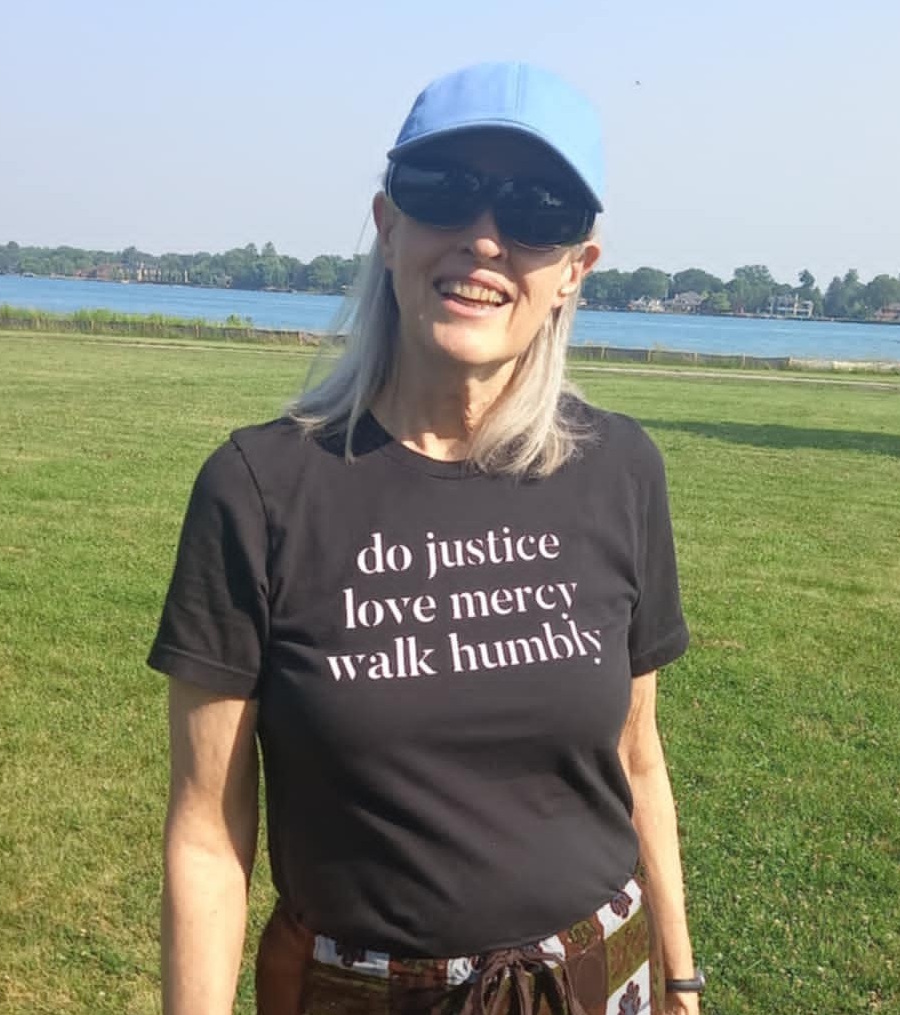





 Linnea's Lines