My Cup Overflows!

My cup overflows
with amazing grace,
precious gifts poured out
by your hands into my life:

my husband, life partner;
the gift of words and
service to you, beyond
anything I imagined;
my offspring and all
the years of watching growth;
community here and over there,
treasured brothers and sisters;
the beauty of this world
and all you have provided.
	
Here is my hope and prayer:
that the shalom in which
I live and breathe
might be consolation
to the world around me—

May my cup be full to the brim
and bless those around me.
When it gets jostled 
by hostile passersby,
or those in too much haste,
may it still be an
unexpected blessing.

And I rest in the confidence 
that you will fill it up again,
because your lovingkindness
is not temporary
but forever.
And you are the reason 
my cup overflows!

“My Cup Overflows” is a condensed version of a very long poem I wrote, one full of specific gratitude and of prayer (based on Psalm 16:5 and 23:5). Once you get started, it is hard to stop! And that says something about how contemplating God’s gifts has impact on perspective.

It’s a practice worth practicing! When I began to spend my first minutes in bed at night thanking God for the good things in that day I just lived, I found that my heart’s tensions were calmed. I shared this with a friend the other day, and she said that she starts her day that way, looking out her door and thanking the Lord for this day and for the flowers blooming—whatever is out there that shows his care. I like that. I do it differently, adding into my morning journal something good that I want to be grateful for. Sometimes it is sleep, or the fuchsia dawn breaking into the dark sky. Doing something like this is biblical:

This is the day that the LORD has made; let us rejoice and be glad in it. (Ps. 118:24 ESV)

As we go through the day, remembering to give thanks reminds us of God’s presence. In Every Moment Holy there are even prayers (called “liturgies” in this collection) for such seemingly mundane things as eating good food, meeting a beautiful person, or this one that touched my heart:

“Upon Experiencing Cheering Laughter: I praise you, O God, for these inexplicable gifts of mirth and merriment and laughter, delighting in such foretaste of the wellsprings of eternal joy that ever bubble and flow within your glad Trinity.”[1]

 Remembering to be thankful for “mundane” moments like this reminds us of the constant presence of our God and Savior, so it complements the discipline of practicing his presence. This is true on our good days and our hard days. There are times when circumstances can make us feel like our cup is empty, but when we turn to the One who loves us constantly, confessing our hurt or anxiety, and thanking him for being with us and listening to our heart-cry, we are living out our union with him. He prayed for that (John 17:21). It is like breathing our conversation with him:

“God is the giver and we are the thanks-givers. The circle is complete and it allows us to open yet a deeper part of our life where there is weakness and we acknowledge our dependence on God. God meets us at that point with another blessing and gift. His grace and help come into our lives. We recognize that he has met us and blessed us. We know that it is a gift of grace that he has brought into our lives, so we respond again with gratitude, praise, trust and faith. The circle is complete and the spiral of our life and experience with God continues to deepen and widen. Life begins to change, not because the circumstances are easier or less demanding, but because we begin to see them in a new light.”

Finishing up her deep contemplation of this discipline, Jay Sivits writes, “gratitude is something that I am. It is the difference between doing and being.”[2]

Being a thankful person changes one’s character.  In the Spiritual Disciplines Handbook one set of the reflection questions on gratitude is this: “How has a grateful person affected your own vision of what matters in life? How has someone who lives out of bitterness affected your life?”[3]

I’ll bet you were able to think of two very different people you know. I can. One grateful person that comes to mind is my mother-in-law, Elva Boese. Confined to her wheelchair or walker, she would not talk about her pain and weakness unless asked. Instead, she was exulting in the swans swimming in the pond beyond her window, or in a connection she had just had with a grandchild. And then there is the person who sees the cup “half-empty” or very sour, constantly. That is draining.

So how am I relating to the King of the Universe, my Abba? Complaints are obviously expected—just read the psalms of lament! But instead of wallowing in criticism and negativity, “thankfulness [would] be an antidote to [my] critical spirit.”[4] Practicing it could change the way I interact with others, too, spreading hope instead of despair. As we grow in our relationship with God, knowing him more intimately from both Bible study and life experience, gratitude will well up within us. That is the way we can actually do what we are told to do:

Be thankful in all circumstances, for this is God’s will for you who belong to Christ Jesus. (1 Thess. 5:18 NLT)

Let your roots grow down into him, and let your lives be built on him. Then your faith will grow strong in the truth you were taught, and you will overflow with thankfulness. (Col. 2:7 NLT)

This does not mean that every day will have sunshine instead of rain, using our Western way of looking at things. In the tropical woodland savanna where we lived in Côte d’Ivoire, people were thrilled when it was a gray, rainy day and the sun could not “beat them up.” One of our local “sons” (Abou Coulibaly) even burst into delight one day and said, in French, “Que ce jour est béni! Le ciel est tout gris!” I like to translate this into English this way: “It’s a beautiful day! The skies are all gray!” Sometimes we just need to shift our perspective to the blessing we can find, like rain on a dry land.

For one thing, no matter what is going on, our Lord is with us. He promised that. And he has proven it in history. A great way to remember this is to meditate on Psalm 107, which repeats over and over: “Let them give thanks to the LORD for his loyal love, and for the amazing things he has done for people!” (Ps 107:8 NET)   Or Psalm 136, where the repeated chorus is: “Give thanks to the God of heaven. His love endures forever. (Ps. 136:26 NIV)

Here are some suggestions for practicing this spiritual discipline:

  • gratefully notice God’s presence and blessings throughout the day; greet or end your day with a prayer of thanks
  • keep a gratitude journal, or write a poem
  • receive what you have as a gift, not an entitlement
  • write a letter of thanks to someone (I was prompted to do this, to thank my Hebrew professor from seminary for equipping me for the ministry God has given me)
  • practice valuing people by thanking them for who they are to you, or to a community
  • contemplate a hardship, find God’s presence in the hardship; if you cannot, fellowship with Jesus in Gethsemane. Listen to him.[5]

“Delight in God and his good will is the heartbeat of thankfulness.”[6]

Yes, He is the reason our cup overflows!


[1] McKelvey, Douglas. Every Moment Holy: Volume One Pocket Edition. (Nashville TN: Rabbit Room Press, 2019) 249.

[2] Sivits, Jay. “Developing the Discipline of Gratitude.” https://thewell.intervarsity.org/spiritual-formation/developing-discipline-gratitude

[3] Calhoun, Adele Ahlberg. Spiritual Disciplines Handbook: Practices that Transform Us. (Downers Grove, Illinois: IVP Books), 31

[4] Ibid.

[5] Ibid, 29,31

[6] Ibid., 29

In Spirit and in Truth


We worship in a cloud, unfocused
though we strain to see and feel --
yet worship what we know
within unknowing, all senses
clamoring for the Real:


-- the One who touches hearts 
with joy, whose fingers heal
the blinded eyes, deaf ears;
who feels our hurts because he hurt
as human-Godson, heart and soul.

-- the One who sees me, eyes
alert to know and change me,
penetrating always to the core,
not fooled by the hypocrisy
I put on like a suit, looking good.

-- the One who hears me, bending 
down to listen to my ramblings,
sorting out the whimpers from the whines
and hearing what the heart
most surely needs for health.

-- the One who smells the fragrance
of my praise, and blends it with
the songs of angels to concoct
aromas that unfurl in galaxies
and waken dances in the stars.

-- the One who made the amber sweet
of honey, hid cinnamon and coffee
in the plants, planned salt's allure, 
the hot surprise of pepper, invites me now
to savor his rich goodness.

He is the God of all the senses,
never numb to what is happening
to his children. I pray: he comes,
he bends, he hears, he enters me
and holds me in his love.

How was Sunday’s “worship service” for you? Were you able to connect with God and truly honor him? What part of the service prompted that response for you? Or, if you were at home, how did you worship?

For most of my life, the word “worship” became associated with singing and praying, being in some programmed setting. So many times I’ve attended a church service and gone through the motions, singing, bowing my head, following the sermon, ready to go home and get going on my day. Other times I am enticed by a song to actually focus on the wonder of who God is and what he has done. Or the message may jolt me out of my routine church attendance and offer me rich meat from the Word that makes me drool for more, and lifts my heart to God in wonder. I’ve often wished that was what going to church would always mean to me.

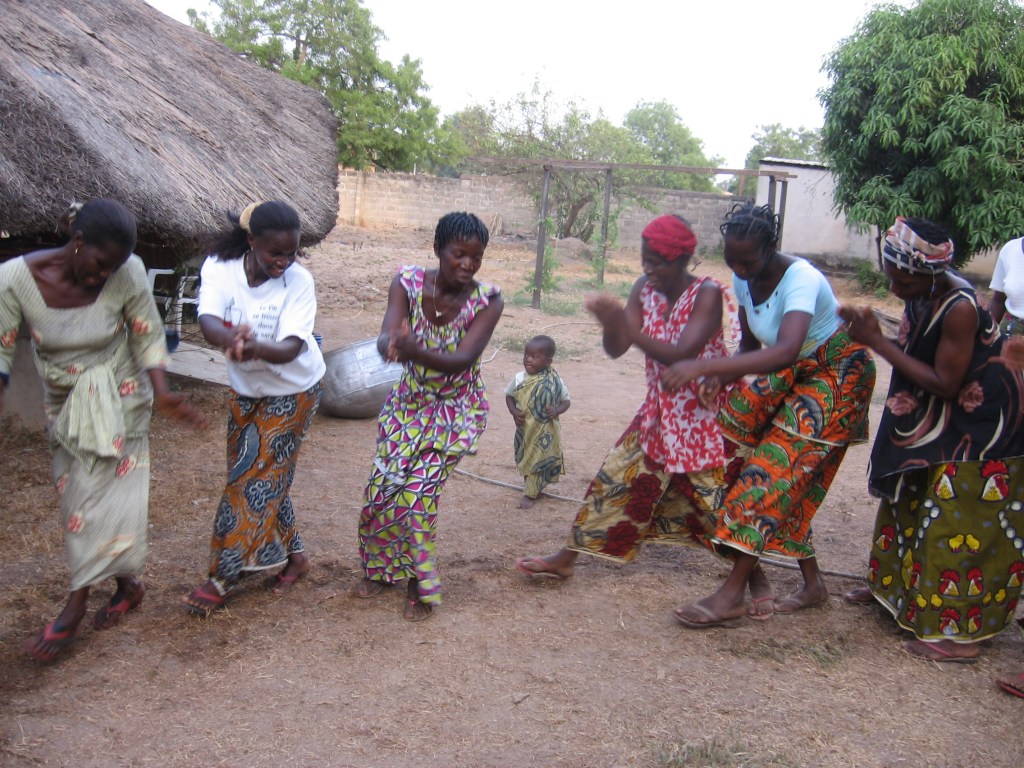
Back in Côte d’Ivoire, the West African styles of worship were very different. I was delighted when I discovered that there were times when community dance that accompanied a song praising God would suddenly make my heart erupt with joy, turning to him.

Then, sometimes it is sitting in quiet by the ocean, or by the Detroit River, or under trees in the yard that silence and solitude calm my heart and open it to contemplate the goodness and love of my Abba, my Messiah friend. Even in my private “skyhouse” space (remodeled attic) at home there are moments like that, but it takes focus.

Learning to dedicate a moment to worship, not just intercessory prayer (as precious as that is) has made a huge difference to me. So has digging into the deep writings of people who have taken the time to analyze what the Scriptures say and how we should apply them.

There are so many forms of “worship” that use of the term can be confusing. What did Jesus mean when he told the Samaritan woman that what God truly wants is for people to worship him “in spirit and in truth”? (John 4:23) Both of these are essential.

Sam Storms explains the “spirit” aspect this way: “To say that we must worship God ‘in spirit’ means, among other things, that it must originate from within, from the heart; it must be sincere, motivated by our love for God and gratitude for all he is and has done. Worship cannot be mechanical or formalistic. That does not necessarily rule out certain rituals or liturgy. But it does demand that all physical postures or symbolic actions must be infused with heartfelt commitment and faith and love and zeal.  But the word ‘spirit’ here may also be a reference to the Holy Spirit—there’s disagreement among good Bible scholars. The apostle Paul said that Christians ‘worship by the Spirit of God and glory in Christ Jesus and put no confidence in the flesh’ (Phil. 3:3). It’s the Holy Spirit who awakens in us an understanding of God’s beauty and splendor and power. It’s the Holy Spirit who stirs us to celebrate and rejoice and give thanks. It’s the Holy Spirit who opens our eyes to see and savor all that God is for us in Jesus.”[1]   

John Piper agrees that emotion accompanies worshiping in spirit, and elaborates on these truths in his classic book, Desiring God. “God is not worshiped where He is not treasured and enjoyed. Praise is not an alternative to joy, but the expression of joy. Not to enjoy God is to dishonor Him. To say to Him that something else satisfies you more is the opposite of worship.[2] . . . I must pursue joy in God if I am to glorify Him as the surpassingly valuable Reality in the universe. Joy is not a mere option alongside worship. It is an essential component of worship . . . Worshiping in spirit is the opposite of worshiping in merely external ways”[3]

I love Piper’s quote from C.S. Lewis in The Last Battle:  ”There is a kind of happiness and wonder that makes you serious.”[4]

So whether we are expressing joy in physical ways or personal prayer and praise, it must spring from our hearts. Worship includes emotions. The Holy Spirit is given us to bring us into a true posture of worship, fueled by the truth regarding the character of God. Knowing God more and more intimately brings trust in him and real joy in his presence. Piper gives a meaningful expression of how this works:

“The fuel of worship is the truth of God; the furnace of worship is the spirit of man; and the heat of worship is the vital affections of reverence, contrition, trust, gratitude, and joy.[5](74)

Did you notice that he added “contrition” to the list of emotions? That is because being in God’s presence often reveals a matter that we need to make right with him. His holiness illuminates our need to repent and ask for forgiveness, which then releases us to truly be at home with him, adoring him.

Yes, our worship must be founded on what the Lord has revealed to us in his Word, what the Spirit is underlining for us in the moment. It must never be based on flippant assumptions or “heresy”.[6] As we grow in that process of knowing God and who he is, we will respond in awe and wonder.

“It follows that forms of worship should provide two things: channels for the mind to apprehend the truth of God’s reality and channels for the heart to respond to the beauty of that truth.”[7]

Those channels are the various practices and experiences that incite worship for us. Some of us find that we worship best in quiet moments, alone. But worship in the assembly of other believers is also normal. Depending on where in the world the assembly takes place, and whether it is in a large church or a small group, even a family, it may take on a huge variety of forms. As Adele Calhoun says, “The heart of worship is to seek to know and love God in our own unique way . . . One style of worship is not better than another. The quality of worship emerges from the heart and its focus.”[8]

The core of worship, then, “is to see God as worthy, to ascribe great worth to him.”[9] It is a spiritual discipline, a part of spiritual formation, when we pay attention to practicing it in solitude and in union with other believers, when “our thoughts and words turn to perception and experience of God, who is then really present to us in some degree of his greatness, beauty and goodness.”[10] This changes and strengthens us!

These authors who mentor us so well point out Scriptures that command us to worship and underline the delight we will find in doing so. God is so amazing, and by paying attention to his invitation to truly enjoy his love and goodness, we will find that worship is the awakening of our senses to who he is. Someday we will see him face to face and worship with the millions. But right now we can be with him in that mysterious union that he calls us to, desiring to enjoy him.

Scriptures that push us to worship in spirit and truth:

Take delight in the LORD, and he will give you the desires of your heart. (Ps. 37:4 NIV)

I delight greatly in the LORD; my soul rejoices in my God. For he has clothed me with garments of salvation and arrayed me in a robe of his righteousness, as a bridegroom adorns his head like a priest, and as a bride adorns herself with her jewels.

Ascribe to the LORD the glory due his name; worship the LORD in the splendor of his1 holiness. (Ps. 29:2 NIV)

Worship the LORD in the splendor of his1 holiness; tremble before him, all the earth. (Ps. 96:9 NIV)

Exalt the LORD our God and worship at his footstool; he is holy. (Ps. 99:5 NIV)

Worship the LORD with gladness; come before him with joyful songs. (Ps. 100:2 NIV)

Therefore, since we are receiving a kingdom that cannot be shaken, let us be thankful, and so worship God acceptably with reverence and awe, (Heb. 12:28 NIV)


[1] Storms, Sam. “What Does It Mean to Worship God in Spirit and Truth?”  (Lightstock: March 14, 2020) Sam Storms

[2] Piper, John. Desiring God, (Revised Edition, The Crown Publishing Groupz; Kindle Edition) ,16.

[3] Ibid., 74.

[4] Ibid., 5.

[5] Ibid., 74.

[6] Storms.

[7] Piper, 93.

[8] Calhoun, Adele Ahlberg. Spiritual Disciplines Handbook: Practices that Transform Us. (Downers Grove, Illinois: IVP Books), 45.

[9] Willard, Dallas. The Spirit of the Disciplines: Understanding How God Changes Lives. (HarperSanFrancisco:1988). 177

[10] Ibid., 178.

Let’s Celebrate

God, who fills the universe,
who made it all, the stars and space,
did choose to put mankind on earth
and focus on this tiny place.

Hallelujah! We sing God's praise!
He offers us his warm embrace,
for as a man he took our place
to pay for sin -- amazing grace!

The perfect world he made for us
was broken by our parents' sin,
and nothing we try is enough
to heal it, make it whole again.

Our God, whose heart is endless love,
could never leave his children lost.
He left his palace up above
to be a man, at a huge cost.
	
Scrunched into human form, Jesus
would usher in God's Kingdom come,
to put an end to what kills us,
for he would die, God's holy Son.

This baby was no accident,
born in a stable, far from home;
Messiah, chosen one, God-sent,
his death killed death, made us his own.

Hallelujah! We sing God's praise!
He offers us his warm embrace,
for as a man he took our place
to pay for sin -- amazing grace!

Hallelujah! That word gained more depth for me when I was taught its meaning. It is borrowed straight from the Hebrew, two words that are translated into English as “Praise the LORD,” from “Praise Yah!” And that last word, Yah, is short for Yahweh. Praising him as a response to that call can come in many different forms. One of them is celebration.

How did you celebrate Easter this year? What was your most joyous moment? How do you express your praise to God at home, or at church, or in a community?

We are each made with unique personalities and our giftings are complementary, so we differ in what frees us to truly rejoice. Expressing joy and gratitude for the goodness of God is what celebration is all about when it is done in the context of worship and investment in spiritual growth. That is why it is even considered a spiritual discipline!

That was new to me, the first time I read about it in the Spiritual Disciplines Handbook: Practices that Transform Us.[1] What? Celebrations of Christmas, or Easter, or a baptism or wedding had always seemed more like parties, or festivals that come with attending church. Digging into the actual practice of celebrating God’s goodness opened up new avenues of spiritual development for me.

I began to pay attention to the incredible diversity that exists in ways we can celebrate. Which things bring deep gladness to your heart and a response of praise and worship? Here are suggestions: listening to music, playing music, singing, dancing, sharing with others, hospitality, joyful prayer, walks in nature, holiday traditions that incite gratitude for the Lord and what he has done, journaling praise, writing poetry . . .

Many powerful celebrations are done in community. A strong example is all of the festivals, or feasts, prescribed for Israel. They included special foods in special places, each festival shaped to commemorate an event, like Passover, or to express gratitude for harvest, or even for atonement.

When we were in Côte d’Ivoire, we learned several forms of celebration new to us. The one that was hardest to adapt to at first was an all-night gathering (veillée) lwith other believers on Christmas Eve or the night leading to Easter dawn. For years, the Christmas veillée in Ferke town was held in our courtyard, which had the biggest private space available for the church members at that time. The three churches in town would gather there for six to eight hours of singing (in multiple languages by immigrant and local groups), testimonies, Bible reading, and messages. We let our kids go back into the house at midnight!

Then as the church grew in Tiepogovogo, the Easter and Christmas veillées added Nyarafolo dancing, with counter-clockwise circles going on for hours. It kept everyone awake, yes, but it was a way of expressing joy as different song lyrics and tempos would turn our hearts to gratitude, or contemplation of truth, or community unity. The dancing lit a fire in my heart, even with the dust rising in the air as the feat beat the rhythms. Not so much for my husband, who was not naturally comfortable with that mode of celebration. He did appreciate the group joy, however, and sitting around a fire in the wee hours with friends, or playing fun stuff with the little kids while most of us were dancing. And the messages and Scripture reading.

Of course that village veillée included food, brought to the church courtyard in big pots by the women. Eating together expresses unity and community, the pleasure of fellowship, in a special way.

This Easter, here in Michigan, I was privileged to be in the church choir. Multiple songs were interspersed between Scripture readings about the death and resurrection of Jesus and two messages. Some songs were choral offerings, some were sung with the congregation, others featured soloists. All of it filled my heart with so much jubilation that sometimes there were shivers or wet eyes.

Then at home we shared a special meal: salmon, asparagus and lemon cake. Just enjoying that food with my family brought gratitude for our shared faith, for the grace of God in providing this food and home for us, for all that Jesus did for us, so that we can rest in his gracious love.

I have not always analyzed celebration that carefully, but I wanted to write about this practice this week that commemorates so much. Just planning for that gave me focus.  As Dallas Willard says, this is not about trying to just develop a spiritual discipline. “Rather it is the effective and full enjoyment of the active love of God and humankind in all the daily rounds of human existence where we are placed.”[2] Learning to pay attention to God’s active love completes worship, and expressing gratitude fortifies us.  “Celebration heartily done makes our deprivations and sorrows seem small, and we find in it great strength to do the will of our God because his goodness becomes so real to us.”[3] Ah! It even strengthens us as we move on in life!

In fact, “the spir­i­tu­al dis­ci­pline of cel­e­bra­tion leads us into a per­pet­u­al jubilee of the Spir­it.” And “it is not just an atti­tude but also some­thing that we do. We laugh. We sing. We dance. We play.”[4] David and the other psalmists urged us to celebrate vibrantly:

1Praise the LORD! Praise God in his sanctuary!

Praise him in the sky, which testifies to his strength!

2 Praise him for his mighty acts!

Praise him for his surpassing greatness!

3 Praise him with the blast of the horn!

Praise him with the lyre and the harp!

4 Praise him with the tambourine and with dancing!

Praise him with stringed instruments and the flute!

5 Praise him with loud cymbals!

Praise him with clanging cymbals!

6 Let everything that has breath praise the LORD!

Praise the LORD!  (actually: Hallelu Yah!)   (Ps. 150:1-6 NET)

We can celebrate on our own, when out in nature (like when we see a magnificent sunset). We can praise him in social media, or at home around the table. We can join with brothers and sisters in Christ in a small group, or sing (and dance maybe!) and gather an orchestra at church to make the praise instrumental too. Good news, maybe an answer to prayer, can lead to spontaneous laughter and a rush to share it with a prayer partner or small group.

However we practice celebration, we want to engage “in actions that orient the spirit toward worship, praise and thanksgiving. Delighting in the attentions and never-changing presence of the Trinity fuels celebration.”[5]

Let’s celebrate!


[1] Calhoun, Adele Ahlberg. Spiritual Disciplines Handbook: Practices that Transform Us. (Downers Grove, Illinois: IVP Books), 26-29.

[2] Willard, Dallas. The Spirit of the Disciplines: understanding how God changes lives. (HarperSanFrancisco, 1988), 138.

[3] Ibid., 179, 181.

[4] Foster, Richard. “Understanding Celebration”  https://renovare.org/articles/understanding-celebration

[5] Calhoun, 26.

Seeking His Face

When I heard him say, “Seek my face,”
my heart skipped a beat like a goat leaping high
to land on a ledge then jump to the top
of a high crag, flat, and shaded by pines
to find him there, his face lit up
by the rising sun.

I wanted to ask him to share with me
some reasons behind all the suffering,
to draw me a map of the road laid out
for the coming days. But standing before him
I suddenly knew that one thing alone
was priority. 

So I bowed my heart 
and listened.

The fire of his Presence warmed my soul,
the light from his eyes swept clean
the dingy crannies, the hoarded toys,
and I flew like a moth right into that flame
and found it health and life and love,
all dross removed.

To find his face is to be with him,
to know his heart and to rest, assured
that he rules the world and is wholly good,
that his Family is his true delight,
that he knows all about me
yet hugs me close.

Your face, Lord,
I will seek.

Why would I “fly like a moth right into that flame”?  Wouldn’t that have scared me away? There had to have been something comforting in the way his face was lit by the rising sun, something that led me to trust that flame.

Yes, that was it. When I was fifteen and away at boarding school, at Ivory Coast Academy, I was yearning for something more in my spiritual life. I was committed to Jesus, enjoying the Bible studies and singing in the choir, having a short daily time in the Word and prayer. Why was this not enough?

In the school library I noticed a book that intrigued me, The Pursuit of God by A.W. Tozer. Why would anyone need to pursue God? Isn’t he always around? I checked it out, began reading, and took off in a new direction like a sheep scrambling up a mountain to meet with my Father/Master/Counselor in a deeper way.

I’ve been reviewing that book to find out what it was that touched me so deeply. There is a lot! And it echoes a verse that I memorized when I was about six, at the family breakfast table:

Draw near to God and he will draw near to you.  (Jas. 4:8 NET)

“Draw near” had always seemed like “coming close,” not a fervent “chasing after” which is implied by “pursue.”  The reason Tozer uses “pursue” is because his main point is to emphasize that this is not passive, just sitting beside someone, but is about looking for God with everything that is within you. It is true that ‘all the time we are pursuing Him we are already in His hand”[1] and the desire to pursue him actually is actually planted in us by Him. I had thought that having given myself to Him, that was basically enough. What God was inciting in me was a hunger to know him intimately, not to just know about him even though that in itself is treasure.

We cannot know a person deeply when we’ve only met them and read about them. It takes spending time with someone, doing more than just working together somewhere, singing, sitting on the same bus. A marriage cannot achieve deep intimacy without mutual sharing of thoughts and feelings—not just once, but increasingly as time moves on. If the husband is away at work for hours, even traveling, and when he comes home he eats, reads the paper, watches a movie, and goes to bed,. the wife is not a partner in his inner journey. I discovered that myself, especially when both Glenn and I were working so hard we ended the day worn out. We had to make space and time for real sharing or we were just drifting apart.

God is a person, with depth far beyond our complete understanding. But what he desires is a “continuous and unembarrassed interchange of love and thought”[2] with his daughter or son, a relationship that keeps on growing.

“To have found God and to still pursue him is the soul’s paradox of love . . . justified in happy experience by the children of the burning heart.”[3] That flame was lit in my heart, and I began to experience its warmth as I opened up to whatever He wanted. His fire lights up dark places too, and burns away trash and anything I am allowing to be more important than he is. That is because he is holy, and fire is the image he has used of himself when appearing to Moses, that symbolized him in the Holy Place in the tabernacle, that fell on disciples at Pentecost.[4] It is a purifying and attractive flame that invites our approach.

How can we practice this unembarrassed exchange? First of all, by wanting it. That makes us receptive spiritually to his approaches and willing to experience ongoing renewal through these interactions. This is what it means to develop “godliness,” a term that often has come to mean a kind of piety in modern thought. We found the concept a challenge to translate into Nyarafolo until we discovered that one of the recent French translations uses the phrase “attached to God.”  This if a firm attachment that leads to walking every moment of life with him, inwardly keeping our soul’s “gaze” fixed on him. Even when “compelled to withdraw their conscious attention in order to engage in earthly affairs, there is within them a secret communion always going on.”[5]

It does take practice, but as the Word says, we are to “make every effort” (2 Pet 1:5-6, 3:14 NET) to grow in all the ways he teaches. These bring us into increasing union with him as we “seek his face.” What does that mean? Well, when we are face to face with someone we are looking at them, eyes engaged, up close to them. It is being together and there is communication. Here is a comparison of some English translations and how they try to make this clear:

My heart says of you, “Seek his face!” Your face, LORD, I will seek. (Ps. 27:8 NIV) My heart has heard you say, “Come and talk with me.” And my heart responds, “LORD, I am coming.” (Ps. 27:8 NLT)

Seek the LORD and his astrength; seek his presence continually! (Ps. 105:4 ESV)  Search for the LORD and for his strength; continually seek him. (Ps. 105:4 NLT)

Look to the LORD and his strength; seek his face always. (1 Chr. 16:11 NIV)  Seek the LORD and the strength he gives! Seek his presencecontinually! (1 Chr. 16:11 NET)

“Face” is a Hebrew manner of referring to a person’s presence. David made it clear that his one and only desire was to be in Yahweh’s presence every moment. When he wants to stay in the “house of the LORD” he is referring to living in that presence.

One thing I ask from the LORD, this only do I seek: that I may dwell in the house of the LORD all the days of my life, to gaze on the beauty of the LORD and to seek him in his temple. (Ps. 27:4 NIV)

Timothy Keller cites the way a commentator underlines the intensity of David’s statement here: “ ‘One, one, one, only, only one thing I want’ . . . it’s a grammatical expression of an extraordinary singleness of purpose.” It occurs is in the middle of a lament about the dangers all around him. He is saying: “No. I’m not going into prayer in order to get things from God, though I might ask about things. I want to get God. Not things from God; I want to get God. That’s the one thing I have to have. I have to have that kind of prayer life. I have to have that kind of fellowship. If I have that, then it doesn’t matter what my enemies do.”[6]

If it was enough for David, who went through countless trials, stumbled and fell, but was chosen by the Lord because he was “a man after his own heart” (1 Sam 13.14), then it should certainly be enough for me and for you. What our Father wants is for us to truly know him, to respond to his warm invitation by running to him and building an increasingly closer relationship to him. Our trust will grow the more we get to know him, as we plunge the depths of his goodness and power. Then, in addition to using lots of spiritual energy, we also find our place of comfort and rest:

Then Jesus said, “Come to me, all of you who are weary and carry heavy burdens, and I will give you rest. (Matt. 11:28 NLT)

Many godly people have gone before us and have passed on practices that they have found fit right into this pursuit of God. We will be exploring them. It’s like becoming physically fit—it takes more than just doing stretches, even though they help. Let’s run this race with all we’ve got!


[1] Tozer, A.W. The Pursuit of God. (Camp Hill, PA: 1982, 1993), 12.

[2] Ibid., 13.

[3] Ibid., 14.

[4] Ibid., 37.

[5] Ibid., 86

[6] Timothy J. Keller, “Repose: The Power and Glory,” in The Timothy Keller Sermon Archive, 2014–2015 (New York: Redeemer Presbyterian Church, 2014), Ps 27.

Never Alone

I thought I was alone, figuring out
how to navigate this world.
Sometimes I walked in burning sun,
seeking shade or longing for sunset.	 
Or blasting winds would throw debris
over the path, hiding the way forward.
Forks in the road scared me. Right? Left?

But then I sensed eyes on me,
a presence by my side.
Who was there, tracking me?
I learned that I had a friend,
a companion and counselor
sent to me to share this journey.
He cares! He knows the master plan! 

All I need do is trust, and listen.
I’m never alone! Chaos cannot
tear us apart. His strength holds me
and since he has the map,
our shared purpose keeps us on track
in inclement weather or twisting paths.
He’s my Companion of the Road, always.

When I was 16, an MK in Côte d’Ivoire, I was committed to Jesus. But when my family went to the field’s annual conference that year I wondered if I really had taken a certain key step.

The pastor who was supposed to come speak that year, giving daily messages to encourage us all spiritually, had to cancel his trip. When the field leaders checked in with other missions that would also be meeting around that time, they discovered that C&MA had a speaker coming who would be able to stay a bit longer and join our conference as well.

This man was a powerful preacher, a bit more charismatic than we usually experienced. I was intrigued. After the second or third meeting, some of our missionaries began to line up for prayer. Some needed healing. The pastor would anoint them with oil and pray over them. I watched in wonder as two of the adults that I especially admired went forward for prayer.

There was one personal dilemma that kept coming to mind. I had heard of the “fullness of the Holy Spirit,” and I wondered: had I ever really been filled? I had never experienced any moment of signs and wonders, such as had happened in Acts. When I could no longer resist, I leaned over to Dad, who was sitting beside me, and whispered, “Dad, I really want to go forward and ask for prayer to be filled with the Holy Spirit.” I wouldn’t go if he said not to. But instead his answer was, “I will go with you.”

So we got in line, and when I approached the pastor I told him that I longed to be filled with the Spirit. He told me to kneel in front of him, and began praying. I was waiting with anticipation. And then I heard a quiet, clear voice in my inner being.

“Hon, you already have me!”

I was astonished and delighted. I got up, thanked the pastor and went back to my seat. Yes, I had really heard that Voice! What I wanted to do now was learn how to hear it more, to live out a reality I had not previously recognized.

There came a time about five years later when a relative that I loved urged me to consider asking for the Spirit to indwell me. She knew I had never spoken in tongues or had any other miraculous experience. I told her about my journey in being increasingly committed, and about that prayer time at conference and the inner Voice that I had heard.

“Well, okay!” she said. And she never brought it up again, but trusted my walk with my Lord.

Of course it has been a learning curve, recognizing the Spirit’s nudges and direction. But he is the Spirit of the Father who made me and has a purpose for me, and the Spirit has indeed kept me on the right path. He is the Spirit of my Lord and Savior, Jesus, sent to comfort me and counsel me

My part is to listen to him. Jesus was comforting his disciples with this news that they would not be alone when he left the earth:

But when the Father sends the Advocate as my representative — that is, the Holy Spirit — he will teach you everything and will remind you of everything I have told you. (Jn. 14:26 NLT)

The “Advocate” is a translation of the Greek word paraclete. So some translate it as “helper” (ESV) or “counselor” (CSB). He is indeed a caring teacher, and one who speaks for Jesus.

 Because faith in Jesus makes us God’s children, we are then led by the Spirit.

For those who are led by the Spirit of God are the children of God. (Rom. 8:14 NIV)

And our Father is good. He does not allow his sons and daughters to live without protection and his presence. Paul underlined this when he wrote to the Corinthians:

May the grace of the Lord Jesus Christ, and the love of God, and the fellowship of the Holy Spirit be with you all. (2 Cor. 13:14 NIV)

We are saved by grace, because Jesus died to save us, once for all. And he was sent to do this by God himself because of his love for the world. When Jesus ascended to heaven, he did not leave us alone! He sent a companion to be with us on the path, a friend and comforter who is also our guide. That is the sense of “fellowship.” The Oxford Languages dictionary gives this definition of the word: “friendly association, especially with people who share one’s interests.”

This reminds me of a Nyarafolo term for people who are in your shared community, with one purpose. They are “companions of the road.” All of us who walk together in the Kingdom of God are meant to live out our companionship here on earth. And then think of the privilege of having the Spirit of God himself as our companion! As our Companion of the Road, the Jesus Road, he comforts us when we are hurt or sad, accompanies us when lonely, laughs joyfully with us when we exult in a victory or delight in a new discovery.

The Spirit walks with us on the long life path we are on, and not only accompanies us but changes us:

So I say, walk by the Spirit, and you will not gratify the desires of the flesh. (Gal. 5:16 NIV)

How can we “walk by the Spirit”? It means to listen to him, and respond by doing what he says to do, living it out. Since we often have a steep learning curve in doing this, throughout the ages much has been written by people who have discovered ways in which we can consciously participate in this transforming process. Back in the Garden of Even, God came to walk with Adam and Eve daily. It was sin that broke off that sure connection, but the Father encourages us to open ourselves to true spirituality, which is “simply the holistic quality of human life as it was meant to be, the center of which is our relation to God.”[1] God has sent me his Spirit to renew me:

. . .he saved us not by works of righteousness that we have done but on the basis of his mercy, through the washing of the new birth and the renewing of the Holy Spirit, (Tit. 3:5 NET)

That “renewing” happens when we turn to Jesus. But it also keeps happening. We are cleansed, but need to keep on learning and being changed:

…you have taken off your old self with its practices 10 and have put on the new self, which is being renewed in knowledge in the image of its Creator. (Col. 3:9-10 NIV)

“Being renewed”! This is ongoing. And one of the ways thousands of believers have found to increase their knowledge of Jesus, and live that out, is through what are usually called the “spiritual disciplines.” Another way to understand the term is to see it as spiritual formation, or practices to encourage ongoing renewal.

I have found myself drawn to these practices. At first I was just using opportunities in my environment, such as time set aside for devotions at boarding school. It became a daily habit to read the Scriptures, and pray for ways to apply what I read to my life. Through InterVarsity in my college years I also learned the inductive study method. And as I grew older I found journaling my journey to be a way to concretize what I was learning. I began to delve into books on the spiritual disciplines, and found several to be extremely helpful. As this section of “Linnea’s Lines” develops I will be referring to them. I actually began to see the authors as spiritual mentors, who did not know me personally but were truly encouraging me to grow in my walk with Jesus.

It was all worth it. Life without the companionship of the Spirit would not only be lonely, it would be pointless. Because we can walk with him, we are never alone, always guided and comforted!

“Spirituality is simply the holistic quality of human life as it was meant to be, at the center of which is our relation to God.”[2]


[1] Willard, Dallas. The Spirit of the Disciplines: understanding how God changes lives. (HarperSanFransisco, 1988), 76.

[2] Ibid., 77.

Set Apart

Set apart from the start
(once I gave myself to you)
I did not know
how far you’d go
to make me someone new!

But I am yours, much-loved,
learning like a daughter should
who wants to know
how best to grow
and act just like you would.

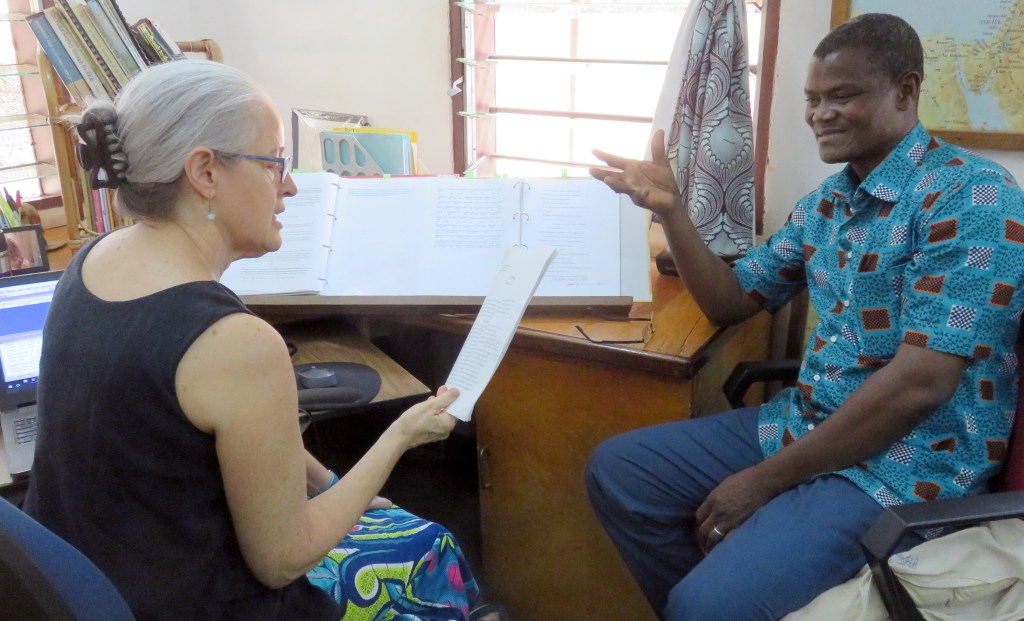
When my Nyarafolo translation partner Moïse and I were working on the book of Leviticus, we met many challenges. But the one that influenced me most was researching the word “holy” and differentiating it from “sacred” or “consecrated,”  “set apart.”  God is holy, even called by the name “the Holy One of Israel,” and he is not consecrated or set apart.

When applied to God, “holy” means absolutely perfect, morally and ethically completely good. There is no defect in him (this is the meaning of the word we used for his holiness in Nyarafolo: tiɛlɛfun (without defect). Holiness is his nature. This means that he can be relied on. He is always faithful, always does what he has promised to do. When we truly know him, experiencing his presence and activity in our lives, we humans respond to his majesty and otherness with awe and compelling fascination. However, it must not stop there! “The experience of God revealing himself as ethically holy calls for the human response to a holiness resembling his own (Lev 20:7).”[1]

Consecrate yourselves and be holy, because I am the LORD your God. (Lev. 20:7 NIV)

To consecrate yourself, you must commit yourself to being set apart for lifelong service to Yahweh. The priests in Israel were set apart like this, and now we who belong to Yahweh through the work of Jesus Messiah are priests too!

But you are a chosen people, a royal priesthood, a holy nation, God’s special possession, that you may declare the praises of him who called you out of darkness into his wonderful light.  (1 Pet. 2:1 NIV)

Being set apart, we are to do everything that we can to know him and to live as we should, developing a character different from people who do not belong to him.

Peter was a disciple of Jesus who experienced what it was to walk life daily with this Master. When we follow his story we can see that this was not always an easy road. When Jesus said to throw his nets back into the water where he knew there had been no fish before, Peter learned that the Lord could provide what seemed impossible. He had to risk walking on water to learn that he needed to keep his eyes fixed on Jesus and not on the storm around him. And he learned that his Lord would forgive him even when he had totally failed him by denying that he knew him, at the crisis point of Jesus’ ministry.

Because he truly knew Jesus, Peter wrote to his own disciples about what they must do to follow him. It would not be a matter of just declaring that they believed his claim to be Messiah and ask for forgiveness, but then keep on living according to their world’s standards. No! It would mean making their life purpose a whole new one: becoming like him.

That’s one of the reasons why it was so deeply meaningful to me to participate in translating the two letters in the New Testament that Peter wrote. He was like a coach telling the athletes that they absolutely must give this endeavor everything they have in order to be successful—they are not just sitting on the sidelines!

So you must live as God’s obedient children. Don’t slip back into your old ways of living to satisfy your own desires. You didn’t know any better then. But now you must be holy in everything you do, just as God who chose you is holy. (1 Pet. 1:14-15 NLT)

Through these he has given us his very great and precious promises, so that through them you may participate in the divine nature, having escaped the corruption in the world caused by evil desires. For this very reason, make every effort to add to your faith goodness; and to goodness, knowledge; and to knowledge, self-control; and to self-control, perseverance; and to perseverance, godliness; and to godliness, mutual affection; and to mutual affection, love. (2 Pet. 1:4-7 NIV)

What? We can participate in the divine nature? That is awesome! It is true that we cannot do this on our own, without the Spirit’s empowerment. He alone can develop that unity with God that literally changes our nature. Peter made it clear that it was because the Spirit had set them apart that they were on track to obey their Lord, right from the beginning of his letter. He said he was writing to:

[those] who have been chosen according to the foreknowledge of God the Father, through the sanctifying work of the Spirit, to be obedient to Jesus Christ and sprinkled with his blood: Grace and peace be yours in abundance. (1 Pet. 1:2 NIV)

Nevertheless, even though the Spirit is doing essential work we are not to go on as if nothing is now required of us. With the peace and generous love that come to us from God, we are to do all we can to become morally pure, like him:

But just as he who called you is holy, so be holy in all you do; (1 Pet. 1:15 NIV)

This was not new to the Jews who knew the essentials of the covenant they had with Yahweh:

“Speak to the entire assembly of Israel and say to them: ‘Be holy because I, the LORD your God, am holy. (Lev. 19:2 NIV)

But to those entering the new covenant, becoming a child of God through Jesus, this had to be startling. And I’m afraid many of us today find it so astonishing that it seems impossible. How can we be morally perfect, without any defect, like God himself?

It is a process that demands our cooperation. We are told to “make every effort” to work with him:

 For this very reason, make every effort to add to your faith goodness; and to goodness, knowledge; 6 and to knowledge, self-control; and to self-control, perseverance; and to perseverance, godliness; 7 and to godliness, mutual affection; and to mutual affection, love. ( 2 Pet. 1:5-7 NIV)

That list of qualities becomes meaningful to us when we know the Lord and his Word and understand how he lived them out. How do we get to know him and live like he did? James, who knew Jesus as a brother and became a fervent disciple, tells us this:

Submit yourselves, then, to God. Resist the devil, and he will flee from you. 8 Come near to God and he will come near to you. Wash your hands, you sinners, and purify your hearts, you double-minded. 9 Grieve, mourn and wail. Change your laughter to mourning and your joy to gloom. 10 Humble yourselves before the Lord, and he will lift you up. (Jas. 4:7 NIV)

When I was a child, back in the days when my parents were missionaries in the Congo, I remember the practice we had of memorizing verses that were on a little pack of cards in a box when we were just finishing breakfast. The one that moved me most, and that I clung to during my older years when I was longing to really know my Lord, was that first part of verse 7: Come near to God and he will come near to you. I can testify that what this says is true. By paying attention to what he left us in the Word, by opening my heart to him in prayer, by listening to mature disciples’ encouragement and teaching, I became closer and closer to him. He became truly the essential person in my life. With every effort I made to know him, he was coming closer to me, more real and present to my senses all the time.

When we get that close to him, we care what he thinks. We even want to do what he tells us to do. We trust him because we know he is good, faithful, completely reliable, so just as we would trust our earthly parent that we know wants the best for us, we learn to respect his direction. It is worth making every effort to participate in his transformation of our nature, and to keep on doing so!


[1] Willem VanGemeren, ed., New International Dictionary of Old Testament Theology & Exegesis (Grand Rapids, MI: Zondervan Publishing House, 1997), 883.

If Only!

If only every word I speak, each tone of voice,
were only what I’ve heard from you!
If only every action, in each sacred moment,
were only that which pleases you!
If only every step I take would move me forward
with my eyes fixed just on you!
If only I could grow in grace and holiness
to be in every way like you!

If only! Yes, we may long to become perfect, to be like Jesus, but attaining that goal can seem truly unrealistic! I remember feeling that way when we would sing this hymn in my youth:

Oh! to be like Thee, blessed Redeemer,
This is my constant longing and prayer;
Gladly I’ll forfeit all of earth’s treasures,
Jesus, Thy perfect likeness to wear.[1]

What does it take to achieve that kind of goal?

Lately I’ve been studying the diets recommended to combat certain physical issues. I even made a chart that notes which foods I should eat, which foods I should avoid. That’s all a great start. But what if I just leave it there and don’t follow any of these recommendations?

Or what if someone wants to get a license to drive. If they study the rules of the road, and even learn the parts of a car that one must master in order to make it run, but never actually practice driving with a parent or other mentor, will they be ready to pass the test? And you may have experienced the difference between when a student driver or a practiced driver navigates an unknown country road that has not been maintained. My husband Glenn (in the photo above) has spent years perfecting how to choose the best path through ruts, rocks and potholes and how fast to drive when out in the bush. Practice has definitely made his skills exceptional!

Studying what Jesus said in the Sermon on the Mount has impressed on me once again that being a true disciple means going beyond just conforming to outward appearances, like saying you are a Christian and attending church. It means truly knowing Jesus (not just knowing about him), and knowing what he and his Father said in the Scriptures, and then actually practicing those things. Many writers have pointed out that Jesus’ message has often been viewed as good moral teaching, then set aside while life is lived as the person wishes.

But Jesus said, ““My mother and brothers are those who hear God’s word and put it into practice.” (Lk. 8:21 NIV) To be in his Family means taking Scriptural instruction seriously and actually learning to live it out! Otherwise, you are showing that you are not related to him!

At the end of his Sermon on the Mount he described it this way:

“Therefore everyone who hears these words of mine and puts them into practice is like a wise man who built his house on the rock. 25 The rain came down, the streams rose, and the winds blew and beat against that house; yet it did not fall, because it had its foundation on the rock. 26 But everyone who hears these words of mine and does not put them into practice is like a foolish man who built his house on sand. 27 The rain came down, the streams rose, and the winds blew and beat against that house, and it fell with a great crash.”  (Matt. 7:24-27 NIV)

The foundation, the Rock, is Jesus and his teaching. Putting what he said into practice prepares the disciple to stand firm, to be unshakeable, when a “storm” comes. He may be facing suffering, or opposition, or danger. But his true inner person stays firmly attached to Jesus and the Master’s straight, narrow path. He has been made strong by building his life on that foundation, whereas the person who did not practice the teaching was fragile. He crashed.

So to be Jesus’ devoted disciple, we must practice doing what he told us. Try doing this along with me: go through the Sermon on the Mount, read each section and meditate on it, pray, then decide how you should implement it in your life. Practice it, so that you can live it out as an automatic way to navigate life—like a skilled driver who intuitively makes the right decision when faced with an unexpected challenge. Here is a beginning list of topics Jesus’ underlined as key:

  • dealing appropriately with anger at a brother
  • being a peacemaker, doing what is necessary to work toward reconciliation
  • conquering lust
  • keeping your promise
  • loving your enemy
  • working to please God, not just to please people (godly motivation)
  • doing what honors your one Master
  • not worrying—trusting God’s love, his care
  • developing discernment—not “judging” without careful personal introspection, and avoiding assumptions
  • doing to others what you want them to do to you
  • staying on the straight path – not swayed by false teaching
  • doing the will of the Father – not as a nominal Christian, but as a true disciple

The writer of Hebrews encourages doing good, showing love, and then says:

Now we want each of you to demonstrate the same diligence for the final realization of your hope, 12 so that you won’t become lazy but will be imitators of those who inherit the promises through faith and perseverance.1 (Heb. 6:11 CSB)

This is our hope: that there will come a day when everything is made new and we are in the actual Kingdom of Love established forever. But we are not supposed to just sit back and wait for it. If practice makes perfect, then it is true that laziness will not achieve the maturity in Christ that we desire. We cannot do it on our own—this is the fruit of the Spirit’s work in us—but our cooperation and diligence is also required.

Dallas Willard gives a useful process for being a true apprentice of Jesus. There are two primary objectives for this training. The first is that apprentices must come “to the point where they dearly love and constantly delight in that ‘heavenly Father’ made real to earth in Jesus and are quite certain that there is no ‘catch,’ no limit, to the goodness of his intentions or to his power to carry them out.”[2] If this is the reality in a person’s life, then their desire will be to do everything Jesus told them to do. The second objective is to be retrained so that our automatic tendencies to follow the kingdom of this world are changed into the automatic practice of the essentials of “the kingdom of the Son he loves” (Col. 1:13). This is accomplished through attention to the spiritual disciplines.[3] These are not punishments but practices that are like a curriculum for spiritual growth.

I personally have benefited hugely by following this curriculum. The Lord knows each of us intimately and he arranges the process according to our temperaments and needs. Our part is to pay attention to his direction, and then actually engage ourselves in the training. By doing so, we learn how to actually become more and more like Jesus, living out his principles. We get to know him better, becoming increasingly attached to him as we walk life with him and experience .his work in our lives and in the world around us.

In the coming weeks, I will be reviewing some of these key “disciplines.” I would love to hear from you readers! What has been truly helpful to you in getting to know and love Jesus and see personal transformation?


[1] Thomas O. Chisholm, “O to be Like Thee! Blessed Redeemer,” 1897.

[2] Dallas Willard, The Divine Conspiracy: Rediscovering our Hidden Life in God (HarperSanFrancisco, 1997), 321.

[3] Ibid., 322.

Revealed!

It happens when shafts of light
sent from the rising sun
strike the long lean leaf of grass:
you see how finely striped it is,
perfectly paralleled veins tracing
from stem to bowed leaf tips.

Life stripes!

You shine on us, Son, Light
that brings life to your waiting world.
You shine on us and suddenly
we are revealed for who we are:
lithe life-drinking light-soaking foliage,
or dried-up worn-out fallen leaves.

God does know exactly who we are. We may put on a show to convince others that we are walking the straight and narrow path and are truly good people. But God is light, and where the light shines, everything is shown up for what it is. The Lord is never deceived by the camouflage someone is wearing when they do all the “right stuff” like going to church, observing the right holidays, speaking correct words, but at the same time choosing to indulge some rooted appetite or rationalized wrongdoing.

Nothing in all creation is hidden from God’s sight. Everything is uncovered and laid bare before the eyes of him to whom we must give account. (Heb 4:13 NIV)

Yes, he knows us intimately, completely. And in our communities the truth also comes out, no matter how hard one tries to hide it. Who we really are will show up in some interaction, or a reaction to injury, or what we treasure most in life. When we think we are walking in the Light, as Jesus is in the Light, we should be models of healthy living. But it seems that all too often we stray off that well-lit path and the consequences are all too revealing. “Hah!” the onlookers say. “Looks like rotten fruit to me!” Jesus did say that the “fruit” produced will be the giveaway. He was talking specifically about “false prophets” in the message as it was recorded by Matthew:

But small is the gate and narrow the road that leads to life, and only a few find it. 15 Watch out for false prophets. They come to you in sheep’s clothing, but inwardly they are ferocious wolves. 16 By their fruit you will recognize them. Do people pick grapes from thorn bushes, or figs from thistles? 17 Likewise, every good tree bears good fruit, but a bad tree bears bad fruit. 18 A good tree cannot bear bad fruit, and a bad tree cannot bear good fruit. 19 Every tree that does not bear good fruit is cut down and thrown into the fire. 20 Thus, by their fruit you will recognize them. (Matt. 7:14 NIV)

We’ve heard way too many disconcerting stories about pastors or Christian teachers who seem to be especially good servants of the Lord, but then their devastating sin is revealed. God knew all along what was inside. But his light reveals the true essence in other people as well. The version recorded in Luke’s gospel is more general:

No good tree bears bad fruit, nor does a bad tree bear good fruit. 44 Each tree is recognized by its own fruit. People do not pick figs from thorn bushes, or grapes from briers. 45 A good man brings good things out of the good stored up in his heart, and an evil man brings evil things out of the evil stored up in his heart. For the mouth speaks what the heart is full of. 46 “Why do you call me, ‘Lord, Lord,’ and do not do what I say? (Lk. 6:43 NIV)

Here it is clear that “fruit” is what people do or say, and it reveals what a person actually is inside. A true follower of Jesus must put his commands into practice! So, do we actually know what the Lord said to do, and take it seriously? This is where knowledge of him, and deep knowledge of what God has said we should be like in his Word, is essential.

That is one reason I spent my years of mission service devoted to translation of God’s Word into the Nyarafolo language. The new believers we were discipling in our first 20 years did not have access to that treasure. All that they knew was what they might hear in the message at church or what was passed on in a conversation. Some with more education could delve into the Bible in other languages. But as we began to produce drafts of Scripture texts in Nyarafolo and test them by reading them aloud, a very common reaction was: “Oh wow! So that is what that passage means!” They had only partially understood it until it was in their heart language.

And now the lack of true understanding by many Nyarafolo believers is becoming revealed as the Word spreads. When Moïse was preaching at a service we attended last month in Ferke, he said that lately it has been mostly nonbelievers who are eager to get the new Nyarafolo Scripture app on their phones! This is very attractive, a Holy Book in modern digital format that includes the audio version of the New Testament. They want to be in on this modern treasure! Several have come back to the Scripture-in-Use team to ask, “Is this book really the same one that you have in your churches?” “Yes,” they are told. Their reaction is not what is expected: “Well, you ‘Christians’ sure are not doing what it says!”

It made me wonder if these questioners had started by listening to Matthew, and when reaching the Message on the Mount, they had heard the Beatitudes and their emphasis on right living and peacemaking, the strong teaching about loving your neighbor and your enemies and about not judging others while refusing to pay attention to your own fault. And I wondered how many Nyarafolo believers have actually digested all those truths. Had they even heard them? They had only received their copies of the Scriptures two years ago. Many are still learning to read.

We all need to know what Jesus said we are to be like when we are his people. And not only that, we need to be serious about putting that teaching into practice. When we don’t, others who know what he said will look at us as though light is shining on us, showing us up either as healthy devoted Jesus followers or as withering branches. We are in a process of sanctification, it is true, but are we hungering for righteousness? Are we working at living out his instructions?

Blessed are those who hunger and thirst for righteousness, for they will be filled. (Matt. 5:6 NIV)

And if we are “filled,” it will be showing up in our actions and our character.

Jesus longs for us to be so attached to him that we have all the nourishment we need to produce good fruit (John 15). Otherwise, he told us, when a branch in the vine is diseased or dead, it will be clear that it is worthless and may as well just be cut off. That nourishment for the true follower, one solidly attached to Jesus who is the Vine, comes from the Spirit living in them and it produces good fruit:

But the Holy Spirit produces this kind of fruit in our lives: love, joy, peace, patience, kindness, goodness, faithfulness, 23 gentleness, and self-control. (Gal. 5:22-23 NLT).

Ah! How do my actions fit that paradigm? This is a good passage to use for self-examination. Am I demonstrating love? Am I joyful? Am I experiencing and making peace? Am I patient? Am I kind? Is goodness clearly an essential characteristic of my life? Am I faithful to my Master and to whatever promises I make? Am I gentle? Do I demonstrate self-control?

When we have entered through the narrow gate, leaving behind our attachment to the world’s values and our selfish nature, we are truly walking a narrow path. It is the one laid out for us through the Lord’s teaching. Let us put it into practice!

The Long Run

“The joy of the Lord is my strength.”
And how does that work out?
I’m tired, dragged down by all the brokenness:
women scrounging far and wide for water,
youth without a future, men distressed.
Marriages are fragmented, replete
with selfishness, misunderstanding, pain.
Wars and crime make headlines every day.
I cannot make it go away.

“The joy of the Lord is my strength.”
I turn away from the huge mess
and try to focus all on him:
my eyes, my inner being, frenzied mind.
What I see is goodness: pure and strong,
healthy, wise, courageous, tender,
understanding, pulsing love --
love that gives itself completely for the other,
for me, for my good in the long run.
 

May I remember this: it is a long run!
There is some joy in the journey:
victories, signs of transformation,
friends who care, numerous blessings
way beyond what I deserve.
If I just take the time to notice.
There are goals met, prayers answered,
delicious fruit and art and song and fun.
Remember these, tired soul, while you run!

And grab the hands of others in the race,
grab the one who stumbles on the path.
But while you keep on serving, 
hold on tight to that one hand
that always pulls you through.
Feel his goodness coursing through your veins
to give you joy, and strength to run
to the sweet goal that lies ahead:
complete renewal after the long run.

When Glenn and I were preparing ourselves for 2023, we drove down to Belle Isle the afternoon of New Year’s Eve. The island sits in the middle of the Detroit River, and where we parked we could see across to Canada. We were there to spend a few hours in silence, listening to what the Lord might be saying to us. It was too cold to go outside, but just sitting there in the car, watching the water flowing by, infused us with peace.

At first, as usual, it took a while for my thoughts to quit roaming. There was so much going on in the world, in our family, in our plans for the future. I had to quietly lay each concern in the hands of the Lord. Finally, the silence began to reign.

And what I heard surprised me. It was a line from a song we used to sing in my childhood: “The joy of the Lord is my strength!” It continued to play, over and over, and I took it as an indication that this was to be my 2023 theme. What would it mean? How could I learn to rest in the truth that “joy” is not the same as feeling happy? It is more exuberant than that, and when linked to “the Lord” it has a whole other connotation. Just as his peace is not the same as what the world gives, so his joy is extra-ordinary, a force that streams from his heart and his sovereign knowledge of the course of the world that is way beyond our understanding.

It is not the first time that he has impressed on me my need to rely on his joy as my strength. The poem featured above was written in 2016! We were on the field, serving in Côte d’Ivoire, when these words poured from my pen into my notebook on a Saturday morning when I was in my silent space, praying, listening. I was tired. There were major concerns not only in the world at large but many coming to my attention every day as local people flowed into my life. They were poor, managing life in a setting where personal funds were sparse, sicknesses like malaria a constant challenge, and relational issues often seemingly insurmountable. Whether they needed counsel, encouragement, or financial aid, it required personal investment of some kind from us.

Now, the Lord was preparing me for a repeat. We were going back to that other home for six weeks, and we knew that the needs would be there waiting for us, people dear to us hoping for relief. Our goals included working towards solutions to some of those problems, like improvements at the chicken farm that has the goal of helping widows in dire straits, and preparation with the former Nyarafolo translation team for what we hoped might be their future: working together to finish the rest of the Old Testament. Their jobs were at stake, yes, but more importantly, they were clinging to the dream of having the entire Bible available for their people, still a least-reached people group. Could it happen?

As you probably know, amazing answers to prayer showed up. Hope for a much better future was being put in place as the widows’ co-op researched how to move ahead, changing from raising meat chickens to layers. It was harder to know what might happen with the translation project. We were practicing long-distance approaches to translation, hoping, and I was editing drafts of literature. But that is not all that was happening.

I was delighted to be back “home,” where my roots are deep after spending most of my life in that country. It was pure pleasure just to take my morning walks outdoors and through town. Friends were visiting daily, bringing gifts of home-cooked local meals or roasted peanuts, whatever they could provide. And as we shared news back and forth, there were stories of astonishing progress. On the other hand, great needs were often revealed: inadequate funds for schooling or medical help or building a home, a relative gone missing, crop failures, dreams dashed. These were people who were not strangers but long-term friends and “companions of the Road,” like family to us. We were able to help many of them. There were other needs beyond us. But in each case, we prayed with them for the Lord’s guidance and provision.

“The joy of the Lord is your strength!” I kept hearing the refrain, reminding me not to let sadness or compassion-fatigue reign in my heart. I needed to turn to the One who provides strength, through joy. It was easy to feel that joy when we saw answers to our prayers. But there was a certain concern in particular, a relationship gone sour, that seemed to elude all attempts to resolve the issues. Where is joy then?

I asked the Lord that question as I sat with him in the early morning. I was reading the last chapters in John, contemplating what it means to be attached to the vine, to be one with my Lord and with his people. And when I turned my thoughts to his desire for that kind of intimate connection, I would sense that joy that he talked about. If I could just become increasingly one with him, with him living in me more and more completely, that joy would strengthen me for whatever he would have me to do. I could almost feel it! So I would go out into the pre-dawn dark to start my walk, and he was with me. There was joy. Throughout the day, I needed to just turn my thoughts to him, and his presence was what I needed. That was where I found joy and was strengthened for the “run” that we were on.

I picked our a book that was on the bookshelf in the bedroom of the house we were living in:  Life Without Lack, by Dallas Willard. He is long gone on to heaven but is still mentoring me! This is one of the gems I found there:

“The strength you experience in this day with Jesus will be followed by a deep sense of joy and confidence. You can count on that. Jesus was full of joy and he means for us to be full as well . . .These things have I spoken to you, that my joy may remain in you, and that your joy may be full (John 15:11). . . When we are with Jesus, the resources available to us are in such overflowing abundance that Paul is emphatic about what our general response should be: Rejoice in the Lord always. Again I will say, rejoice! (Phil. 4:4). Joy brings with it confidence. It is, in fact, a matter of confidence. It is not some kind of superecstatic state. Joy is a pervasive sense of well-being that claims your entire body and soul . . .Joy comes naturally when we are confident (‘con-fide,’ literally ‘acting in faith’) about who we are and what we are doing. To be with Jesus is to have both.”[1]

Turning my thoughts to him increased my confidence, my trust. There was still pressure: so much to do, and schedules were constantly interrupted by people. Yes, we were back in Africa. There was joy in community, and it was a great reminder that we are not running the race alone—even when the race is long. With my eyes on the Lord who knows what is around the corner, and who is ultimately in charge, I could keep running.

His ways are beyond our understanding. It turned out that he would bring unexpected answers to prayer during that very last day we had there in Ferke before heading south to depart. The message came at the end of the translation team’s morning with their new board: yes, their project was now approved by SIL! We rejoiced together. That was joy as we were experiencing what the Lord had done. And that afternoon, the difficult relationship was also addressed, and at last there was mutual understanding and forgiveness.

You make me glad by your deeds, LORD; I sing for joy at what your hands have done. (Ps. 92:4 NIV)

We were literally exhausted as we made our way south the next day, and we’re still feeling it after the long trip and moving back into Detroit life. By there is a new understanding of joy in my mind, and a renewed determination to turn my eyes onto Jesus throughout the day. I will continue to find my joy—my confident well-being—in Him.

May it be so for you, too, however long your run may be, whatever pressures may be exhausting you. Turn to him, and the joy that comes from him will be your strength!


[1] Dallas Willard, Life Without Lack: Living in the Fullness of Psalm 23. (Thomas Nelson, 2018) 194-195.

That Living Water!

Lord, may the rivers of living water
 flow from my heart!
You are the source, the eternal spring –
Spirit of Yahweh, to you I sing!

Well up within me and fill my soul 
till it overflows
and brings relief to this thirsty land,
your mercy reaching through my open hand!

Clean out my heart of whatever trash is
 blocking the flow
of your pure current, help from above
bringing hope to the hurting through your endless love. 

“Living water!” What is that?

In the Scriptures there are several ways that the imagery of “living water,” a spring, is used to teach us what it means to live in unity with God Himself, doing what he most wants to do. In John 7:38-39 Jesus explains that it is the Spirit living in us that flows like living water to others. And in Ephesians 3:15-19 we learn that when we are strengthened inwardly by the power of the Spirit, the Messiah living in us, we can learn the infinite dimension of God’s love and be filled with the fullness of God. That is when that love can keep on overflowing, touching those around us. The Lord is the source, when on our own we would run dry.

I am dipping into those truths again during this time back in Nyarafololand, where the needs of people around us tear at our hearts and make us wish we could meet them all. That is when we truly need that discernment that comes through our Counselor, the Spirit. And there are times when he says to stretch beyond what is “normal,” depending on him. One of the ways in which we’ve seen him supply what was beyond expectations was through those who gave through the years to our Compassion Fund so that we could help young people who were truly in desperate straits. It was God’s compassionate love flowing through them, with us as a kind of pipeline, to many who needed “living water” in this parched land.

Let me tell you three inspiring stories that will demonstrate the amazing way God reached out through some of you to change their life paths.

These two brothers are from Tiepogovogo, our “home” village. They decided to follow Jesus when they were teens. Their father, a nominal Muslim deeply involved in traditional occult practices, was so angry he basically threw them out: no more food, no help. They were in high school, and suddenly had no support. The Compassion Fund was able to come to their rescue and pay school fees. Through years of desperation, often wondering how they would make it through to the next year, they stayed true to Jesus.

The older of the brothers, Nyihɛnɛnifanhanɛ, married a young Palaka woman, Clementine, when Glenn was here last year. They now have twin baby boys, José and Joseph. Nyihɛnɛfanhanɛ is now teaching in a new elementary school that recently opened near where he lives. He was able to get his middle school diploma through the help of the Compassion Fund, which makes him eligible to do this.

Pedjouyaha, still single, is now teaching biology at a private high school in town. With the help of generous donors he was able to get an associate’s degree in agricultural development, his passion, but kept being taken advantage of by different companies as an “intern” with no pay. He finally realized he might be able to fill in as a teacher since the need here is desperate, and now has even earned the award of “best teacher” in the school this year due to his skills in communication and computer. He is working toward getting the teaching certificate necessary for teaching at this level so that he can continue to stay in the profession. As his shirt proclaims, yes, he loves what he does!

And interestingly, their father now admires them. He actually calls for advice whenever something comes up, even training in a trade for a younger brother who has a disability. Maybe someday he will realize that these two young men are where they are socially because they are in the Family of Yahweh, the God of love!

The young woman holding her baby, her first child, is Haby, who I came to know as a young pre-teen when my friend Saly began to foster her. Haby was friends with Saly’s daughter, so they had become aware of her suffering after her mother died, when her father’s other wife began to abuse her. So Saly took her in, but did not have enough income through her secretarial job at the police station (then the town hall) to provide for her two daughters as well as for Haby. One of our dear friends sponsored Haby through the Compassion Fund. Haby was able to go to school and came to know the Lord, too. She excelled in high school and was accepted at the university, where they decided she would major in Spanish! (You don’t get to choose your own major!). The Lord provided a strong Christian man as her husband, and she is now teaching Spanish in Korhogo, a major city near Ferke, at a private school. And she, too, is a shining light, a person who was nourished by spring-fed waters and is passing it on.

Perhaps the idea of living water being a flow of compassion is new to you. Here is a passage from Isaiah that underlines the way mercy and social justice actually are what demonstrate that you are truly worshiping Yahweh, the LORD, rather than just performing religious observances, and become light and living water. It is much easier to ignore this teaching than to live it out, but many believers are exactly that, light and refreshing water, as they live out the compassion that matters. And in exchange, they are blessed by the Lord with his presence and guidance and strength. Such encouragement!

6 Isn’t the fast I choose: To break the chains of wickedness,to untie the ropes of the yoke, to set the oppressed free, and to tear off every yoke? 7 Is it not to share your bread with the hungry,to bring the poor and homeless into your house, to clothe the naked when you see him,and not to ignoreyour own flesh and blood? 8 Then your light will appear like the dawn, and your recovery will come quickly.Your righteousness will go before you,and the LORD’s glory will be your rear guard. 9 At that time, when you call, the LORD will answer;when you cry out, He will say, ‘Here I am.’ If you get rid of the yoke among you,the finger-pointing and malicious speaking  10 and if you offer yourself  to the hungry, and satisfy the afflicted one, then your light will shine in the darkness,and your night will be like noonday. 11 The LORD will always lead you, satisfy you in a parched land, and strengthen your bones. You will be like a watered garden  and like a spring whose waters never run dry. (Isa. 58:6-11 CSB)

The wadi (seasonal wetland) in the featured photo above, just down the road from where we are living, is nearly completely dry right now and the space around it has dried up. When the rains finally come, everything will change. There will be water for the animals, and rice fields that succeed. It is amazing what a difference flowing water can make! Let us be like a spring of refreshing water, drinking in the loving kindness of our God, and see the way a parched land can become verdant!