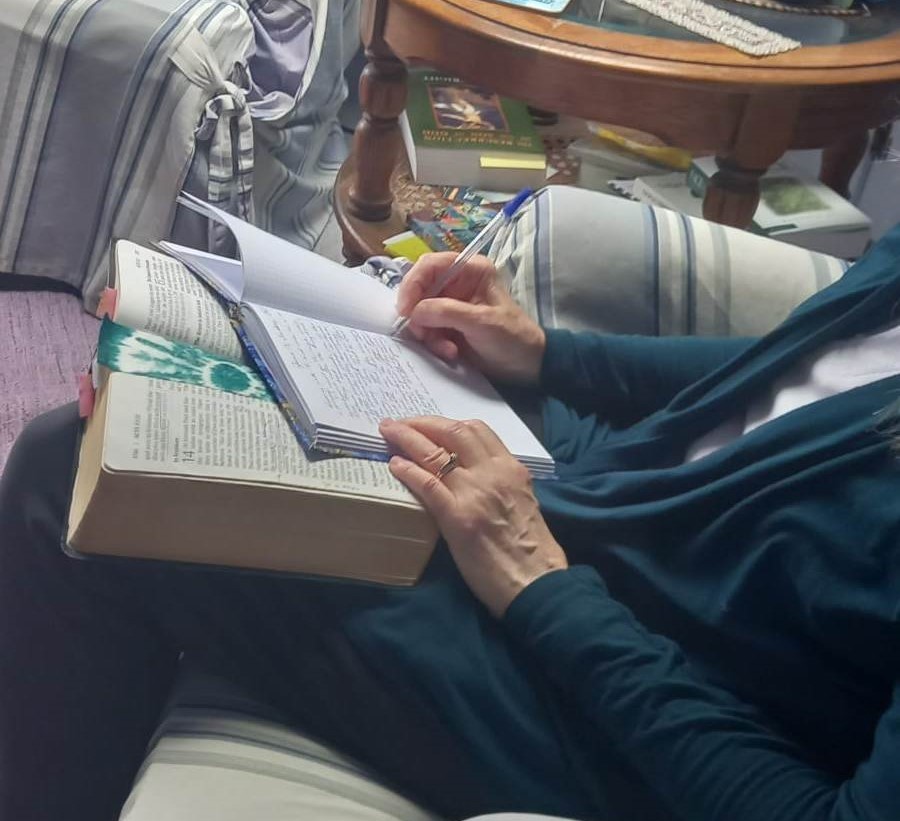
Pen in Hand

pen in hand
the words press out
anxious for paper
a place to live

the silence sizzles
sentient and longing
standing on tiptoe
to read the news

what I am hearing
what has been forming
in hidden spaces
how I’ve been growing

invisible
the thoughts take on
colors and edges
given a page

Yes, my pen is a tool, an instrument that provides a way to notice what is going on in my life and in the world. Every morning I pick up the notebook set aside for this time in my life and write a summary of what matters to me: what’s been happening, what I am grateful for, what is challenging, what I am learning. And I write at least one prayer that issues from all that, setting it apart with a little symbol I’ve chosen. Then I wait. When I believe that Abba has reminded me of a truth, spoken to my heart in response, I write that down with a symbol for “what I heard him say.” Then, when reading Scripture or another book that is helping me grow spiritually, I often write down those verses or words that have been underlined as important for me.

This has helped me to consistently pay attention to what I am learning, when I have stumbled, and what my Lord is teaching me. I know not everyone finds a pen to be that friendly and helpful—even my husband and son have not been able to get into it. They prefer sharing audibly with someone close to them, or just contemplation done in privacy. What is important is discovering what practice prevents life from just slipping by. We miss out when we do not notice major themes our Counselor is highlighting, or even the smallest fingerprints of God on our lives and our spiritual growth.

He knows all that is going on, inside and out in the world around us, and he cares about it all. Do I pay attention?

You have searched me, LORD, and you know me. 2 You know when I sit and when I rise; you perceive my thoughts from afar. 3 You discern my going out and my lying down; you are familiar with all my ways. 4 Before a word is on my tongue you, LORD, know it completely. 5 You hem me in behind and before, and you lay your hand upon me. 6 Such knowledge is too wonderful for me, too lofty for me to attain.  (Ps. 139:1 NIV)

To even gain an inkling of how Yahweh is paying attention to me, I need to return that focus. I journal with my pen, and often the deepest insight comes to me when a poem begins to sing in my heart and I follow through, writing it down. Most days it is just words on paper, a recounting of what has happened, especially any hurts or struggles, any joys or successes, any words of Scripture or a song that are making my heart take a leap.

A  prayer journal that notes requests and answers is another great instrument.

There are other ways to keep track of such things if writing is not your thing. Calhoun suggests making scrapbooks, for yourself or for others.[1] I found a very worn scrapbook handed down through several generations while cleaning up at the heritage cabin in the forest left to me and my siblings by our parents. It was a collection of clippings, poems, verses, sermon notes, and poems. We don’t know who put it together, but it obviously represented what had been meaningful to them over the years.

For some, it is drawing that gives them that outlet, art as a “pen.” That is a gift.

For people who need personal exchanges, finding a prayer partner who also revels in that kind of mutual sharing can be deeply meaningful. The trick is remembering to be open, sharing one’s spiritual learning curve and preoccupations.

Calhoun’s list of “God-given fruit” that comes from this practice is stimulating:

  • keeping company with Jesus through reflection
  • listening to God, praying your life
  • slowing down and noticing where God shows up in the “ordinary”
  • noting God’s faithfulness in your life journey
  • becoming aware of phases and stages of your own pilgrimage[2]

Sometimes journals become a legacy for others. Have you read published journals that inspire? I was actually afraid that someone might read my journals, and for a moment it kept me from being “too open” in what I write. After years of filling small notebooks I began to tell myself that no one would ever have the patience to read them anyway. I still used some personal coding for certain reflections or episodes, but mostly I experienced new freedom in confessing my faults as well as my progress. If anyone ever reads them they will need  to have a deep motivation that doesn’t seem likely at all!

On the other hand, some of what I journal becomes the fruit that the Lord prompts me to share with others, such as the poetry that came from those moments that I published in When He Whispers: Learning to Listen on the Journey. And some of my growth moments get shared when I am asked to speak. Either way, that is God at work, using this daily spiritual discipline for his purposes.

It is possible to reserve journaling for special moments like a spiritual retreat, or to do it weekly or monthly, whatever is appropriate for one’s instincts or time availability. When I had babies, I definitely found it tough to count on much private space! Later I found that I really needed to journal when going through deep waters; it was a way to debrief after evacuation from a war zone, and after going through a season of relational ruptures. I often added notes from key discussions or meetings. All of them are resources for my own contemplation now, a long shelf in my library holding a row of a huge variety of large and small notebooks. (They are very helpful for writing those phases of life in my memoir!)

David Mathis, executive editor at desiringgod.com, summarizes a key goal of journaling this way: “What if journaling wasn’t simply about recording the past, but preparing for the future? And what if, because of God’s grace in our past and his promises for our future, journaling was about deepening your joy in the present?”[3]

He goes on to say, “Journaling is a way of slowing life down for just a few moments, and trying to process at least a sliver of it for the glory of God, our own growth and development, and our enjoyment of the details. Journaling has the appeal of mingling the motions of our lives with the mind of God. Permeated with prayer, and saturated with God’s word, it can be a powerful way of hearing God’s voice in the Scriptures and making known to him our requests. Think of it as a subdiscipline of Bible intake and prayer. Let a spirit of prayer pervade, and let God’s word inspire, shape, and direct what you ponder and pen.”[4]

I love the way he puts it, and I can testify that journaling has done this powerful work for me.

However you implement such practices to attain these spiritual goals, may the Lord use that instrument to bring you joy and a safe space for processing your journey!


[1] Calhoun, Adele Ahlberg. Spiritual Disciplines Handbook: Practices that Transform Us. (Downers Grove, Illinois: IVP Books, 2005), 56.

[2] Ibid.

[3] Mathis, David. Journal as a Pathway to Joy, July 30, 2014.  https://www.desiringgod.org/articles/journal-as-a-pathway-to-joy

[4] Ibid.

A Contemplative Life

Subscribe to continue reading

Subscribe to get access to the rest of this post and other subscriber-only content.

Checking Out My Ways

This I desire: integrity— 
heart and mind
undivided
unfragmented
undistracted
truly focused
deeply centered
all transparent
and devoted—
set apart
for only You.

So take this moment:
give me grace
to know truth
see your hand
understand
what you did
how you worked
what I did
what it meant—
how to live
set apart
for only You.

There is that healthy moment before going to sleep when gratitude is the focus, settling the mind into peace. Then comes morning, the start of a new day, with time set aside for worship and preparation. For me, that includes journaling, praying Scriptures, studying Scriptures, and prayer—mostly intercession. But there is another spiritual discipline that has crept into those sacred rhythms, that I want to develop. It increases one’s recognition of God’s presence and promotes confession, healing, and ongoing growth.

It is called “examen.” That comes from Latin, meaning “examination,” and is still used in French for “test.” Back in the 16th century, Ignatius required his Jesuit companions to practice this form of contemplative prayer at noon and before sleep. Perhaps that Catholic origin has kept it hidden from most of us Protestants, but it is becoming recognized as a powerful tool for developing spiritual awareness and discernment.

My daily schedule would make noon and bedtime difficult moments for this kind of contemplative prayer, at least most of the time. But while reviewing it I realized that my morning “quiet time” is already incorporating it. Journaling takes me back through the previous day and leads me to write short prayers that come out of that review.

I found a very helpful outline of steps for practicing the examen published by Baylor University,[1] and will be using it to structure my personal process in the morning. Perhaps it will be helpful for some of you as well. It is adapted from the online site of Gravity Center—and I recently finished reading Mindful Silence, written by one of the founders of that center and a spiritual director there, Phileena Heuertz.[2] Here are the five classic points:

  1. Acknowledge an awareness of God’s Presence.
  2. Review the day in a posture of gratitude.
  3. Recognize a “Consolation” and a “Desolation” from the day.
  4. Choose a “Desolation” to pray into.
  5. Look with hope for new tomorrow.

Baylor’s site makes an important point: “Often, the Examen awakens the practitioner to the Divine through routine or ordinary moments to illustrate the subtle and surprising ways God speaks. This prayer practice helps cultivate and refine discernment as well as an awareness of God’s presence.”[3]

Some terms in the classic outline need definition.

A “consolation” is something that took place for which you are deeply grateful, especially one that reminded you of God’s presence and love. Did you notice a fruit of the Spirit being lived out in your walk? What part of the day felt the most life-giving?[4]

A “desolation” is something that took place that distressed you, that felt the most life-thwarting. It may even have made you question God’s nearness. It is the moment for which you are the least grateful.[5] Was it that you demonstrated a lack of one of the fruits of the Spirit? It may lead to confession, and determination to practice change in that area.

The goal that inspires me is “keeping company with Jesus throughout the highs and lows of the day.[6] I have already experienced that benefit through the years of journaling those moments and reflecting on what they mean.

This can also be used as a part of a retreat, focusing on what has been happening during the past month, the past six months, or the past year.[7] It provides a sound base for praying regarding guidance for the future as you recognize themes, whether they are about your learning curve, ministry, or even a need to change in some area. What has God been doing? What have you been doing? What patterns are evident?

This practice reminds us that God is near and at work in us, even when things happen that are uncomfortable or painful. They cause us to rely increasingly on his grace. Perhaps that increased reliance on him is actually the best part! I have noticed that I am more aware of my weaknesses, my stumbling. I have seen this as one way that God prompts me to turn from certain attitudes and failures and grow in healthier directions. Using the structure of examen will make the process more rigorous, and help me to be more attentive to God’s prompts toward both change and actions that flow from spiritual fruit.

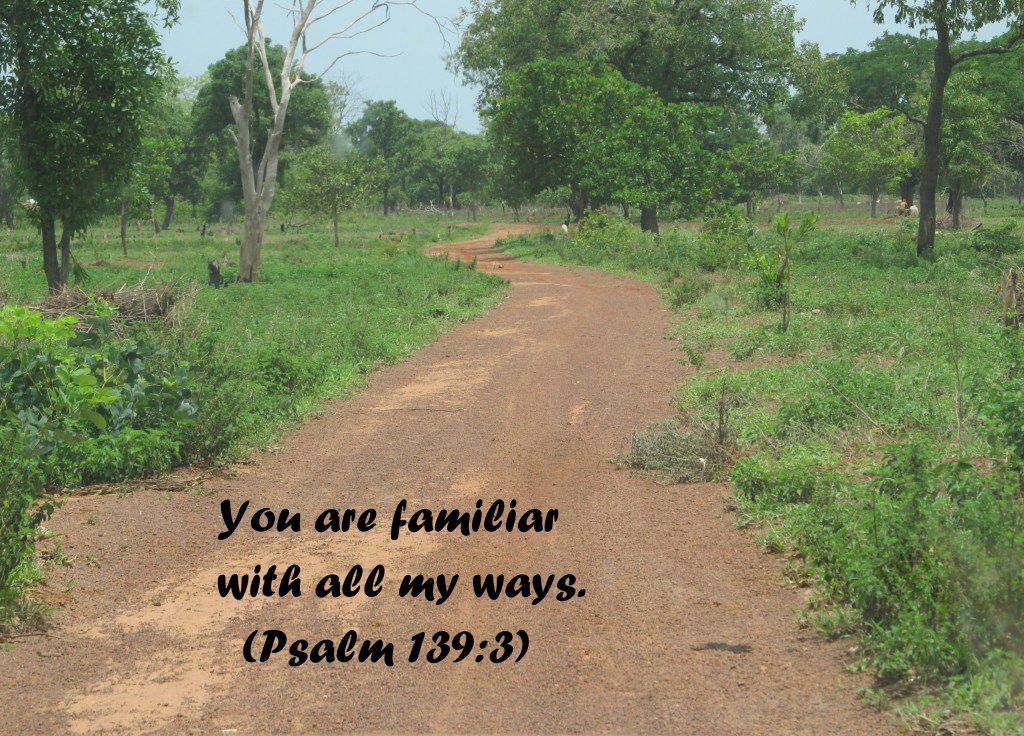
This reminder in Scripture has been a tremendous reassurance to me on my life journey: You discern my going out and my lying down; you are familiar with all my ways. (Ps. 139:3 NIV)  He knows all that I do, everywhere I am. This is great comfort, because he loves me. When I contemplate what has been happening, it gives an opening for him to use his insight to prompt me towards more spiritual growth.

As my constant companion, he is the one empowering me to live the way that I should: So do not fear, for I am with you; do not be dismayed, for I am your God. I will strengthen you and help you; I will uphold you with my righteous right hand. (Isa. 41:10 NIV)

He wants me to grow! Paul wrote it this way: And this is my prayer: that your love may abound more and more in knowledge and depth of insight, 10 so that you may be able to discern what is best and may be pure and blameless for the day of Christ, (Phil. 1:9 NIV)

May it be so!


[1] Baylor>Spiritual Life>Mindfulness>Examen  https://www.baylor.edu/spirituallife/index.php?id=971624

[2] Heuertz, Phileena. Mindful Silence: The Heart of Christian Contemplation. (IVP Books, InterVarsity Press: Downers Grove, IL: 2018)

[3] Baylor.

[4] Calhoun, Adele Ahlberg. Spiritual Disciplines Handbook: Practices that Transform Us. (Downers Grove, Illinois: IVP Books, 2005), 52-53.

[5] Ibid.

[6] Ibid., 52.

[7] Ibid., 54.

Exhausted

Exhaustion
depresses 
like a brick
on foam
squeezing out air,
leaving me compacted,
heavy, 
flat out dense.

Sleep and love, 
contemplation
are nectar
and nutrients
(eat what fits):
breathe in air,
restoration.

In time
I will stretch
and power up
for life as usual.

Once I get to the beach, or to another quiet spot, I have to quiet my roiling thoughts and pumping adrenaline and give myself permission to just rest. “You don’t have to feel guilty,” I tell myself. “You need this. God told us to rest. Just relax!”

I’ll bet you’ve been there too, so consumed with daily activities, obligations, interactions that you just need to find rest, whether it’s a vacation or just a quiet spot in the house. Our Lord made us and knew that we would need that. It’s one reason why he ordained “sabbath,” one day out of seven to change the rhythm to a quieter pace. We do need to be free from ordinary distractions and turn our hearts to worship. But we also need to let go of the pressures that drive us, if we can. There are times when that is not possible—urgent needs, illness, calamity. But rest is precious.

The problem with our understanding of “sabbath” is that it has become either legalistic or meaningless. When I was growing up, many of our family’s friends held tightly to regulations that they felt would maintain a restful day: no swimming, no sports, no outings. It made Sunday feel like a long drawn-out day that had to be spent at church and at home. I personally love a day with time at home—it restores energy to the introvert side of me. But I also love it when that day includes a hike by a river or in the woods, or (yes!) swimming in a warm pool. All of those things open up room for contemplation or relaxation, another kind of rest than sitting in a chair.

When involved in full-time ministry, Sunday may not be a restful day. We experienced that as missionaries: the long trip on rugged roads to the village church, time greeting everyone, home to grab a meal and rest (when there was not a longer celebration programmed at church, like a baptism, or evangelistic event). And then there was the two-hour meeting in our back yard with the Nyarafolo group for singing, prayer and Nyarafolo devotions together. We loved it all. But by the time supper was over, bedtime sounded so inviting! And then there were often visitors at the door . . .

 Many pastors and lay workers here in America meet the same challenge. That’s why Monday often becomes their day off. The trick is then to spend it in such a way that it brings restoration. And rest. Whatever that means for each person and personality type.

What is essential is to listen to the Lord’s promptings to make space for rest, not to be addicted to the compulsions of productivity. Then we have to let go of the “tyranny of the urgent. God’s sabbath reality calls us to trust that the Creator can manage all that concerns us in this world as we settle into his rest.”[1]

When Sunday is a day for you to invest your gifts and calling, not one for personal rest, find a way to compensate. Even the gift of an evening quietly spent with your spouse or children, or a close friend, can bring that restoration. So can a quiet retreat. That was, for me back in Ferkessédougou, the three-hour protected space in the “sacred grove” in my yard, where I could just breathe and work on listening to my Lord while enjoying nature. Here in Detroit I am learning how to find those spaces in certain early mornings in my third-floor “skyhouse,” in the quiet of pre-dawn birdsong and reflection.

Vacations and retreats count too, if they include rest—not just a long list of activities. We need time to breathe, both physically and spiritually. Play can contribute to that, helping us to focus on other people and let go of the to-do list. Most of all, each of us needs to recognize what distracts us from resting, and what refreshes us. That way we are strengthened to keep on going, to keep on doing what the Lord has put in front of us.

I used to wonder how on earth my dad ever found rest. Often he was the only doctor, only surgeon, at the mission hospital in Ferkessédougou. Being on call meant he could not always plan his time. What I saw him do—and other missionaries as well—was to treasure the moments when not at work by paying attention to what he loved: birds, tropical plants, and art. He collected them all, with an aviary for birds and a series of gardens (one shaped like a map of Africa) for his plants. Art was collected whenever we were on a trip to another country or a big city in the south. While on one vacation when I was young, he invited along his favorite painter, Samuel Dekesse, formerly from Congo. They spent hours together painting scenes on pieces of canvas while Dad imitated Samuel’s brush strokes in his “feather painting.”

We tried to have game nights with friends as well. An evening spent laughing together, joking, made a huge difference as we no longer concentrated on tragedies or challenges all around. That is something we still do in retirement, inviting family or friends over to play some favorite games.

 Practicing “rest” is not about being lazy or apathetic. It is about being active in whatever way is possible given one’s time of life, physical condition and work, but learning to devote time to rest that promotes healing. A sabbath rest includes time set aside for worship, a focus on God:

“‘Six days work may be done, but on the seventh day there must be a Sabbath of complete rest,2 a holy assembly. You must not do any work; it is a Sabbath to the LORD in all the places where you live. (Lev. 23:3 NET)

Rest from pressure to always perform well or from anxiety about the future also comes in quietness, time apart:

Truly my soul finds rest in God; my salvation comes from him. (Ps. 62:1 NIV)

Yes, my soul, find rest in God; my hope comes from him. (Ps. 62:5 NIV)

And when we are linked to Jesus, “pulling the plow” with him, his gentleness will also provide our souls with rest:

Take my yoke upon you and learn from me, for I am gentle and humble in heart, and you will find rest for your souls.  (Matt. 11:29 NIV)

And our Shepherd even inserts rest into our long journeys:

2 He makes me lie down in green pastures, he leads me beside quiet waters (Ps. 23:1 NIV)

The daily schedule of work is good. But our Lord knows that we need rest for heart and soul, and body as well. That is why he made the earth turn, so that night would come and cut the rhythm of daytime activities. He gave sabbath for rest that would concentrate on relationship with him, which is of the most importance. Then, throughout the other days of the week, it is profitable to find a way to carve out time for being open to what the Lord wants to say to us. Either way, rest provides space for certain kinds of spiritual formation as well as for the restoration we need.

Physically, we also need rest in order to stay well and have that ongoing productivity that matters so much to us.  Health for our bodies, health for our souls—rest contributes to both. As John said to Gaius:

Dear friend, I pray that you may enjoy good health and that all may go well with you, even as your soul is getting along well. (3 Jn. 1:2 NIV)

Let me close by sharing a list I wrote to remind myself to rest in a way that opens me up to things beyond the normal :

Relax     Exhale    Silent   Thinking

Remove   Every   Stormy   Tension

Review   Each   Stretching   Test

Remember   Eternal   Significant   Truths


[1] Calhoun, Adele Ahlberg. Spiritual Disciplines Handbook: Practices that Transform Us. (Downers Grove, Illinois: IVP Books, 2005),  42.

Helping Hands

Barbara Slater, my mother

Her fingers crook now at the joint,
swollen and unwell.
But even though they ache and chafe
they still cannot be still,
a tender testimony to
a history of easing life 
for others in her world.

They tap upon a tabletop,
thinking audibly,
type heartbeats into keyboard words
to pleat divisive miles 
and hold her daughter close.
They multiply the loaves of bread
to feed whoever comes.

(What I do, he said,
you will do too).

Because, to this dear mother/friend,
to love connotes to touch:
to stretch across a wall to reach
those different hands,
dark-skinned and suffering much;
to change a diaper, clean a wound,
or wipe away the tears.

(Or even scrub a floor:
the act is more.)

My fingers’ gifts are not the same;
I fumble, yet I know
her loving has rubbed off on me.
The years of mirroring
her moves left habits in my hands.
And so her fingers keep right on,
still fruitful in old age.

But now, they’re exponential
in beneficent effect
passed on to all her children—
their great inheritance.

We just celebrated Mother’s Day, which always brings back memories of those no longer with us. My mom, Barbara Slater, went to her eternal home five years ago, and I was not able to be with her during her final days (I was in Africa, and by the time I heard her last days had arrived she would not have known I was with her). But she lives in on my heart, and thinking about her life brought to mind the poem I had written about her hands back in 2002, when she was retired but still active. One of the gifts she had was compassion, which really showed up in her acts of service. She was a nurse who not only practiced her medical skills but taught them to others. When I was a teenager she invited me down to the mission hospital to learn how to care for the newborn babies, but also showed me how to sort through the “white cross” packages filled with handmade goods sent over to the hospital by various women’s groups, and count pills to put into small bottles.  And at home she taught me how to serve the family and guests by helping her in the kitchen and taking care of my baby siblings. Her hands seemed to constantly find tasks to do, whether it was in medical work or accounting for the hospital, writing letters, or teaching us kids.

It is not always recognized that “service” can also be a practice to apply in spiritual formation. Not all work fits that category, but consciously applying oneself to service as an antidote to seeking public admiration or to counteract tendencies to laziness, apathy or selfishness can make it truly effective.[1]

That is what I had seen in Mom. She was not looking for applause or status. She was paying attention to needs around her and responding as she could, all because of her calling to serve Jesus.

This reminds me of an unexpected moment of spiritual formation that the Lord inserted into my program. I needed to find a way to minister in a church to fulfill an internship requirement for a seminary course. Being a woman, I knew my options would be limited, but asked if I could serve in some way for my home church’s preparation of short-term missions teams. I was, after all, a missionary with over 20 years of experience already. To my surprise, the task I was given was to provide the food for the luncheon at an all-day training session! That was not the kind of experience I had expected, and not an area that fits my skill set. But doing it definitely checked my expectations of being in a front-seat role, and put me in a position of humbly absorbing what I could by watching and listening even while serving behind the scenes. It bred humility. And that is what service does when it is a spiritual discipline.

So we should be asking ourselves: What is motivating my response to involvement in an act of service, a desire to be helpful or a need for recognition? What activities only add busyness to my schedule, versus the ones that my Lord is putting before me as a way to serve? What will sand away my preoccupation with my standing and help me to become increasingly humble?

Let’s look at what the Word says about it:

Jesus called them together and said, “You know that those who are regarded as rulers of the Gentiles lord it over them, and their high officials exercise authority over them. Not so with you. Instead, whoever wants to become great among you must be your servant, 44 and whoever wants to be first must be slave of all. 45 For even the Son of Man did not come to be served, but to serve, and to give his life as a ransom for many.” (Mk. 10:4-45 NIV)

You, my brothers and sisters, were called to be free. But do not use your freedom to indulge the flesh; rather, serve one another humbly in love. (Gal. 5:13 NIV)

Slaves, obey your earthly masters with respect and fear, and with sincerity of heart, just as you would obey Christ. 6 Obey them not only to win their favor when their eye is on you, but as slaves of Christ, doing the will of God from your heart. 7 Serve wholeheartedly, as if you were serving the Lord, not people, 8 because you know that the Lord will reward each one for whatever good they do, whether they are slave or free. (Eph. 6:5-8 NIV)

We may not be “slaves” but most of us do have a boss, someone in authority over us. Learning to do the work assigned to us wholeheartedly, as if our beloved Master were the one right there overseeing us (which he is, actually!), changes our motivation. This is especially life-changing when we are having a difficult relationship with that earthly boss. The pressure to please them is released when instead we focus on pleasing our King.

Jesus showed us how to serve with humility when he washed his disciples’ feet. That was something a person either did for themselves when entering a house, or a servant (or the wife) would wash them, someone of lower social status. It was not what the teacher or a famous person would do. But he insisted on taking that role. Then he explained the main lesson:

12 When Jesus had washed their feet and put on His robe, He reclined  again and said to them, “Do you know what I have done for you? 13 You call Me Teacher and Lord. This is well said, for I am. 14 So if I, your Lord and Teacher, have washed your feet, you also ought to wash one another’s feet. 15 For I have given you an example  that you also should do just as I have done for you. 16 ” I assure you: A slave is not greater than his master,and a messenger is not greater than the one who sent him. 17 If you know these things, you are blessed if you do them. (Jn. 13:12-17 CSB)

Life for most of us is already full to the brim with work and other obligations. But if we take time to notice a need that we can actually meet by pitching in to serve, it can make a huge difference to those around us. In the Spiritual Disciplines Handbook, Adele Calhoun suggests making it a practice to ask someone in our life daily, for two weeks, “What can I do to help you?”[2] This would be a way of learning to pay attention to opportunities to serve. And noticing them is what would make humble service become a part of our character. It would become more automatic to do what seem like mundane tasks but that contribute to the good of family, colleagues, neighbors or even a stranger. They might not be so mundane, either—think of the service the “Good Samaritan” gave to the wounded man he happened to see!

For those of us not naturally attuned to what is happening around us, this is transformative. For some, it may even be their spiritual gift (1 Corinthians 12:406). Each of us can concentrate on doing what is helpful to those around us, whether it is a physical need or helping to set up an event, helping with dishes or changing a diaper. As Richard Foster points out, any service that is done for the good of another, not for self aggrandizement of any kind, takes us out of the spotlight and teaches us humility. When I am with someone who takes over a conversation completely, do I assert my right to speak, or listen? Often this involves learning to “bear the sorrows” of another, even their loneliness. The most important requirements are compassion and patience.” The service of listening also teaches us to be more sensitive to promptings that come from the Spirit, more aware of what our Lord is saying to us. This promotes service that matters to him.[3]

Perhaps your occupation is already one of serving others, just like nursing was for my mother. Changing the heart attitude to the tasks can transform them into “the ministry of the towel,” as Foster puts it, serving the way Jesus demonstrated when he got out of his official seat, took off his outer clothing and bent down to wash the feet of his students.[4]

Let’s “serve one another humbly in love”! (Gal. 5:13)


[1] Willard, Dallas. The Spirit of the Disciplines: Understanding How God Changes Lives. (HarperSanFrancisco:1988), 182.

[2] Calhoun, Adele Ahlberg. Spiritual Disciplines Handbook: Practices that Transform Us. (Downers Grove, Illinois: IVP Books, 2005),  146.

[3] Foster, Richard J. Celebration of Discipline. (New York, NY: Harper & Row, 1978), 120, 121.

[4] Ibid., 122.

Practicing His Presence

Written over twenty years ago, this poem was a commitment I was making to learn to really “practice the presence” of God. Whether a day was filled with routines or with unexpected delights or sorrow, walking in constant awareness of him is life-changing. It is ongoing, the deep desire of my heart, yet so often interrupted by the pressures of work, distractions of interactions, forgetfulness. It is a practice that takes commitment—not just a set of rituals, but a constant background rhythm that becomes as normal as breathing. There are moments when the percussion picks up speed or volume or becomes like the crash of a cymbal; then attention links the daily to the eternal. As C.S. Lewis said, ‘For the Present is the point at which time touches eternity.’

But those are not indications that “God just showed up.” He is always there. Always here. Always everywhere, and he is paying attention to his dear ones. We just forget that reality.

Ever since a prayer partner pointed out to me the depth of that truth in Psalm 139, back when I was at Wheaton Graduate School (1977), I have clung to it:

You have searched me, LORD, and you know me.
2 You know when I sit and when I rise; you perceive my thoughts from afar.
3 You discern my going out and my lying down; you are familiar with all my ways.
4 Before a word is on my tongue you, LORD, know it completely.
5 You hem me in behind and before, and you lay your hand upon me.
6 Such knowledge is too wonderful for me, too lofty for me to attain.
7 Where can I go from your Spirit? Where can I flee from your presence?
8 If I go up to the heavens, you are there; if I make my bed in the depths, you are there.
9 If I rise on the wings of the dawn, if I settle on the far side of the sea,
10 even there your hand will guide me, your right hand will hold me fast.  (Ps. 139:1-10 NIV)

I did leave the United States and “settle on the far side of the sea.” Missions often requires that. This has been my comfort: that Yahweh not only knows me, he knows every second of every day and every single thought or word or action I take. Of course if I make bad choices and choose not to follow his orders that puts me in a bad position: I can hide nothing from him. But since I have made the decision to be all his, always, it also draws me back to him in confession and yearning for ongoing intimacy. What a radical change that makes!

A number of books have been mentors on this journey—there are lots out there, since this is so crucial to spiritual formation. Brother Lawrence wrote the first one that is always pointed out, describing how implementing this practice into daily life, beyond just the fixed times of prayer in the monastery, transformed life for him. Even doing the dishes was no longer only a menial task. That is underlined in a book I mentioned last week, Every Moment Holy, by Douglas Kaine McKelvey. For me, his “liturgies” are examples of ways to interact with God in every moment. It is not that we are constantly repeating rote words or even maintaining the conversation incessantly. That kind of multi-tasking is beyond me! But it is a reminder to pay attention to the Lord’s presence and live every moment for him and with him.

There is a beloved person in my life who is no longer walking with the Lord. Conversation about spiritual things meets a steep wall. But when we spend time together, I have been learning to remember that God is present there, since he is always with me,  and to occasionally ask for guidance in the conversation or even just silently pray for that person to become aware of his love and goodness.

On the way to church, I am learning to ask Abba to remind me to worship “in spirit and in truth,” to not let the moments just pass by. When picking up the phone to talk to a friend, I am practicing that awareness of my Counselor’s presence, giving the conversation to him. I have not yet learned to remember his presence while doing dishes or sorting the laundry—but reviewing the principles recommended for this practice has been alerting me to new opportunities!

Tom Schwanda shares this: “I find it valuable to ask: What helps me pay attention to God? What hinders me from paying attention to God?”[1] The whole purpose of practicing his presence is to strengthen your union with God/Christ/the Spirit, to develop increased awareness of him as we become more intimately connected to him. It keeps us more open to his working in and through us. If we can sweep away whatever obstacles are blocking us from that awareness, and practice whatever helps maintain it, it promotes growth. I also find that it incorporates many of the other spiritual formation practices that I want in place: various forms of prayer, time in the Word, service, compassion, gratitude etc. It cultivates alertness to the Spirit’s promptings that can open up unexpected opportunities to reach out to people, too.

So how should one approach implementing this practice? Here are suggestions from Calhoun, who reminds us that it “is simply a way to love him and stay connected to him throughout the day”:

  • intentionally recollect yourself before God as you engage in the activities and duties of life
  • seek to see others through the eyes of God
  • stop throughout the day to listen to God
  • carry or place symbols in your workplace and home that remind you of Christ’s presence[2]

Ken Boa has written a book and accompanying guide for the practice, both of them worth digging into. Here are a few of the cues included in his online blog about it:

  • Pick one ordinary task that you do with regularity, and each time you go to do it this week, seek to do it to the honor of God, thanking Him as you go.
  • Be on alert for an opportunity to share something from the Word of God with someone
  • start the day by praying a passage of Scripture that puts your heart in readiness for walking with the Lord consciously through the day[3]

My own awareness of God’s presence has increased my reliance on him as well as my enjoyment of him. I so grateful that he is able to pay that same attention to every single one of his people! Here are some Bible verses suggested by Boa that may increase our understanding of how this practice is based on Scriptural principles, and encourage us to continue “making every effort”:

Abide (John 15:4–5)
Love God and neighbor (Matthew 22:37–40)
Set your mind (Romans 8:5–6)
Walk by/keep in step with the Spirit (Galatians 5:16, 25)
Set your heart (Colossians 3:1–2)
Rejoice always (1 Thessalonians 5:16)
Pray continually (1 Thessalonians 5:17)
Give thanks in all circumstances (1 Thessalonians 5:18)
Run with endurance/perseverance (Hebrews 12:1–2)
Submit/offer yourself up (Romans 12:1–2)
Press on (Philippians 3:12–14)
Dwell on (Philippians 4:6–8)
Remember God’s faithfulness and provision (Deuteronomy 8:2–3)[4]

So when I feel him looking over my shoulder as I write or as I research the difficult Hebrew in some verse in Isaiah that we are translating, or when I know he is watching over me when I face an emotional challenge, it is all a part of my spiritual formation to becoming increasingly “one” with him. It is learning to know him in ways I’ve missed before. And just as that happens in a true love relationship between humans who spend lots of time together, it will happen for each of us who pay attention to this precious relationship with the One who loves us far more than anyone else can.


[1] Tom Schwanda,     https://www.cslewisinstitute.org/resources/cultivating-attentiveness-to-gods-presence/.

[2] Calhoun, Adele Ahlberg. Spiritual Disciplines Handbook: Practices that Transform Us. (Downers Grove, Illinois: IVP Books), 59.

[3] Boa, Ken. https://kenboa.org/living-out-your-faith/the-eight-spiritual-essentials-part-4-practice-gods-presence/

[4] Ibid.

Grateful for this Morning Hour

I thank you, Lord, for this morning hour,
when you deign to come and sit with me, 
when you calm me by your Spirit’s power,
and open my eyes so that I can see.

Without you, days would just pass by,
empty of meaning, empty of peace.
But with you teaching my heart to fly,
I find my purpose and deep release.

When I turned 13 in July 1965, I had no idea that I was beginning what would be a milestone year in my spiritual growth. I had been baptized in 1964, and in early 1965 had made a more mature total consecration of my life to Jesus Christ. My family had returned to Côte d’Ivoire from our home assignment year in the U.S., and I was off to boarding school again. My earlier experience there had been okay; now key changes were going to shape me.

Some missionaries who were some of my parents’ best friends were filling in as dorm parents that year, Don and Glenna Bigelow. The routines of boarding school schedule took over each day’s activities, including a 20-minute space for personal devotions before breakfast. As long as we were quiet we did not get into trouble, so there were those who just rested or read a book. I found it wonderful to have that moment set aside to read something in my Bible and pray, but it was just too short a time. We eighth graders were the oldest kids at the school, so “Uncle” Don and “Aunt” Glenna gave us a special privilege: on Saturday mornings we were allowed to get up early and go outdoors anywhere we wished on the campus, to have our own quiet time with the Lord in nature. That meant we could also come in to the dining room for a late breakfast with coffee (Nescafe and sweetened condensed milk)!

I jumped into that practice with delight. Morning was much cooler than the rest of the hot day, and being alone in grassy areas wet with dew, or under some trees, I could think about issues swirling through my mind, and pray. I did not know back then that I was learning the value of certain spiritual disciplines in my life: solitude and silence. And during the week, I was benefiting from the regular Bible reading and prayer. There were also evening devotions, where we seventh and eighth graders were being encouraged to use new translations like Phillips’ New Testament to delve into the Word. How would this fit into my life when I would be in charge of my routine?

Back home I had seen Mom and Dad reading their Bibles early in the morning before the workday began. Our family had devotions together, usually geared to my younger siblings. But my own program had been rather random. Now I was adding personal practices that would become critical for my spiritual formation.

I’ve learned that for years a daily or weekly schedule like this has been called a “rule of life.” I prefer Ruth Haley Barton’s name for it: sacred rhythms.[1] Her book of that name  explained such rhythms was transformational for me, helping me to understand how to think through what my heart’s yearnings were telling me and how to work out ways to address them.  I was still doing my daily morning quiet time, something that my InterVarsity training in my college years had also strengthened. But now I was in full-time ministry in Bible translation. My children were adults, all in the United States. Glenn and I were involved in discipling Nyarafolo believers and encouraging the village church we had planted, as well as welcoming many visitors into our home and housing certain pastors’ families as they worked out their plans, as well as some youth we were mentoring. Life was full. I was feeling fried. My brain was constantly reeling with words/conversations/concerns.

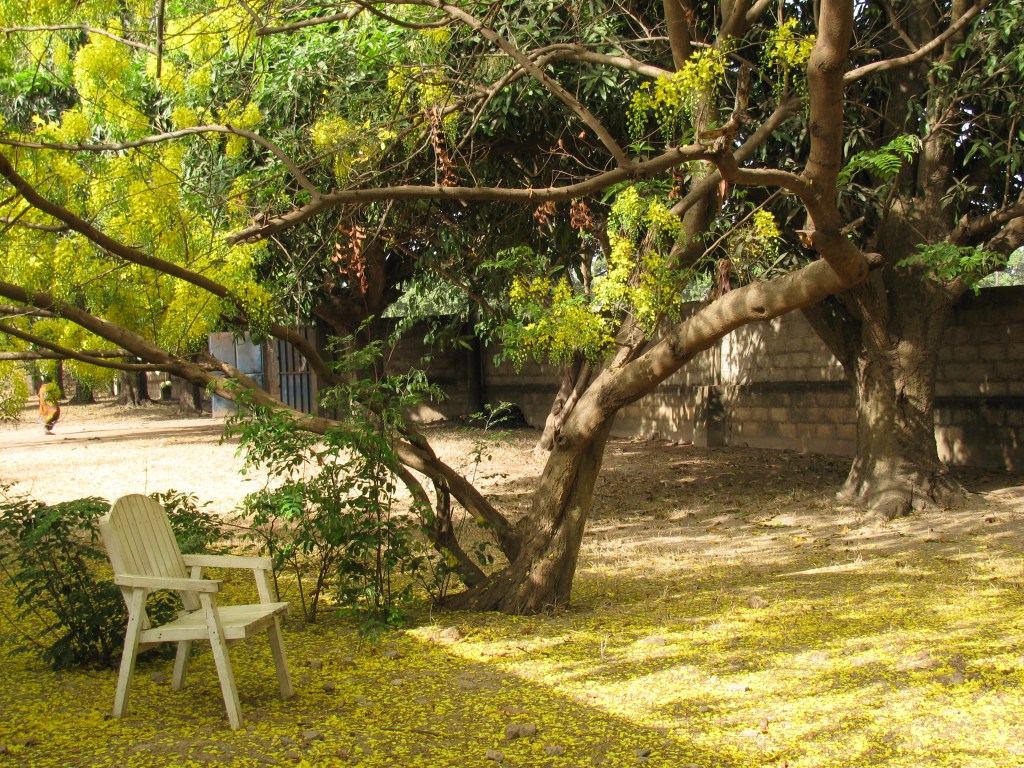
Sacred Rhythms and Invitation to Solitude and Silence: Experiencing God’s Transforming Presence[2], came to me at just the right time. I realized that my spiritual health required rest and renewal that I could not get through all my activities, as spiritually energizing and demanding as they were. “Early bird” that I am, mornings were and still are my best moments. So I set aside 6 to 9 a.m. every Saturday (when it worked out) for my protected quiet space under the golden rain trees on the west side of our courtyard. I called that my “sacred grove,” and told the workers and friends closest to us that I was not to be interrupted when I was sitting there on Saturday mornings, except for something urgent. What a difference that made!  Looking back, I realize that I was not only practicing solitude and silence but also contemplation, worship, celebration (through my poetry), intercession (urgent needs came up), rest and examen. Whew! I began delving into many other books to expand my understanding of these “disciplines.”

So why am I getting into this discussion about “sacred rhythms” when so far we have only examined worship, celebration and gratitude? It’s because I would like to urge you to think through what your yearnings are, and what might empower you to focus on meeting those needs. Whenever there is a new phase of life, or some changes in circumstances, it is good to reconsider what will work and how to engage in that pursuit. As I continue to share what I’ve been learning, I would encourage you to walk through that process. Perhaps you already have a plan, which is great. I find that incorporating another practice that particularly suits a new goal, or rough path, when the time is right, makes a huge difference. Right now, I’m focusing on a certain way of meditating on Scripture, and rhythms that incorporate worship and gratitude into certain times of the day. Other kinds of service and ministry continue, and there is now a return to participating in translation long-distance that takes hours of my days in a way that has made “retirement” into what I call “retread!” I have definitely had to reconsider my sacred rhythms and make place for the rest, silence and solitude that I need.

What rhythms are already in your life? What would deepen your path of spiritual formation?   I will share with you some of the questions recommended by Barton and Adele Calhoun that I’ve found pertinent for putting together a personal plan. This must be done prayerfully, incited by a desire to know God better and love him more, as well as to grow in areas he is pointing out that need attention.

  • What am I currently doing to meet my life goals and spiritual goals? What is helping me, and what has become just a duty or a blockade?
  • What community practices should be priority for me? (a prayer partner or group? church meetings? service opportunities?)
  • In this current life phase, what time and space limitations am I dealing with?
  • What areas of weakness do I want to address? What kind of person do I want to become?
  • My personality will influence the goals I set, so what already brings me delight in my journey? What do I believe the Lord has made me for? How can I cooperate with him in his plans?[3]
  • What would fit into my life daily (or certain times of day)? weekly? monthly? quarterly? yearly?[4]

You may think of others. We are all different, all a part of the Body that belongs to our Lord. And life throws in unexpected circumstances. That is why our rhythms can change, just like the different movements in a symphony. What is important is paying attention to them, and taking time to realign them as seasons and needs change.

It may be helpful to make a list of what you already are practicing, and begin to prayerfully consider what else the Lord may want to be drawing to your attention. He is our loving Father, our Counselor, and our Master and Shepherd. He knows best what we need, and when we need it. I can testify that he is also the Potter and I am the clay; he is still molding me into what he purposed for me. It is joy to open up to him, to walk with him and to let him do his work in me!


[1] Barton, Ruth Haley. Sacred Rhythms: Arranging Our Lives for Spiritual Transformation. (InterVarsity Press: 2009).

[2] Barton, Ruth Haley. Invitation to Solitude and Silence: Experiencing God’s Transforming Presence. (InterVarsity Press:2010).

[3] Barton, 121.

[4] Calhoun, Adele Ahlberg. Spiritual Disciplines Handbook: Practices that Transform Us. (Downers Grove, Illinois: IVP Books), 37.

My Cup Overflows!

My cup overflows
with amazing grace,
precious gifts poured out
by your hands into my life:

my husband, life partner;
the gift of words and
service to you, beyond
anything I imagined;
my offspring and all
the years of watching growth;
community here and over there,
treasured brothers and sisters;
the beauty of this world
and all you have provided.
	
Here is my hope and prayer:
that the shalom in which
I live and breathe
might be consolation
to the world around me—

May my cup be full to the brim
and bless those around me.
When it gets jostled 
by hostile passersby,
or those in too much haste,
may it still be an
unexpected blessing.

And I rest in the confidence 
that you will fill it up again,
because your lovingkindness
is not temporary
but forever.
And you are the reason 
my cup overflows!

“My Cup Overflows” is a condensed version of a very long poem I wrote, one full of specific gratitude and of prayer (based on Psalm 16:5 and 23:5). Once you get started, it is hard to stop! And that says something about how contemplating God’s gifts has impact on perspective.

It’s a practice worth practicing! When I began to spend my first minutes in bed at night thanking God for the good things in that day I just lived, I found that my heart’s tensions were calmed. I shared this with a friend the other day, and she said that she starts her day that way, looking out her door and thanking the Lord for this day and for the flowers blooming—whatever is out there that shows his care. I like that. I do it differently, adding into my morning journal something good that I want to be grateful for. Sometimes it is sleep, or the fuchsia dawn breaking into the dark sky. Doing something like this is biblical:

This is the day that the LORD has made; let us rejoice and be glad in it. (Ps. 118:24 ESV)

As we go through the day, remembering to give thanks reminds us of God’s presence. In Every Moment Holy there are even prayers (called “liturgies” in this collection) for such seemingly mundane things as eating good food, meeting a beautiful person, or this one that touched my heart:

“Upon Experiencing Cheering Laughter: I praise you, O God, for these inexplicable gifts of mirth and merriment and laughter, delighting in such foretaste of the wellsprings of eternal joy that ever bubble and flow within your glad Trinity.”[1]

 Remembering to be thankful for “mundane” moments like this reminds us of the constant presence of our God and Savior, so it complements the discipline of practicing his presence. This is true on our good days and our hard days. There are times when circumstances can make us feel like our cup is empty, but when we turn to the One who loves us constantly, confessing our hurt or anxiety, and thanking him for being with us and listening to our heart-cry, we are living out our union with him. He prayed for that (John 17:21). It is like breathing our conversation with him:

“God is the giver and we are the thanks-givers. The circle is complete and it allows us to open yet a deeper part of our life where there is weakness and we acknowledge our dependence on God. God meets us at that point with another blessing and gift. His grace and help come into our lives. We recognize that he has met us and blessed us. We know that it is a gift of grace that he has brought into our lives, so we respond again with gratitude, praise, trust and faith. The circle is complete and the spiral of our life and experience with God continues to deepen and widen. Life begins to change, not because the circumstances are easier or less demanding, but because we begin to see them in a new light.”

Finishing up her deep contemplation of this discipline, Jay Sivits writes, “gratitude is something that I am. It is the difference between doing and being.”[2]

Being a thankful person changes one’s character.  In the Spiritual Disciplines Handbook one set of the reflection questions on gratitude is this: “How has a grateful person affected your own vision of what matters in life? How has someone who lives out of bitterness affected your life?”[3]

I’ll bet you were able to think of two very different people you know. I can. One grateful person that comes to mind is my mother-in-law, Elva Boese. Confined to her wheelchair or walker, she would not talk about her pain and weakness unless asked. Instead, she was exulting in the swans swimming in the pond beyond her window, or in a connection she had just had with a grandchild. And then there is the person who sees the cup “half-empty” or very sour, constantly. That is draining.

So how am I relating to the King of the Universe, my Abba? Complaints are obviously expected—just read the psalms of lament! But instead of wallowing in criticism and negativity, “thankfulness [would] be an antidote to [my] critical spirit.”[4] Practicing it could change the way I interact with others, too, spreading hope instead of despair. As we grow in our relationship with God, knowing him more intimately from both Bible study and life experience, gratitude will well up within us. That is the way we can actually do what we are told to do:

Be thankful in all circumstances, for this is God’s will for you who belong to Christ Jesus. (1 Thess. 5:18 NLT)

Let your roots grow down into him, and let your lives be built on him. Then your faith will grow strong in the truth you were taught, and you will overflow with thankfulness. (Col. 2:7 NLT)

This does not mean that every day will have sunshine instead of rain, using our Western way of looking at things. In the tropical woodland savanna where we lived in Côte d’Ivoire, people were thrilled when it was a gray, rainy day and the sun could not “beat them up.” One of our local “sons” (Abou Coulibaly) even burst into delight one day and said, in French, “Que ce jour est béni! Le ciel est tout gris!” I like to translate this into English this way: “It’s a beautiful day! The skies are all gray!” Sometimes we just need to shift our perspective to the blessing we can find, like rain on a dry land.

For one thing, no matter what is going on, our Lord is with us. He promised that. And he has proven it in history. A great way to remember this is to meditate on Psalm 107, which repeats over and over: “Let them give thanks to the LORD for his loyal love, and for the amazing things he has done for people!” (Ps 107:8 NET)   Or Psalm 136, where the repeated chorus is: “Give thanks to the God of heaven. His love endures forever. (Ps. 136:26 NIV)

Here are some suggestions for practicing this spiritual discipline:

  • gratefully notice God’s presence and blessings throughout the day; greet or end your day with a prayer of thanks
  • keep a gratitude journal, or write a poem
  • receive what you have as a gift, not an entitlement
  • write a letter of thanks to someone (I was prompted to do this, to thank my Hebrew professor from seminary for equipping me for the ministry God has given me)
  • practice valuing people by thanking them for who they are to you, or to a community
  • contemplate a hardship, find God’s presence in the hardship; if you cannot, fellowship with Jesus in Gethsemane. Listen to him.[5]

“Delight in God and his good will is the heartbeat of thankfulness.”[6]

Yes, He is the reason our cup overflows!


[1] McKelvey, Douglas. Every Moment Holy: Volume One Pocket Edition. (Nashville TN: Rabbit Room Press, 2019) 249.

[2] Sivits, Jay. “Developing the Discipline of Gratitude.” https://thewell.intervarsity.org/spiritual-formation/developing-discipline-gratitude

[3] Calhoun, Adele Ahlberg. Spiritual Disciplines Handbook: Practices that Transform Us. (Downers Grove, Illinois: IVP Books), 31

[4] Ibid.

[5] Ibid, 29,31

[6] Ibid., 29

In Spirit and in Truth


We worship in a cloud, unfocused
though we strain to see and feel --
yet worship what we know
within unknowing, all senses
clamoring for the Real:


-- the One who touches hearts 
with joy, whose fingers heal
the blinded eyes, deaf ears;
who feels our hurts because he hurt
as human-Godson, heart and soul.

-- the One who sees me, eyes
alert to know and change me,
penetrating always to the core,
not fooled by the hypocrisy
I put on like a suit, looking good.

-- the One who hears me, bending 
down to listen to my ramblings,
sorting out the whimpers from the whines
and hearing what the heart
most surely needs for health.

-- the One who smells the fragrance
of my praise, and blends it with
the songs of angels to concoct
aromas that unfurl in galaxies
and waken dances in the stars.

-- the One who made the amber sweet
of honey, hid cinnamon and coffee
in the plants, planned salt's allure, 
the hot surprise of pepper, invites me now
to savor his rich goodness.

He is the God of all the senses,
never numb to what is happening
to his children. I pray: he comes,
he bends, he hears, he enters me
and holds me in his love.

How was Sunday’s “worship service” for you? Were you able to connect with God and truly honor him? What part of the service prompted that response for you? Or, if you were at home, how did you worship?

For most of my life, the word “worship” became associated with singing and praying, being in some programmed setting. So many times I’ve attended a church service and gone through the motions, singing, bowing my head, following the sermon, ready to go home and get going on my day. Other times I am enticed by a song to actually focus on the wonder of who God is and what he has done. Or the message may jolt me out of my routine church attendance and offer me rich meat from the Word that makes me drool for more, and lifts my heart to God in wonder. I’ve often wished that was what going to church would always mean to me.

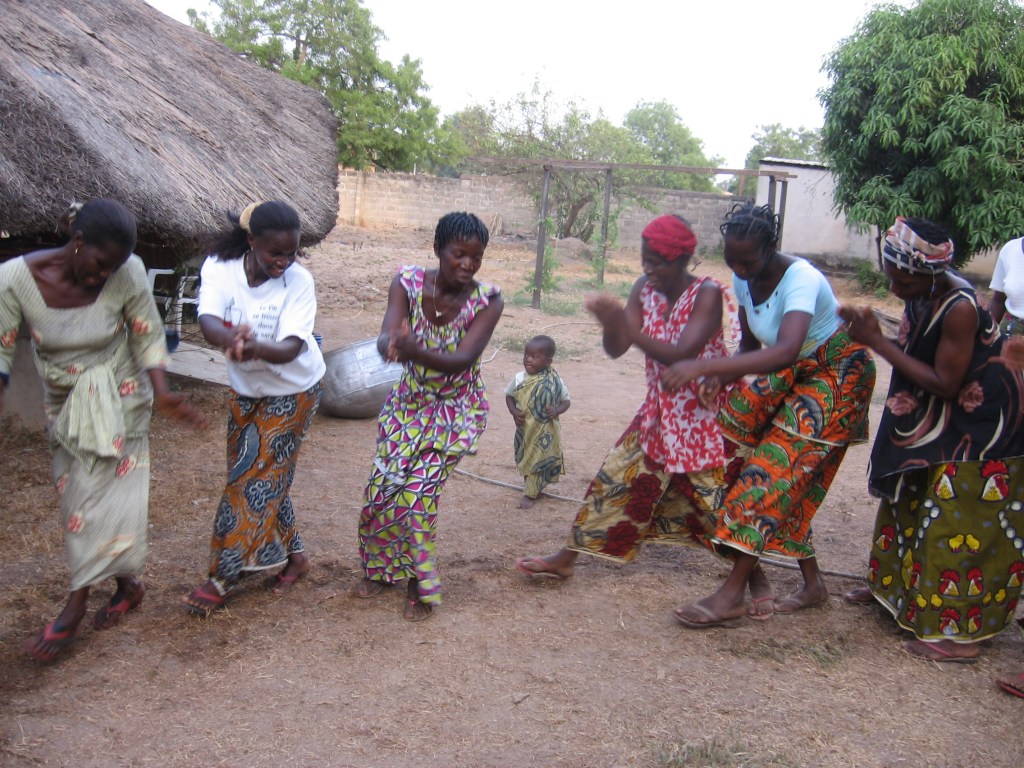
Back in Côte d’Ivoire, the West African styles of worship were very different. I was delighted when I discovered that there were times when community dance that accompanied a song praising God would suddenly make my heart erupt with joy, turning to him.

Then, sometimes it is sitting in quiet by the ocean, or by the Detroit River, or under trees in the yard that silence and solitude calm my heart and open it to contemplate the goodness and love of my Abba, my Messiah friend. Even in my private “skyhouse” space (remodeled attic) at home there are moments like that, but it takes focus.

Learning to dedicate a moment to worship, not just intercessory prayer (as precious as that is) has made a huge difference to me. So has digging into the deep writings of people who have taken the time to analyze what the Scriptures say and how we should apply them.

There are so many forms of “worship” that use of the term can be confusing. What did Jesus mean when he told the Samaritan woman that what God truly wants is for people to worship him “in spirit and in truth”? (John 4:23) Both of these are essential.

Sam Storms explains the “spirit” aspect this way: “To say that we must worship God ‘in spirit’ means, among other things, that it must originate from within, from the heart; it must be sincere, motivated by our love for God and gratitude for all he is and has done. Worship cannot be mechanical or formalistic. That does not necessarily rule out certain rituals or liturgy. But it does demand that all physical postures or symbolic actions must be infused with heartfelt commitment and faith and love and zeal.  But the word ‘spirit’ here may also be a reference to the Holy Spirit—there’s disagreement among good Bible scholars. The apostle Paul said that Christians ‘worship by the Spirit of God and glory in Christ Jesus and put no confidence in the flesh’ (Phil. 3:3). It’s the Holy Spirit who awakens in us an understanding of God’s beauty and splendor and power. It’s the Holy Spirit who stirs us to celebrate and rejoice and give thanks. It’s the Holy Spirit who opens our eyes to see and savor all that God is for us in Jesus.”[1]   

John Piper agrees that emotion accompanies worshiping in spirit, and elaborates on these truths in his classic book, Desiring God. “God is not worshiped where He is not treasured and enjoyed. Praise is not an alternative to joy, but the expression of joy. Not to enjoy God is to dishonor Him. To say to Him that something else satisfies you more is the opposite of worship.[2] . . . I must pursue joy in God if I am to glorify Him as the surpassingly valuable Reality in the universe. Joy is not a mere option alongside worship. It is an essential component of worship . . . Worshiping in spirit is the opposite of worshiping in merely external ways”[3]

I love Piper’s quote from C.S. Lewis in The Last Battle:  ”There is a kind of happiness and wonder that makes you serious.”[4]

So whether we are expressing joy in physical ways or personal prayer and praise, it must spring from our hearts. Worship includes emotions. The Holy Spirit is given us to bring us into a true posture of worship, fueled by the truth regarding the character of God. Knowing God more and more intimately brings trust in him and real joy in his presence. Piper gives a meaningful expression of how this works:

“The fuel of worship is the truth of God; the furnace of worship is the spirit of man; and the heat of worship is the vital affections of reverence, contrition, trust, gratitude, and joy.[5](74)

Did you notice that he added “contrition” to the list of emotions? That is because being in God’s presence often reveals a matter that we need to make right with him. His holiness illuminates our need to repent and ask for forgiveness, which then releases us to truly be at home with him, adoring him.

Yes, our worship must be founded on what the Lord has revealed to us in his Word, what the Spirit is underlining for us in the moment. It must never be based on flippant assumptions or “heresy”.[6] As we grow in that process of knowing God and who he is, we will respond in awe and wonder.

“It follows that forms of worship should provide two things: channels for the mind to apprehend the truth of God’s reality and channels for the heart to respond to the beauty of that truth.”[7]

Those channels are the various practices and experiences that incite worship for us. Some of us find that we worship best in quiet moments, alone. But worship in the assembly of other believers is also normal. Depending on where in the world the assembly takes place, and whether it is in a large church or a small group, even a family, it may take on a huge variety of forms. As Adele Calhoun says, “The heart of worship is to seek to know and love God in our own unique way . . . One style of worship is not better than another. The quality of worship emerges from the heart and its focus.”[8]

The core of worship, then, “is to see God as worthy, to ascribe great worth to him.”[9] It is a spiritual discipline, a part of spiritual formation, when we pay attention to practicing it in solitude and in union with other believers, when “our thoughts and words turn to perception and experience of God, who is then really present to us in some degree of his greatness, beauty and goodness.”[10] This changes and strengthens us!

These authors who mentor us so well point out Scriptures that command us to worship and underline the delight we will find in doing so. God is so amazing, and by paying attention to his invitation to truly enjoy his love and goodness, we will find that worship is the awakening of our senses to who he is. Someday we will see him face to face and worship with the millions. But right now we can be with him in that mysterious union that he calls us to, desiring to enjoy him.

Scriptures that push us to worship in spirit and truth:

Take delight in the LORD, and he will give you the desires of your heart. (Ps. 37:4 NIV)

I delight greatly in the LORD; my soul rejoices in my God. For he has clothed me with garments of salvation and arrayed me in a robe of his righteousness, as a bridegroom adorns his head like a priest, and as a bride adorns herself with her jewels.

Ascribe to the LORD the glory due his name; worship the LORD in the splendor of his1 holiness. (Ps. 29:2 NIV)

Worship the LORD in the splendor of his1 holiness; tremble before him, all the earth. (Ps. 96:9 NIV)

Exalt the LORD our God and worship at his footstool; he is holy. (Ps. 99:5 NIV)

Worship the LORD with gladness; come before him with joyful songs. (Ps. 100:2 NIV)

Therefore, since we are receiving a kingdom that cannot be shaken, let us be thankful, and so worship God acceptably with reverence and awe, (Heb. 12:28 NIV)


[1] Storms, Sam. “What Does It Mean to Worship God in Spirit and Truth?”  (Lightstock: March 14, 2020) Sam Storms

[2] Piper, John. Desiring God, (Revised Edition, The Crown Publishing Groupz; Kindle Edition) ,16.

[3] Ibid., 74.

[4] Ibid., 5.

[5] Ibid., 74.

[6] Storms.

[7] Piper, 93.

[8] Calhoun, Adele Ahlberg. Spiritual Disciplines Handbook: Practices that Transform Us. (Downers Grove, Illinois: IVP Books), 45.

[9] Willard, Dallas. The Spirit of the Disciplines: Understanding How God Changes Lives. (HarperSanFrancisco:1988). 177

[10] Ibid., 178.

Let’s Celebrate

God, who fills the universe,
who made it all, the stars and space,
did choose to put mankind on earth
and focus on this tiny place.

Hallelujah! We sing God's praise!
He offers us his warm embrace,
for as a man he took our place
to pay for sin -- amazing grace!

The perfect world he made for us
was broken by our parents' sin,
and nothing we try is enough
to heal it, make it whole again.

Our God, whose heart is endless love,
could never leave his children lost.
He left his palace up above
to be a man, at a huge cost.
	
Scrunched into human form, Jesus
would usher in God's Kingdom come,
to put an end to what kills us,
for he would die, God's holy Son.

This baby was no accident,
born in a stable, far from home;
Messiah, chosen one, God-sent,
his death killed death, made us his own.

Hallelujah! We sing God's praise!
He offers us his warm embrace,
for as a man he took our place
to pay for sin -- amazing grace!

Hallelujah! That word gained more depth for me when I was taught its meaning. It is borrowed straight from the Hebrew, two words that are translated into English as “Praise the LORD,” from “Praise Yah!” And that last word, Yah, is short for Yahweh. Praising him as a response to that call can come in many different forms. One of them is celebration.

How did you celebrate Easter this year? What was your most joyous moment? How do you express your praise to God at home, or at church, or in a community?

We are each made with unique personalities and our giftings are complementary, so we differ in what frees us to truly rejoice. Expressing joy and gratitude for the goodness of God is what celebration is all about when it is done in the context of worship and investment in spiritual growth. That is why it is even considered a spiritual discipline!

That was new to me, the first time I read about it in the Spiritual Disciplines Handbook: Practices that Transform Us.[1] What? Celebrations of Christmas, or Easter, or a baptism or wedding had always seemed more like parties, or festivals that come with attending church. Digging into the actual practice of celebrating God’s goodness opened up new avenues of spiritual development for me.

I began to pay attention to the incredible diversity that exists in ways we can celebrate. Which things bring deep gladness to your heart and a response of praise and worship? Here are suggestions: listening to music, playing music, singing, dancing, sharing with others, hospitality, joyful prayer, walks in nature, holiday traditions that incite gratitude for the Lord and what he has done, journaling praise, writing poetry . . .

Many powerful celebrations are done in community. A strong example is all of the festivals, or feasts, prescribed for Israel. They included special foods in special places, each festival shaped to commemorate an event, like Passover, or to express gratitude for harvest, or even for atonement.

When we were in Côte d’Ivoire, we learned several forms of celebration new to us. The one that was hardest to adapt to at first was an all-night gathering (veillée) lwith other believers on Christmas Eve or the night leading to Easter dawn. For years, the Christmas veillée in Ferke town was held in our courtyard, which had the biggest private space available for the church members at that time. The three churches in town would gather there for six to eight hours of singing (in multiple languages by immigrant and local groups), testimonies, Bible reading, and messages. We let our kids go back into the house at midnight!

Then as the church grew in Tiepogovogo, the Easter and Christmas veillées added Nyarafolo dancing, with counter-clockwise circles going on for hours. It kept everyone awake, yes, but it was a way of expressing joy as different song lyrics and tempos would turn our hearts to gratitude, or contemplation of truth, or community unity. The dancing lit a fire in my heart, even with the dust rising in the air as the feat beat the rhythms. Not so much for my husband, who was not naturally comfortable with that mode of celebration. He did appreciate the group joy, however, and sitting around a fire in the wee hours with friends, or playing fun stuff with the little kids while most of us were dancing. And the messages and Scripture reading.

Of course that village veillée included food, brought to the church courtyard in big pots by the women. Eating together expresses unity and community, the pleasure of fellowship, in a special way.

This Easter, here in Michigan, I was privileged to be in the church choir. Multiple songs were interspersed between Scripture readings about the death and resurrection of Jesus and two messages. Some songs were choral offerings, some were sung with the congregation, others featured soloists. All of it filled my heart with so much jubilation that sometimes there were shivers or wet eyes.

Then at home we shared a special meal: salmon, asparagus and lemon cake. Just enjoying that food with my family brought gratitude for our shared faith, for the grace of God in providing this food and home for us, for all that Jesus did for us, so that we can rest in his gracious love.

I have not always analyzed celebration that carefully, but I wanted to write about this practice this week that commemorates so much. Just planning for that gave me focus.  As Dallas Willard says, this is not about trying to just develop a spiritual discipline. “Rather it is the effective and full enjoyment of the active love of God and humankind in all the daily rounds of human existence where we are placed.”[2] Learning to pay attention to God’s active love completes worship, and expressing gratitude fortifies us.  “Celebration heartily done makes our deprivations and sorrows seem small, and we find in it great strength to do the will of our God because his goodness becomes so real to us.”[3] Ah! It even strengthens us as we move on in life!

In fact, “the spir­i­tu­al dis­ci­pline of cel­e­bra­tion leads us into a per­pet­u­al jubilee of the Spir­it.” And “it is not just an atti­tude but also some­thing that we do. We laugh. We sing. We dance. We play.”[4] David and the other psalmists urged us to celebrate vibrantly:

1Praise the LORD! Praise God in his sanctuary!

Praise him in the sky, which testifies to his strength!

2 Praise him for his mighty acts!

Praise him for his surpassing greatness!

3 Praise him with the blast of the horn!

Praise him with the lyre and the harp!

4 Praise him with the tambourine and with dancing!

Praise him with stringed instruments and the flute!

5 Praise him with loud cymbals!

Praise him with clanging cymbals!

6 Let everything that has breath praise the LORD!

Praise the LORD!  (actually: Hallelu Yah!)   (Ps. 150:1-6 NET)

We can celebrate on our own, when out in nature (like when we see a magnificent sunset). We can praise him in social media, or at home around the table. We can join with brothers and sisters in Christ in a small group, or sing (and dance maybe!) and gather an orchestra at church to make the praise instrumental too. Good news, maybe an answer to prayer, can lead to spontaneous laughter and a rush to share it with a prayer partner or small group.

However we practice celebration, we want to engage “in actions that orient the spirit toward worship, praise and thanksgiving. Delighting in the attentions and never-changing presence of the Trinity fuels celebration.”[5]

Let’s celebrate!


[1] Calhoun, Adele Ahlberg. Spiritual Disciplines Handbook: Practices that Transform Us. (Downers Grove, Illinois: IVP Books), 26-29.

[2] Willard, Dallas. The Spirit of the Disciplines: understanding how God changes lives. (HarperSanFrancisco, 1988), 138.

[3] Ibid., 179, 181.

[4] Foster, Richard. “Understanding Celebration”  https://renovare.org/articles/understanding-celebration

[5] Calhoun, 26.