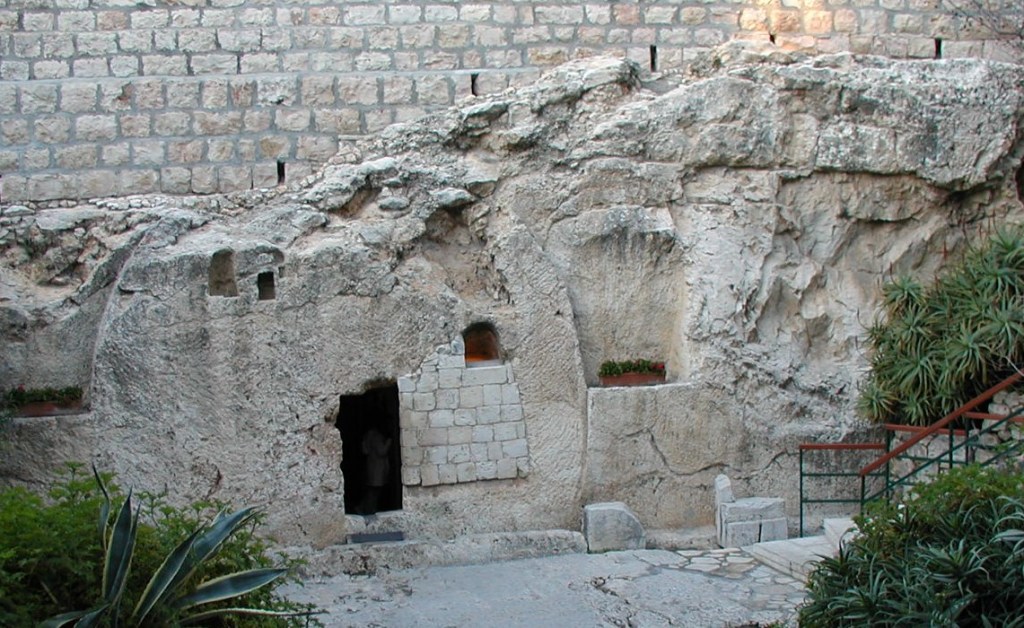
Like your disciples
on that day between
your murder
and your return to life
I wait, longing to see
what you have promised.

You said that,
if I would just believe
even a little tiny bit
I could make a mountain move—
I would receive
from your loving hand
what I am begging for.

So I wait,
and scrape up hope,
asking you for mercy.
Help my unbelief!
Have you been there, pleading with the Lord, forced to wait to see what his answer will be? We who are his children often beg, wondering “if” . . .
His plan, his timing is not always what we hoped it would be.
But he tells us to pray without stopping! He told us that if we even have miniscule faith, tiny like a mustard seed, we would see our prayer answered (Mat. 17:20). It’s easy to throw in the towel and lose hope when we don’t see it happening immediately. But praying on behalf of others, intercessory prayer, is a training ground in trust, obedience, and knowing the Lord. There is lots to push us to keep on practicing it.
For one thing, we need to obey our Master and keep on praying. Jesus even told his disciples a parable about a woman constantly pestering a judge to give her justice, protection against an enemy. Jesus said that, like the widow, they should not give up:
7 Will not God grant justice to His elect who cry out to Him day and night? Will He delay to help them? 8 I tell you that He will swiftly grant them justice. Nevertheless, when the Son of Man comes, will He find that faith on earth?” (Lk. 18:7-8 CSB)
And pray in the Spirit on all occasions with all kinds of prayers and requests. With this in mind, be alert and always keep on praying for all the Lord’s people. (Eph. 6:18 NIV)
Pray constantly. (1 Thess. 5:17 CSB)
So Jesus was clear that his followers should pray, continually. He even told his disciples that they would get what they ask for:
“Ask and it will be given to you; seek and you will find; knock and the door will be opened to you. 8 For everyone who asks receives; the one who seeks finds; and to the one who knocks, the door will be opened. (Matt. 7:7-8 NIV)
But there is also a warning: we might be asking what does not align with his priorities, and what he has told us are the purposes he has for us. If we ask for something for selfish reasons, we cannot expect to get what we ask for. Would I give my child whatever she wants, even if I know it will only be unhealthy for her, maybe even something that could encourage her to do something wrong?
When you ask, you do not receive, because you ask with wrong motives, that you may spend what you get on your pleasures. (Jas. 4:3 NIV)
It becomes clear that we, God’s children, can come to him freely, but we need to get more and more in tune with his teaching. We need to learn how to pray correctly by living in him, letting his Word live in us increasingly, and then asking him to act in line with that. As he said:
If you abide in me, and my words abide in you, ask whatever you wish, and it will be done for you. (Jn. 15:7 ESV)
That is the big IF we need to take into account!
In Celebration of Discipline, Richard Foster advises us to take an important first step before launching into our intercessory prayer: be still, listen, see what the Lord is saying about the person or situation. Then use that as the format for our prayer.[1]
This prepares us so that we can come like children to their Father, as Jesus said to do, trusting his good heart. His model prayer begins, “Our Father in heaven”. Yes, he is high over the earth, but lovingly connected with his dear ones. Imagine, or “see” with your heart, the good outcome you desire, and pray it to him.[2]
Here is a suggestion: collect texts that lead you to pray the way that the Lord is teaching you. I have begun to do that myself. For example, I am praying for the Nyarafolo people, who are still in the category “least reached.” Joined by many others, prayer has been going on for years. And more and more are coming to him. The following verses give good leads—then we can add data that we know, events that are going on. It is in line with his heart to ask for more to believe, for more people over to there to share the Good News, for his purposes to be fulfilled:
For the Son of Man came to seek and to save the lost.” (Lk. 19:10 NIV)
And the gospel must first be preached to all nations. (Mk. 13:10 NIV)
All the nations you have made will come and worship before you, Lord; they will bring glory to your name. (Ps. 86:9 NIV)
For God so loved the world that he gave his one and only Son, that whoever believes in him shall not perish but have eternal life. (Jn. 3:16 NIV)
I write to you, dear children, because you know the Father. I write to you, fathers, because you know him who is from the beginning. I write to you, young men, because you are strong, and the word of God lives in you, and you have overcome the evil one. (1 Jn. 2:14 NIV)
That last one gives ways to pray for the believers who are already there, but also that others might “know him who is from the beginning.” And may the “word of God” come to them and live in them!
When I pray for someone wandering, I have found Jesus’ parable of the lost sheep to be a wonderful structure for my prayer (Luke 15:4-6). He loves that lost sheep, who belongs to his flock but has allowed other things to lead them astray. I know he is that Good Shepherd who will pursue them.
Another practice that can fill our hearts with compassion as we pay attention to those around us is what Frank Laubach calls “flash prayers,” praying for anyone we see. We can do this at family get-togethers, when with friends, or on a prayer walk.[3] This can truly change how we interact with those people.
If the Lord lays someone on our heart, prompting a genuine yearning for his intervention in their lives, that is a prompt we should pay attention to. Foster says: “If we genuinely love people, we desire for them far more than it is within our power to give, and that will cause us to pray.” This “is one of the clearest indications from the Lord that this is a prayer project for you.”[4]
We cannot command our Father! We come with hearts submitted to him as King of the Universe, Lord of our lives, and petition him. He hears us. But he also lets us come to him with pleading for his understanding:
Listen to my prayer, O God. Pay attention to my plea. (Ps. 54:2 NLT)
Then, trusting him and his goodness, we wait.
[1] Foster, Richard J. Celebration of Discipline: The Path to Spiritual Growth. (San Francisco: Harper and Row, Publishers), p. 35
[2] Ibid., p. 36.
[3] Ibid., p. 39.
[4] Ibid., p. 35.
 Linnea's Lines
Thanks so very much for sharing this, Linn. So many of us are at a point of begging, and this really comforted me.
LikeLike
I am there with you, needing that comfort from the Word!
LikeLike