Your heartbeat
spins the
galaxies
and pats my back to calm me.
You are so good,
and true,
and I am loved by you.

Compassion is
the constant
instant
outflow of your heart
in perfect sync
with wisdom,
beyond myopic sight.

I’m nesting here,
the shuffling
hush of
angel wings subduing other sound.
This quiet
without answers
is the peace that heals my wound.

And yet your Word
hangs wholly
in the air
and fills my mind with echoes
rippling whispered
and profuse
as they diffuse into my soul.

My waiting place
my chosen
in-between
is here within the everlasting arms.
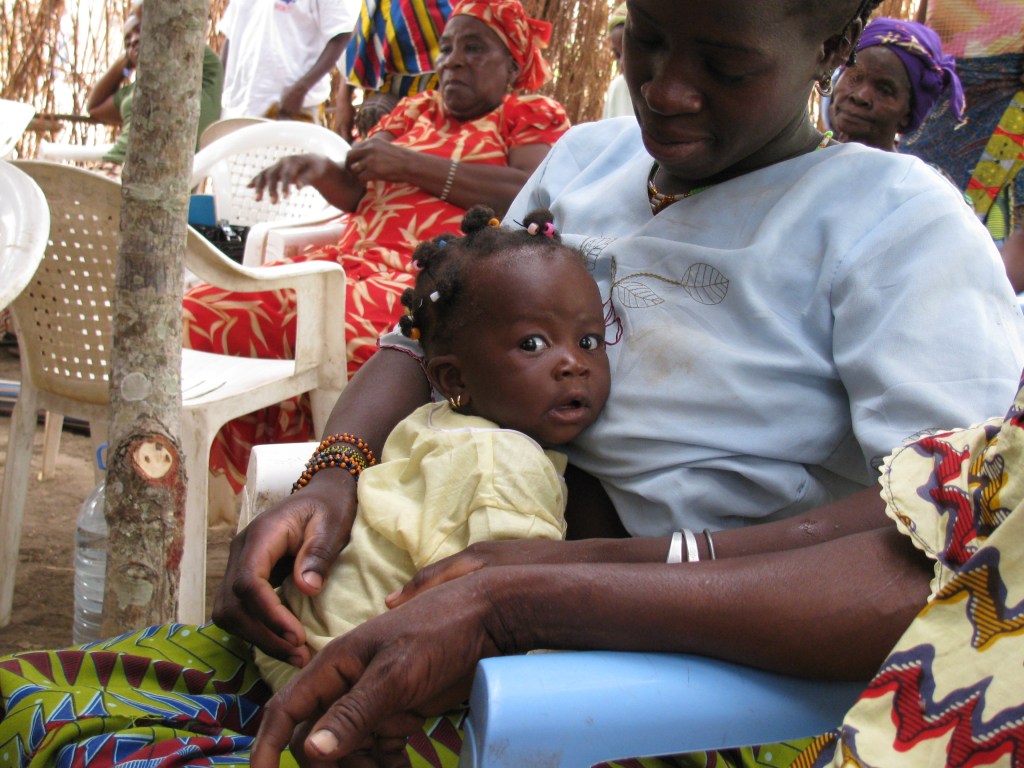
Do you remember the comfort you felt when you were a toddler sitting on your parentɛs lap? Or maybe you have a recent memory of holding a small child (maybe a son or daughter, or a friend’s toddler) on your lap, their head resting quietly on your chest. I treasure my memory of the last time my son woke up from his nap and ran to me to crawl up on my lap and lay his head against me, because that day his legs were so long they dangled almost to the floor. I was right: it didn’t happen again.
Precious memories like those can help us understand the imagery in the Scriptures about finding comfort in God’s arms, even against the chest of the King. That requires having the same trust and close attachment to him that you had to your parent when you rested on their lap. Consider the implications:
A Song of Ascents. Of David. O LORD, my heart is not lifted up; my eyes are not raised too high; I do not occupy myself with things too great and too marvelous for me. 2 But I have calmed and quieted my soul, like a weaned child with its mother; like a weaned child is my soul within me. 3 O Israel, hope in the LORD from this time forth and forevermore. (Ps. 131:1–3 ESV)
Only a couple of English translations have kept the imagery that is clear in the Hebrew: “a weaned child”! I realized why it gets disregarded when I was in seminary studying Hebrew poetry about 20 years ago, and the professor brought up this psalm.
“It doesn’t really matter that you render it ‘a weaned child,’ he said. ‘What matters here is the relationship of a child and their parent.”
It was a classroom full of men, so as I looked around no one else was showing any reaction. I had raised three children, breast-feeding each one. “Weaned child” said something to me!
I raised my hand. “I think it does matter,” I said. “I see a good reason why the psalmist (David) was so specific. When you are still nursing a child and you hold them against your chest, they tend to root around looking for milk, rather than lying quietly against you. Once they are weaned, they no longer do that. They rest!”
The students looked startled but enlightened. I realized it could be normal for a man not to realize the relevance of the child being weaned. And breast-feeding was not something everyone would have been intimately familiar with in this country, the U.S.
The image is truly full of meaning. It underlines complete submission to the parent, and trust. Here the child of God is not like a baby that is frantic for milk to be calmed down. The psalm is “drawing an analogy between the child which no longer frets for what it used to find indispensable, and the soul which has learned a comparable lesson . . . It is freedom . . . from the nagging of self-seeking, and as verse 3 would add, from the bondange of delusive frets and fears.”[1]
Maybe you are facing a dilemma or a challenge that is wearing you out. You can run to the Father and spend time “on his lap” and find comfort in that safe place. Your heart needs to be like a child’s, not needing instant answers to what is “too great and too marvelous for [you]” (verse 1). As we go to the One who knows everything and loves us beyond understanding, we can give it over to him and wait for him to do his work.
I am currently in such a place: my ministry of Bible translation is hanging by the threads for lack of adequate funding (the entity that has supported us generously for years is now lacking sufficient funds!). I do think about it, wondering how the Lord is going to work things out this time. I remember how over the years he has kept it going in stunning ways, through war and a devastating fire, through severe injuries and illness hindering a worker from engaging for a long while, through the heartbreaking revelation of sin in the life of one team member years ago. It is God’s project. He is in charge.
This recent sudden discovery of our fragile position could have blown me over—and I wondered why it did not. I pray daily, with others. And there is a peace inside me that I cannot explain except by this analogy of resting on my Parent’s chest, sitting on his lap. It sounds risky to think of myself in that position. He is, after all, in charge of millions of other sons and daughters too, and busy with his plans all the time. But he gives me, and you, this gift beyond comprehension: instant access any time to him and his comfort.
I wrote the poem above 24 years ago, and I’m so glad Father God had put it in my heart. One year later war started where we lived, and we were under fire. We evacuated, with no idea what the future would hold. Looking forward at that time, there seemed to be no assurance that any of our plans would ever be accomplished. Looking back we can see how our Almighty God worked out his plan. True, it has been another long stretch of ups and downs. I am so grateful that I can run to him and soak up grace, there in his arms, my head against his chest!
Like Israel back in David’s days, we must“hope in the LORD from this time forth and forevermore” (verse 3). Always! Turn to him in childlike submission and find rest!
[1] Derek Kidner, Psalms 73–150: An Introduction and Commentary, vol. 16, Tyndale Old Testament Commentaries (Downers Grove, IL: InterVarsity Press, 1975), 484.
 Linnea's Lines